
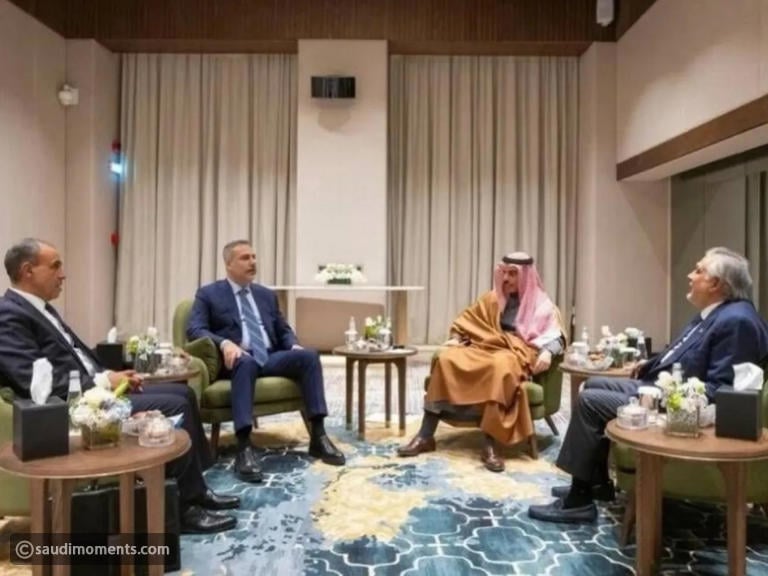
Top diplomats of Pakistan, Egypt, Saudi Arabia, and Türkiye met in Islamabad on Sunday to prepare ground for de-escalation in the U.S.-Israel war on Iran.
Foreign ministers from Pakistan, Türkiye, Saudi Arabia and Egypt began two days of consultations in Islamabad on Sunday, reaffirming their unity to contain the regional conflict, reduce the risk of military escalation, and prepare conditions for structured negotiations.
Pakistan’s Deputy Prime Minister and Foreign Minister, Mohammad Ishaq Dar, said the ministers agreed that the war benefits no one and “would only lead to death and destruction,” stressing the importance of Muslim Ummah unity in these challenging times.
He added that the ministers expressed concern over the conflict’s devastating impact on lives and livelihoods across the wider world.
Dar also briefed them on potential U.S.-Iran talks in Islamabad, which received full support from the visiting ministers.
The consultations follow the first meeting held in Riyadh on 19 March 2026. The Islamabad meeting did not include U.S. or Iranian officials, serving as a preparatory forum for possible future negotiations.
The ministers also met Pakistan’s Prime Minister Muhammad Shehbaz Sharif, who earlier spoke with Iranian President Masoud Pezeshkian in a 90-minute phone call—the second in five days. Iran’s president welcomed Pakistan’s mediation efforts to halt the U.S.-Israeli conflict and thanked Islamabad for its initiative, Pakistan said.
Dar highlighted Pakistan’s ongoing engagement with the United States as part of efforts to de-escalate the situation and secure a peaceful resolution.
“Pakistan will be honoured to host and facilitate meaningful talks between the two sides for a comprehensive and lasting settlement,” he said.
He also noted support from China, with Foreign Minister Wang Yi backing Islamabad’s initiative, and from the UN Secretary-General, alongside other international partners who have expressed confidence in Pakistan’s mediation efforts.
The statement concluded that the ministers reaffirmed the importance of coordinated diplomacy, dialogue, and joint efforts to restore regional stability while creating conditions for negotiations between relevant parties.