
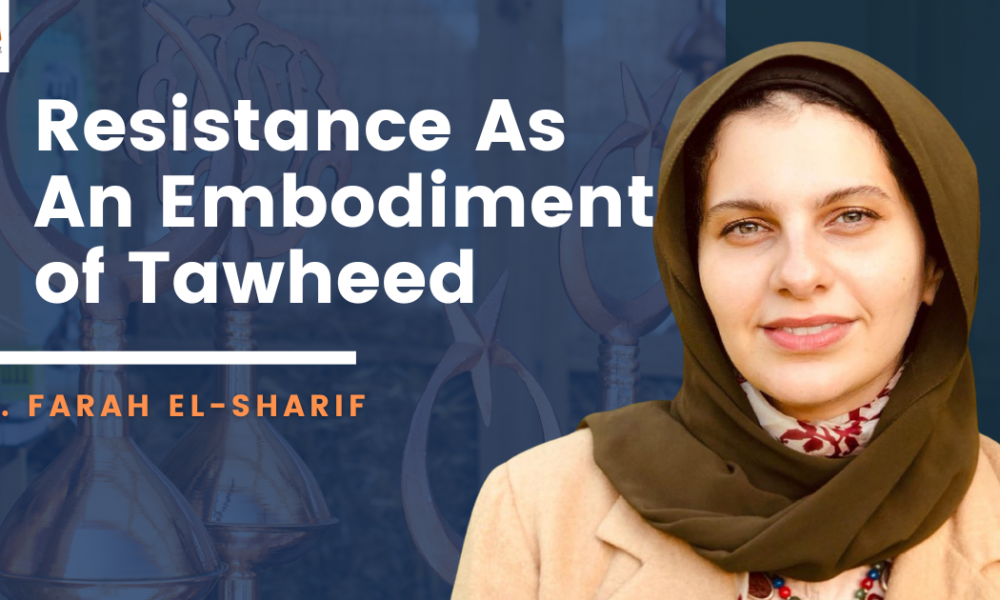
Is Ramadan really a time to simply withdraw from the world? When we are fasting while witnessing genocides in across the Muslim world, are we really meant to turn to private worship and ignore what’s happening?
Zainab bint Younus speaks to Dr. Farah El-Sharif about what grappling with the concept of resistance in light of Islamic ethics, navigating scholarly advice to avoid politics, and the fears that many have about the consequences of engaging in resistance. This episode highlights the importance of Islam as more than just a private religious practice, and the revolutionary potential of Islamic theology in changing the world – during Ramadan, and beyond.
Keep supporting MuslimMatters for the sake of Allah
Alhamdulillah, we’re at over 850 supporters. Help us get to 900 supporters this month. All it takes is a small gift from a reader like you to keep us going, for just $2 / month.
The Prophet (SAW) has taught us the best of deeds are those that done consistently, even if they are small.
Click here to support MuslimMatters with a monthly donation of $2 per month. Set it and collect blessings from Allah (swt) for the khayr you’re supporting without thinking about it.
[This episode was recorded on February 24 and does not reflect or account for up-to-date political changes.]
Dr. Farah El-Sharif is a writer, educator and scholar in Islamic intellectual history. She received her PhD from Harvard University where she specialised in West African Islamic intellectual history. She studied with scholars in Egypt, Morocco, Senegal, Jordan and the US. You can find her writings on Substack, “Sermons at Court.”
Related:
[Podcast] The Faith of Muslim Political Prisoners | Dr. Walaa Quisay & Dr. Asim Qureshi
[Podcast] Muslims, Muslim-ness, and Islam in Politics | Celsabil Hadj-Cherif