
A new power device could change how high voltage systems are designed by simplifying architectures, reducing cost and replacing existing approaches.
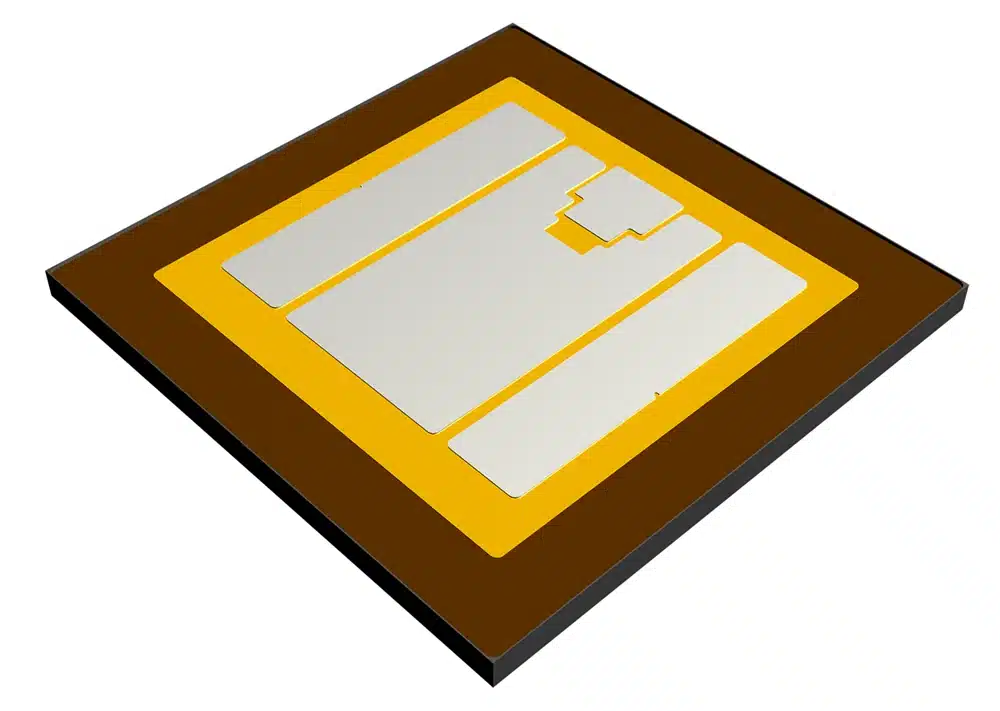
Wolfspeed has announced the industry’s first commercially available 10 kV silicon carbide (SiC) power MOSFET. It is aimed at high-voltage systems, where it enables more flexible system design, improves durability, and supports reliable and sustainable power for applications such as grid infrastructure, industrial electrification, and AI data centers. The device challenges existing power conversion approaches by offering a path to modernize critical power infrastructure and support growing energy demands.

At the device level, it sets a new benchmark for durability and performance. Intrinsic time-dependent dielectric breakdown (TDDB) lifetime analysis predicts 158,000 years of operation at a continuous 20 V gate bias. It is also the first 10 kV SiC MOSFET to address bipolar degradation while maintaining reliable performance, including body diode operation—an important requirement for mid-voltage UPS systems, wind power, and solid-state transformer applications.
The higher voltage capability directly impacts system design. It enables architectural freedom that was not possible earlier, allowing simplification of power conversion systems. Multi-cell designs can be combined into fewer cells, and three-level inverter topologies can shift to two-level designs. These changes can reduce overall system cost by about 30%.
Switching performance also improves system efficiency and size. By increasing switching frequency from 600 Hz to 10,000 Hz, power density can improve by more than 300%. This reduces the size of magnetics and simplifies control and gate drive circuits.
Thermal performance is also improved at the system level. With conversion efficiency reaching 99%, thermal requirements can be reduced by up to 50%, enabling simpler cooling solutions compared to IGBT-based systems.
In pulsed power applications, the device introduces a shift from mechanical switching. With a rise time of less than 10 ns, it can replace mechanical spark-gap switches that degrade due to high-current, high-temperature arcing. Solid-state switching using SiC MOSFETs removes arcing, improves energy transfer efficiency, and provides better timing control.
This also reduces system size and complexity in applications such as geothermal power systems, power supplies for AI data centers, semiconductor plasma etching, and fertilizer production.
Click here for the original announcement.