
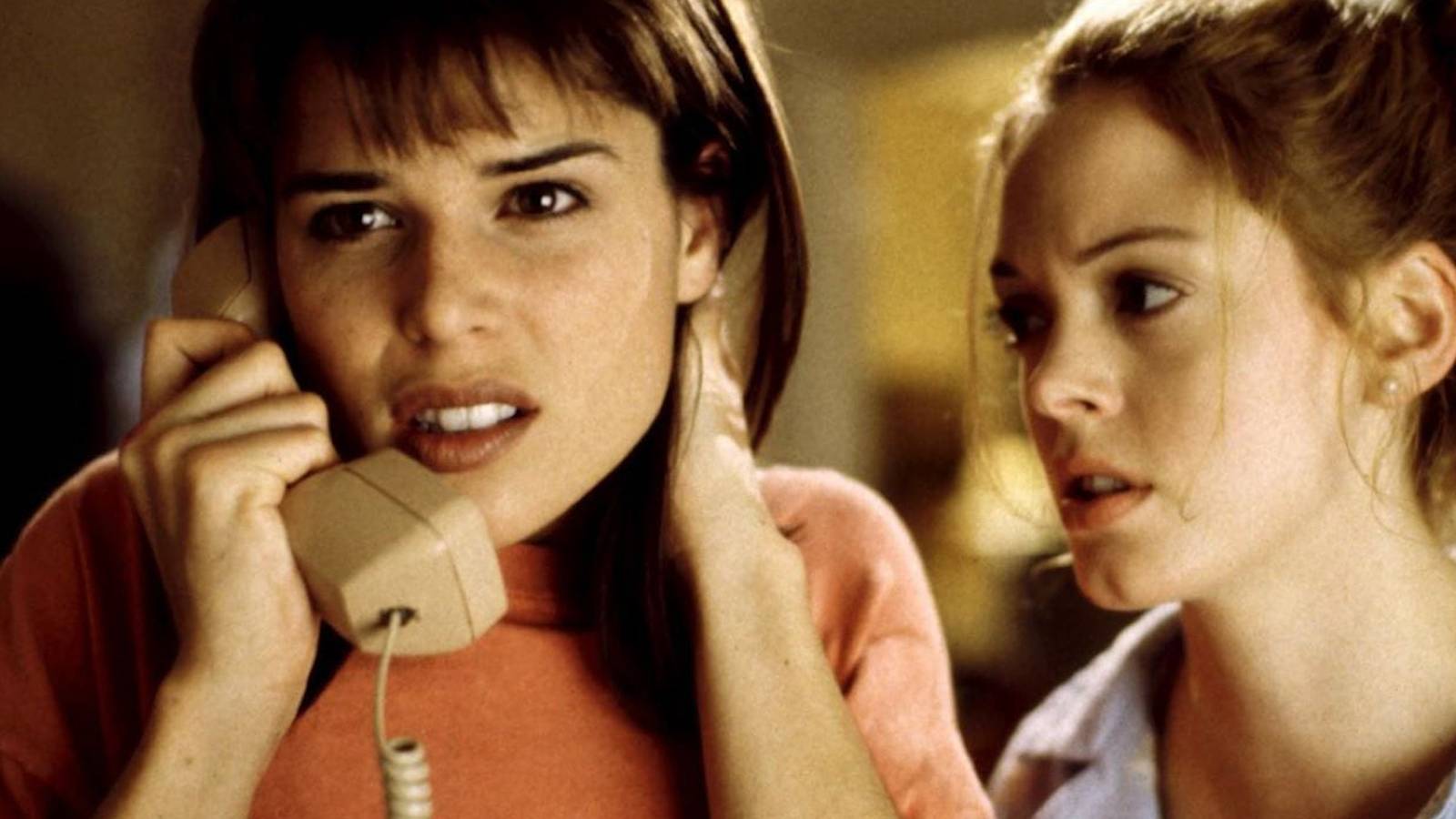
Quentin Tarantino is one of the best modern filmmakers, yet as talented as he is, the director also comes off as a cranky guy with a lot of bad takes. Recently, he was in the news for attacking the acting abilities of Paul Dano and Matthew Lillard, which understandably earned him a ton of backlash. It’s not the first time he’s said something controversial, and it won’t be the last. Years ago, he went after Lillard’s most famous movie, Scream. However, instead of criticizing the guy who played Stu Macher, Tarantino saved his harsh words for the last person you’d expect: Wes Craven.
Quentin Tarantino Thought Wes Craven’s Directing Held ‘Scream’ Back
In the mid 1990s, horror was not in a good place. After ruling the 80s due to the slasher fad, audiences had gotten bored and moved on. With CGI effects taking off, moviegoers found their thrills elsewhere in movies like Terminator 2: Judgment Day and Jurassic Park. Outside of rare examples here and there, such as 1992’s Candyman, the genre lost its voice. In 1996, that all changed.
Little-known screenwriter Kevin Williamson wrote Scream (initially called Scary Movie), a slasher about a killer who takes their love of scary movies too far, and after Dimension Films came on board, the search for a director began. Many major names of the era were approached, such as Danny Boyle, Sam Raimi, and George A. Romero. Robert Rodriguez was considered too, which Quentin Tarantino talked about in an eye-opening 2015 interview with Vulture. He started by saying, “I could have imagined doing the first Scream. The Weinsteins were trying to get Robert Rodriguez to do it. I don’t even think they thought I would be interested.”

One of the Scream Movies Owes a Lot to This Brilliant Nightmare on Elm Street Sequel
And no, we’re not talking about the first ones.
It would have been fine to leave it there and let fans wonder about an alternate version of Scream with Rodriguez or Tarantino in the director’s chair, but Tarantino took his thoughts further with a baffling opinion. “I actually didn’t care for Wes Craven’s direction of it. I thought he was the iron chain attached to its ankle that kept it earthbound and stopped it from going to the moon.”
Wes Craven Was the Perfect Choice to Direct ‘Scream’
Scream is credited with single-handedly saving the horror genre, while bringing back the slasher for a new generation. It currently has a 78%rating from critics on Rotten Tomatoes, and when it was initially released on December 20, 1996, it racked up $173 million worldwide on just a $6.3 million budget, resulting in a franchise that still lives on three decades later. None of that happens without Wes Craven, who already had a proven track record for horror with terrifying movies like the ultra-realistic The Last House on the Left and the inventive slasher A Nightmare on Elm Street. Sure, he wrote both of those, while Kevin Williamson wrote Scream, but rather than being “the iron chain,” Craven is the glue keeping it all together.
The plot of Scream is already a bit over-the-top with its meta approach. These characters know they’re in a horror movie and play by the established tropes of the genre. In someone else’s hands, this could have been leaned into so heavily as to make the plot unimportant, or to turn it into a wacky meta horror comedy like Gremlins 2. Williamson’s screenplay, however, doesn’t allow that, and neither does Craven’s directing talent. He knew how to walk a fine line between fiction and nods to reality, having shown this skill only two years earlier with 1994’s New Nightmare. In that film, Heather Langenkamp, Robert Englund, and even Craven play versions of their real selves, with Freddy now a demon who takes the form of the character from the Nightmare on Elm Street movies. Craven balanced between pure horror and winking at the camera, without breaking the fourth wall so much that the terror was stripped away.
Craven’s directing in Scream is not flashy. This is meant as the highest of compliments because he never tries to make the movie about himself. His focus is on the story and its characters. In Scream, he achieved that with the dynamic between his teen cast, like he did with A Nightmare on Elm Street. He perfectly captured the comedy (in large part because of the talent of Matthew Lillard, thank you very much), while keeping it realistic, and crafted some phenomenal chase scenes, all while refusing to give in to senseless gore. Scream is bloody, funny, and meta, yet restrained because Craven knew plot, character, and scares mattered most. The same movie, directed by Tarantino, would have purposely pushed it all too far with desensitizing ultra-violence, characters reciting unrealistic dialogue, f-bombs galore, and a suffocating amount of meta. Craven was the maestro and the manager, both crafting a masterpiece and knowing going to the moon was the wrong approach. That’s not an iron chain. It’s directing.
Scream is available to stream on Paramount+ in the U.S.

- Release Date
-
December 20, 1996
- Runtime
-
112 minutes
- Writers
-
Kevin Williamson
- Producers
-
Bob Weinstein, Cary Woods, Cathy Konrad, Harvey Weinstein