
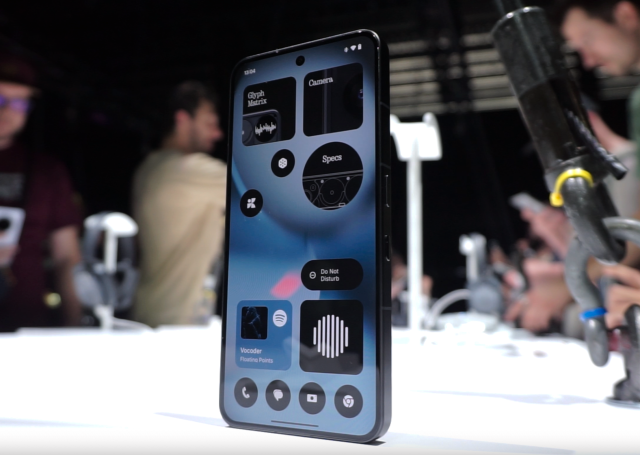
Remember when you could grab a decent smartphone for under $300? Yeah, those days might be numbered. Budget phones in 2026 are facing an existential crisis, and Nothing CEO Carl Pei just explained why your next affordable smartphone might not be so affordable after all.
Nothing CEO Carl Pei just dropped some uncomfortable truth bombs about the smartphone industry, and if he’s right, budget phones in 2026 are going to be rough for anyone who doesn’t want to drop serious cash on a phone. So, what’s the issue? Turns out AI is eating the smartphone industry alive, and it’s happening in a way nobody predicted.
To give you some perspective, when Apple launched the first iPhone in 2007, it cost $499. Samsung’s original Galaxy S debuted at $399 in 2010. Fast forward to today, and flagship phones routinely break the $1,000 barrier. We got used to that inflation at the high end, but budget phones remained accessible because component costs kept dropping. That safety net just disappeared.
Nothing CEO’s Warning: The Era of Cheap Components is Over
For fifteen years, the market operated on one reliable assumption: components get cheaper over time. Memory that cost $50 this year would cost $40 next year, allowing companies to pack better specs into phones without hiking prices. That predictable decline in component costs is what made smartphones under $500 possible in the first place.
That model just broke.
AI data centers are now competing directly with smartphones for the same memory chips. Companies are locking up silicon wafer capacity years in advance, and the result is brutal. According to Pei’s commentary, memory costs have already jumped up to 3x in some cases, with more increases expected. Memory modules that cost less than $20 last year could hit $100 or more by year’s end for flagship models.
Let that sink in. A single component that used to be almost negligible is becoming the most expensive part of the phone.
Smartphone makers now face an impossible choice: raise prices by 30% or more, or lower the specs. And as for the “more for less” value proposition that budget brands built their entire identity on? Yeah, that’s no longer a thing. Pei predicts entry and mid-tier segments could shrink by 20% or more, with brands that dominated those categories struggling to survive. That means budget phones in 2026 will either cost significantly more or come with significantly worse specs.
For Nothing, this is actually an opportunity. As Pei puts it in his statement, they never competed on specs alone because they couldn’t afford to. Instead, they focused on design and user experience, proving that how a phone feels matters more than benchmark scores. Now that everyone else is being forced into that same reality, Nothing’s approach suddenly makes a whole lot more sense.
TSMC’s 2nm Problem: When New Tech Gets More Expensive
But it’s not just memory. TSMC’s 2nm manufacturing process is significantly more expensive than previous generations. The cost per wafer has jumped from around $18,000-$25,000 for 3nm to approximately $30,000 for 2nm. This breaks the usual pattern where each new chip generation gets cheaper to produce.
According to reports, Apple’s A20 chip for the iPhone 18 could cost around $280 per unit, roughly 80% more than the current A19. Qualcomm’s Snapdragon chips and MediaTek’s processors are expected to see similar price hikes. The 2nm process uses nanosheet Gate-All-Around transistors that boost density and cut power use, but they’re much harder to manufacture at scale.
Advanced chips are getting pricier to produce right as demand is exploding, creating a perfect storm for smartphone makers who were already dealing with razor-thin margins on budget and mid-range devices. This directly impacts what we can expect from budget phones in 2026.
Geopolitics Making Everything Worse
Then there’s the geopolitical nightmare. The ongoing trade war between the US and China has thrown supply chains into chaos. US tariffs have forced companies to scramble for alternative supply routes with lower tariff exposure, and that is a costly process. Every time a company has to shift manufacturing or find new suppliers, costs go up.
Manufacturing in the US isn’t the easy solution some politicians make it sound like either. Building factories and scaling production to match China’s capacity will take years and massive investment. Even if companies wanted to move everything stateside tomorrow, US labor costs are significantly higher than in Asia. Those costs get passed directly to consumers. All of this is happening at once, creating what might be the perfect storm for smartphone pricing.
Nothing’s own phones won’t escape the price increases. The company confirmed pricing will rise across their portfolio, especially as they upgrade some Q1 launches to UFS 3.1 storage.
The uncomfortable (and expensive) reality is this: 2026 might be the year budget phones as we know them cease to exist. Or at the very least, our definition of “budget” will change. If memory costs don’t stabilize, manufacturing doesn’t get cheaper, and geopolitical tensions keep supply chains in turmoil, the $300-500 category could get squeezed out entirely. Consumers will face an impossible choice between expensive flagships and genuinely compromised low-end devices with outdated specs.
The era of cheap silicon is over. Welcome to the era where your phone costs as much as your laptop, and AI is the reason why. Well, AI and tariffs and trade wars and expensive manufacturing processes. Basically, everything that could go wrong for smartphone pricing is going wrong at exactly the same time.
Budget phones in 2026 are shaping up to be a very different beast than what we’re used to, and your wallet isn’t going to like it.