
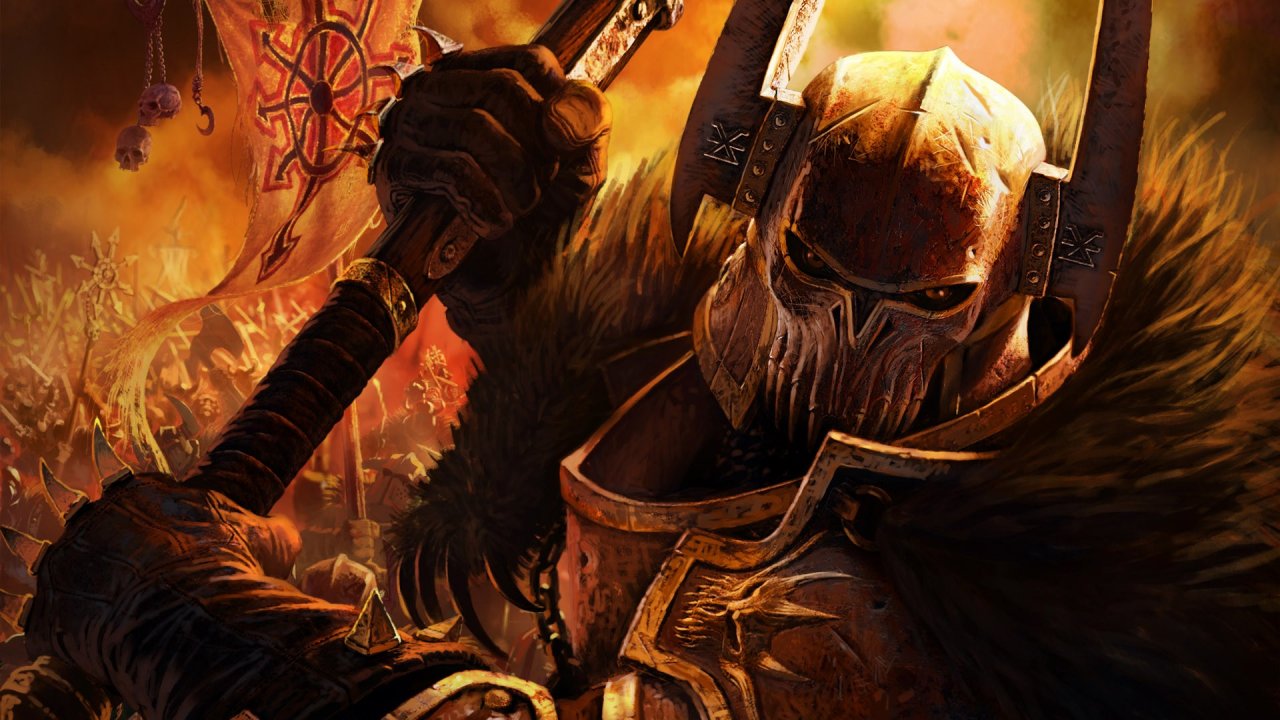
Last month, “boutique publisher” SNEG unveiled, in collaboration with rights-holder Games Workshop and its developer and publisher partners, the Warhammer Classics label. While many retro Warhammer games were already available, especially on GOG, this is a major effort to re-release and future-proof them on Steam. More than 20 games were included, with seven making their Steam debut.
It’s an astonishing collection of tuned-up classics overall, from RTS classics like Mark of Chaos to the overlooked first-person shooter Warhammer 40,000: Fire Warrior. With restored multiplayer capabilities where possible and even Steam achievements in some cases, they’re more than simple re-releases. We had the chance to talk with SNEG co-founders Artem Shchuiko and Oleg Klapovskiy – both GOG veterans – about the effort of bringing these retro titles back, preservation efforts in the industry, and our love for retro gaming.
Some quotes have been editorialized and lightly trimmed for better flow.
“They really care,” Shchuiko said about Games Workshop as a creative partner. “They have a great team responsible for the classic games; those who work with us on classics are just great people who care about it, who can talk in depth about it, which is not always the case when it comes to any IP owner. Good luck finding a similar team like that.” In the past, we’d heard the same from other developers about games like Space Marine 2 and the process of getting everything right alongside GW. The Nottingham-based company doesn’t just give away the rights and evaluate work after a lot of time has passed; it’s hands-on in its approach.
Klapovskiy added the process was a bit different for SNEG, as the “original developers of these games made very hard work, ensuring everything inside is already compliant with the Warhammer universe and the lore.” He added many years have passed, so of course the canon and lore have evolved. Warhammer Classics, as a label, is meant to make a clear distinction beyond “these games are old” and help folks navigate the past of the Fantasy and 40K properties.
The discussion to bring back more Warhammer games from olden times started “back to our time at GOG,” Klapovskiy revealed. The relationship with Games Workshop isn’t a new one. “We were exchanging lots of ideas about all the titles, so it was like an iterative process… It was slowly cooking until the moment we decided ‘why not, I think we believe it’s the right moment’, and I think the experiment worked out quite well, looking at the feedback from the community, gamers, and media.” Is Warhammer Classics’ success so far enough to push a further expansion of the back catalogue? Klapovskiy had encouraging words to share: “Obviously, just the first step. We all want to do more.”
“The fact there was a trust component already in place is critical. Everyone wants to do a great job with the given resources, time constraints, and legal limitations,” Shchuiko added. SNEG and Games Workshop didn’t get to every Warhammer classic yet, as there are dev and publishing restrictions blocking a few from happening. Don’t expect them to give up easily though.
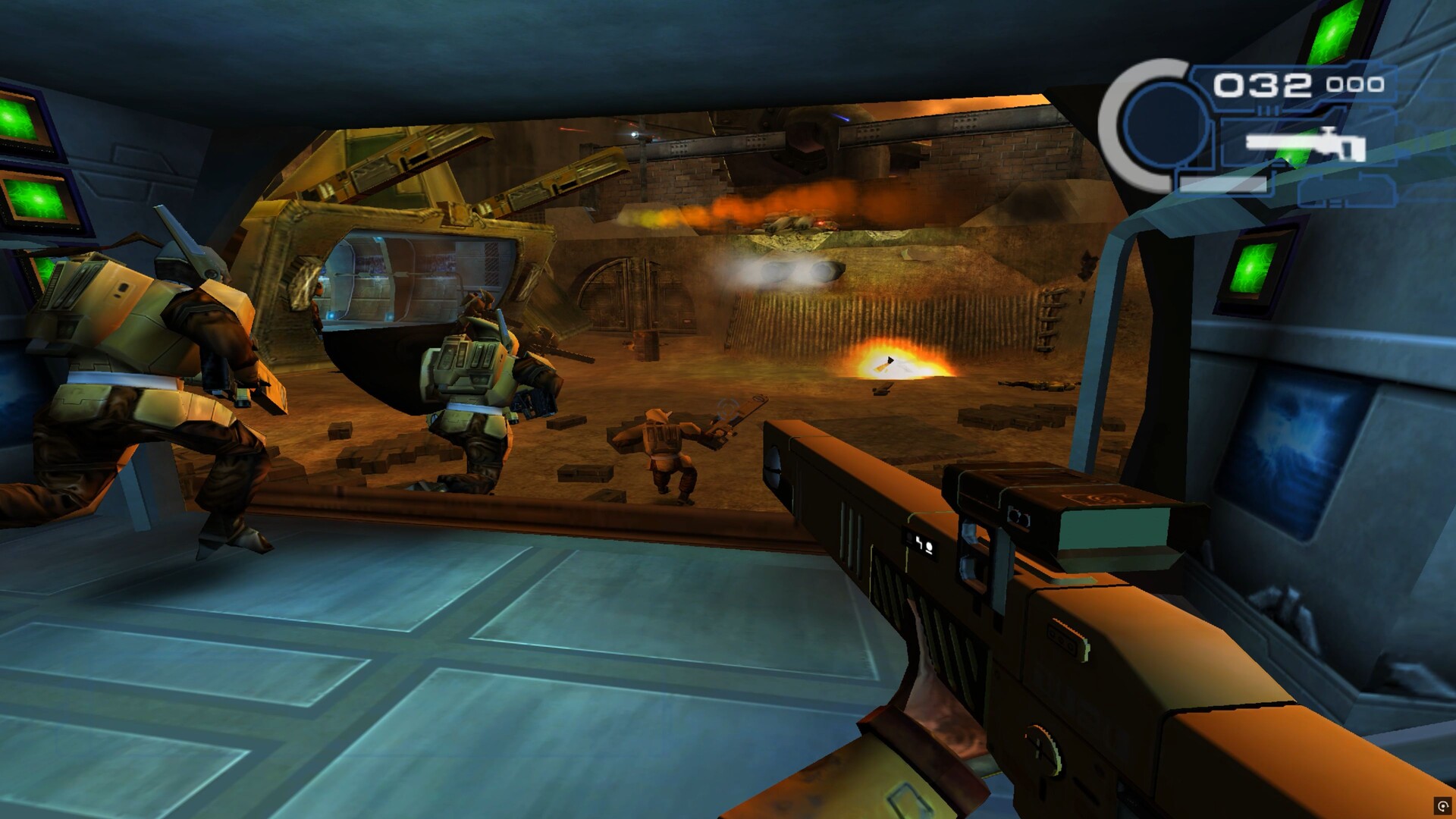
We also got to briefly discuss our personal favourites. Fire Warrior understandably got a lot of love despite its rough edges because it was Warhammer’s attempt to bite into the Halo: Combat Evolved pie, but Shchuiko made sure to underline Dark Omen too: “It’s magical when you play it. Its cranky, funny British humour… It smells and feels like a game of a specific era from a specific place… Fire Warrior as well; it was after Halo but before Half-Life 2, so it had this strong cinematic appeal that was impressive. Regardless of the game being not 95 out of 100 on Metacritic or whatnot, it just felt special compared to everything else in the market.”
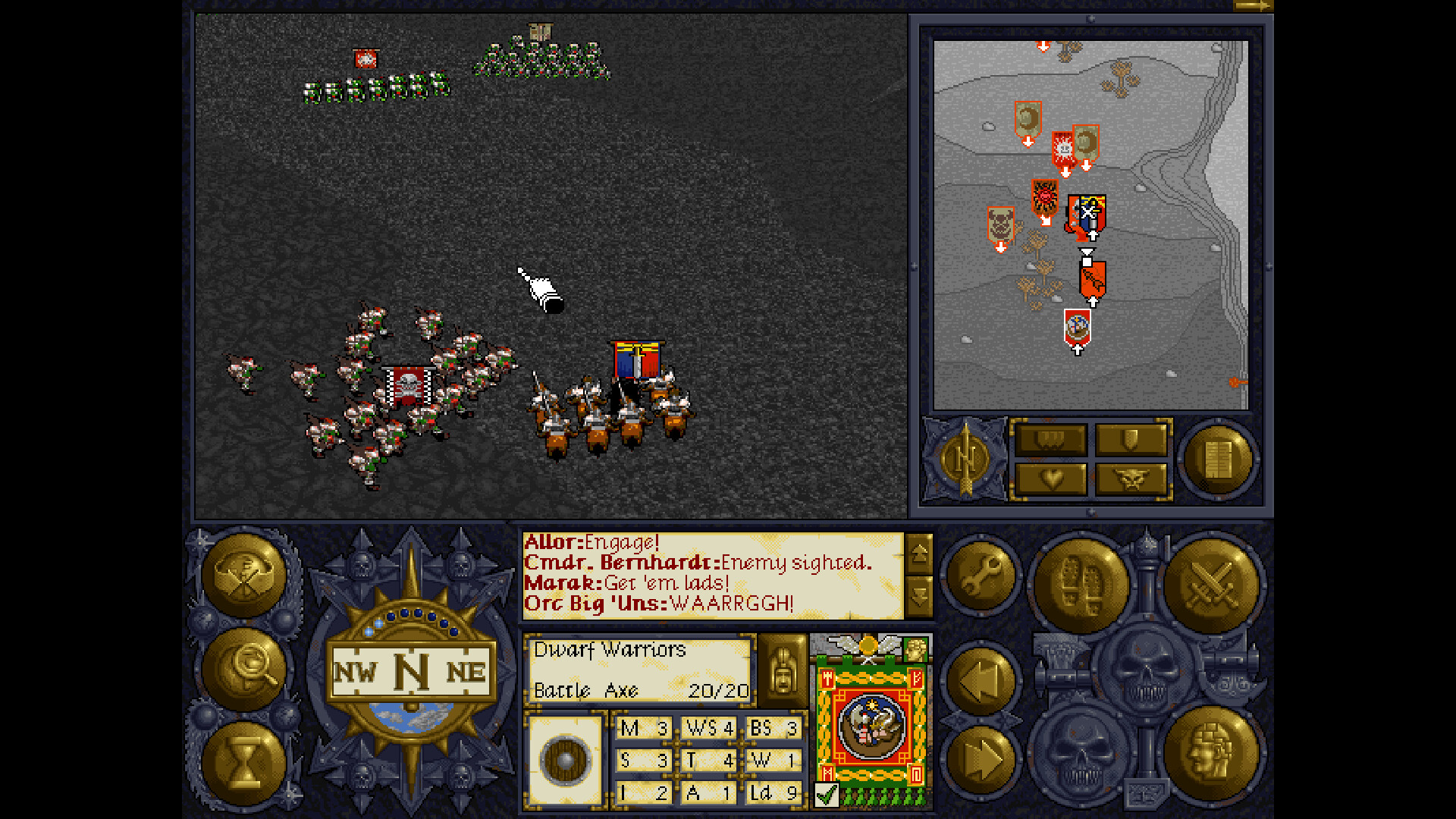
Klapovskiy had a harder time picking favourites “because I had to play through them and finish quite a few while we were getting ready for the launch.” Dark Omen got an enthusiastic thumbs-up from him too thanks to “its own appeal and the story that you’re going through.” According to him, it also plays well even today, something he couldn’t say about Shadow of the Horned Rat: “I tried to play it and I need to admit: I miserably failed. It’s so painful to play on PC. I’m so happy that we had cool QA guys that managed to go through it a few times. That said, I like the PS1 version of Shadow of the Horned Rat because it’s a totally different game.”
Anyone who’s been gaming for long enough remembers multiplatform releases back in the day often were different from each other, with different studios taking on different versions of a game that was the same only in concept. Shadow of the Horned Rat was one of those projects, as Klapovskiy told us: “There were three different independent teams working on the game for DOS, Windows, and PlayStation. Obviously, they were exchanging things, but the majority of things were written in a different way, renders, how it was hard-coded… There were no systems used by all teams, which is crazy.” This might explain why many veterans had fond memories of the game, only to be greeted by a rougher PC version later.
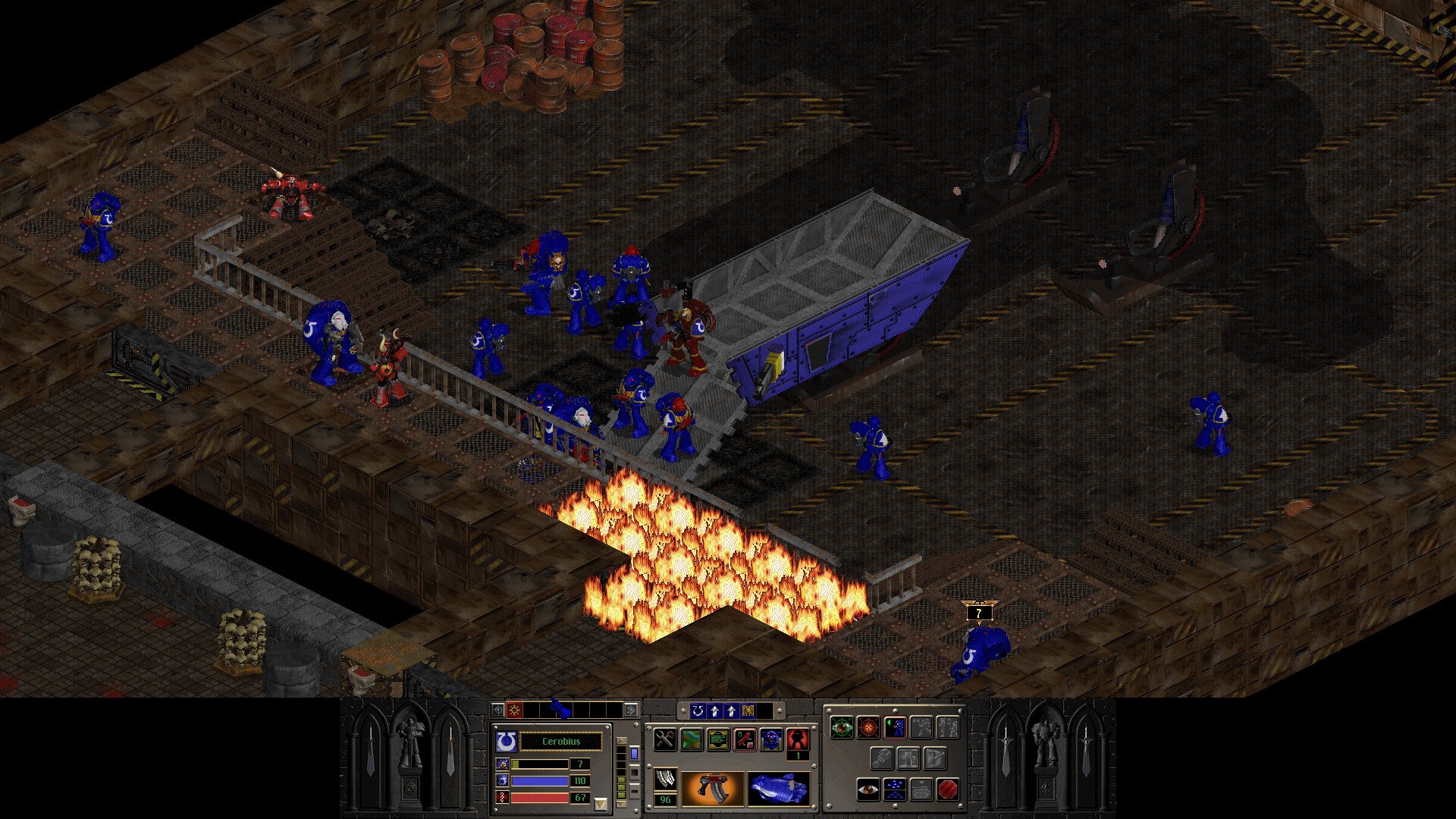
Final Liberation: Warhammer Epic 40,000 also got some love from Klapovskiy: “I loved it. I went through it. For me, it’s like a masterpiece.” The FMVs specifically had a big impact on him: “Like amazing short movies. If the videos were in higher resolution, I’m sure TikTokers would just love it.” As an extra, SNEG apparently heard there was an expansion or content pack of sorts for it that was never released. “Maybe one day we’ll be able to find something from it.”
Other favourites include Chaos Gate (the first one) and the latter iterations of the Space Hulk tabletop game. “It’s not only about the game, it’s also about memories, about the great people developing it,” Klapovskiy concluded after going through several of these classics. “I’ll stop here because I went too far,” he apologised, but our full chat about specific Warhammer games was lovely.
Another matter worth diving into was that of modding and community patches for olden games like many of these Warhammer classics. Some of them “developed” these niche but very dedicated communities over time, so what happens when you go back to them in an official capacity and have to update things, potentially breaking some of that work in the process? Last year, WH40K: Dawn of War – Definitive Edition tried to keep all the underlying systems the same for mod compatibility, but how did SNEG’s process look like?
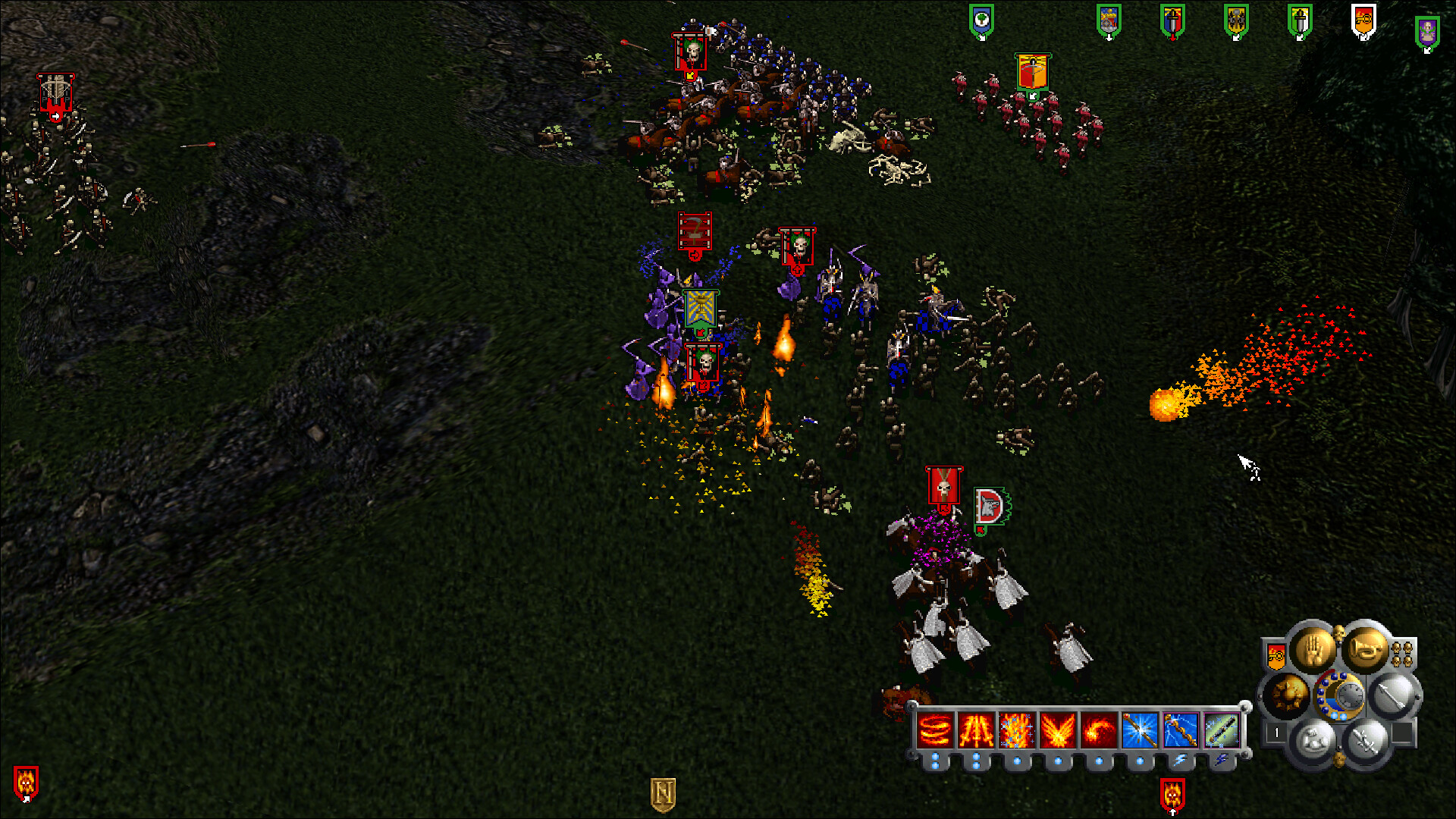
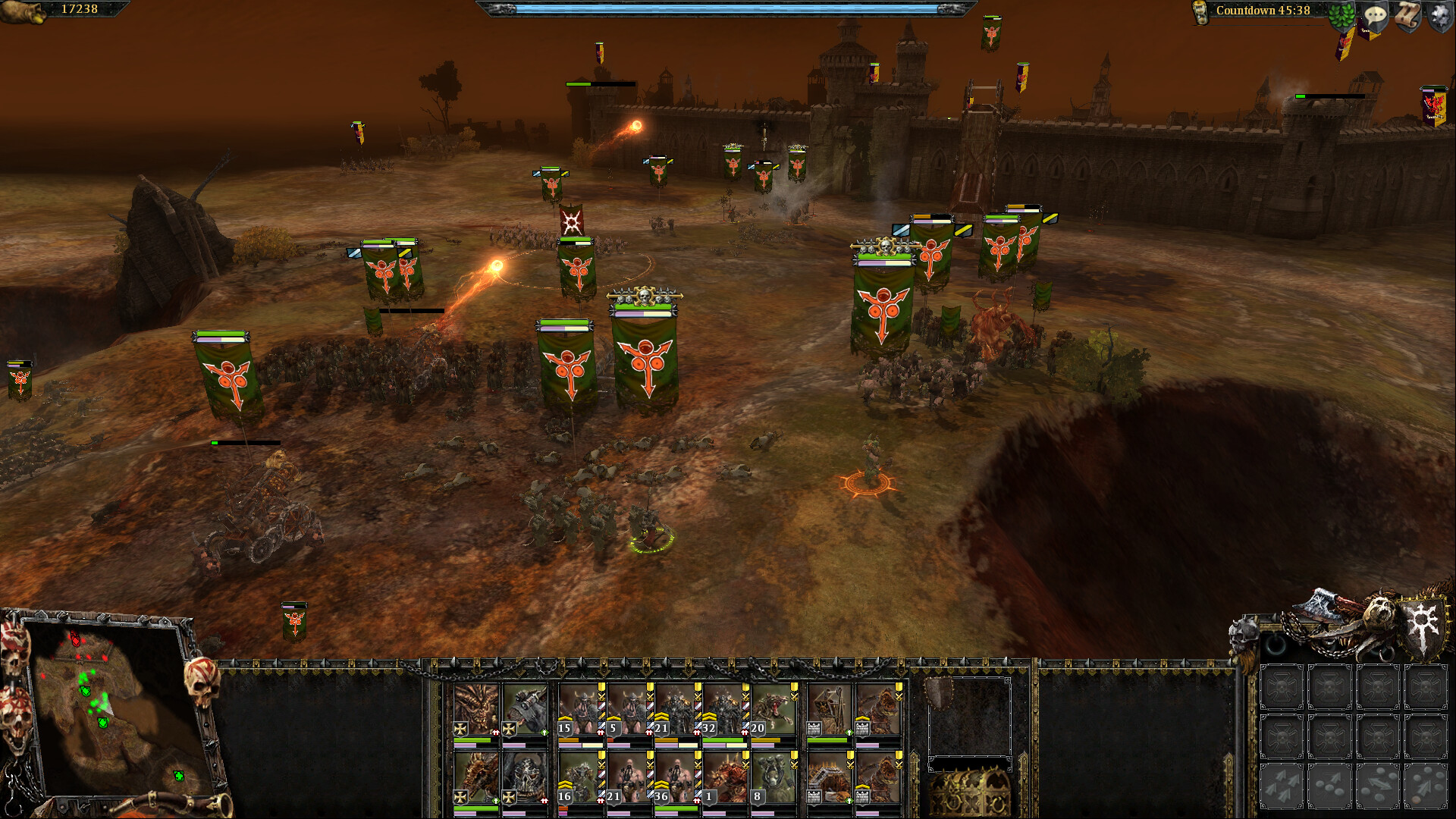
For games like Mark of Chaos, Shchuiko explained “there was no community around it because it was fully encrypted… On top of that, the editor, which the developers raised along with the original game, wasn’t updated to work when the expansion came out, so you don’t have a working editor. It was really crippled.”
On the other hand, Dark Omen is a good example of a game that’d stayed alive over the years due to community work. “We’re trying not to change the game in a way that mods stop working. Sometimes there are slight changes that might make it more complex to launch mods, but they still can work. Not to mention that thanks to the modding community we know more and learn more about what’s wrong with the game nowadays… The best source of information and updates (after so long) is the community because they live with this game.”
Beyond the Warhammer IPs, SNEG has done great work so far preserving old games that were lost to time. But how do they decide what’s worth bringing back and pushing to re-release commercially? “We believe commercial preservation is the best way to expose the games and give them to as many people as possible, through demand or interest in them. That’s where it starts on certain things; it has certain renown, but not always. More or less, it has to have a certain audience hoping to have a game,” Shchuiko told us. “It might be important for the moment of time in history of video games, but there has to be something special about it. And then it has to have value when it comes to the game design; being a great replica of something by a famous studio or a great thing on its own or maybe it’s a game which went in a direction which never really got explored afterwards.”
Klapovskiy admitted “some projects that we’re bringing back are our pure passion, things that we loved as kids and brought back.” The math doesn’t work at times: “A few projects where we’ll never make money, we’ll just bring them because we want it and wanted to share our passion with others… I think all these games deserve to be present in this or that form.”
In the age of AI taking off and not everyone being on board with some (or many) of its uses – and with PR crises proliferating as we speak – we had to ask these veterans about their stance and whether AI-powered tools could help their work. “On the basic level, I think it’s very hard to ignore the fact all of us are using AI in some shape or form,” Shchuiko pointed out while referring to search engines and regular software. “Is it really critical for bringing up the games? I cannot say so. The most complex thing with the classic games is the rights and the source code. That didn’t change with AI. If certain development studios use AI for coding assistance, that’s up to the teams. We don’t have a direct usage at SNEG.”
Klapovskiy said AI “can speed up certain things and help understand the logic of certain games, especially if we don’t have source code, but it can’t do many things because of its own limitations.” Shchuiko jokingly added there’s no “remaster the game” button.
To wrap up, I was asked which games I’d like to see brought back from the grave if there were no limitations. My first pick was a deep cut: Zono’s Aliens vs. Predator: Extinction, a very off-beat and moody RTS that was exclusive to PS2 and Xbox. Of course, I couldn’t leave behind the two Lord of the Rings: Battle for Middle-earth titles, which can be played fine thanks to the community nowadays, but haven’t been available officially for a very, very long time. Both tricky to track down and re-release due to IP and rights limitations, but a man can dream.
Klapovskiy would personally love to bring back The Neverhood, a point-and-click adventure with claymation visuals and animations. “The game is so unique, I think there are no other games like this.” Other titles the SNEG co-founders agreed they’d love to touch up and unearth are the old Dune games and Black & White. “Never say never.”
Before we said our goodbyes, Shchuiko underlined the importance of being vocal about the video games we love even if they’re no longer available: “Continue talking about them, be vocal, write in a Facebook post, vote for them when there’s a place to vote for them. Just be active about your passion, because people notice.”
The Warhammer Classics collection was released and updated on PC via Steam on April 13, 2026. Seven of them were added to Steam for the first time ever.
For the latest gaming news, follow GameWatcher on BlueSky, check out our videos on YouTube. We sometimes include affiliate links in our posts, which grants us a small commission, thank you. Please support independent Games Media. ❤️