

Scientists saw a sperm whale giving birth. And then things got weird
Sperm whales are known to socialize, but scientists were stunned when they saw a group of sperm whales gather as one of them gave birth
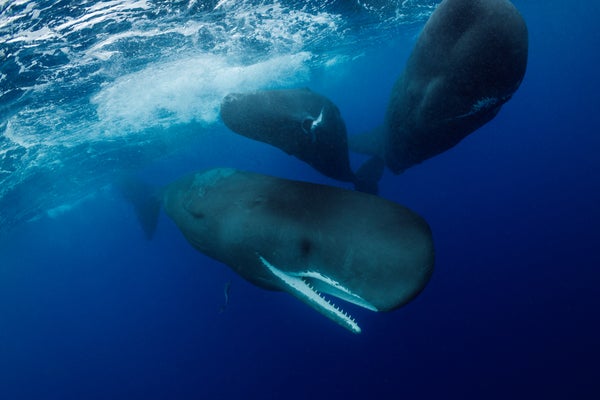
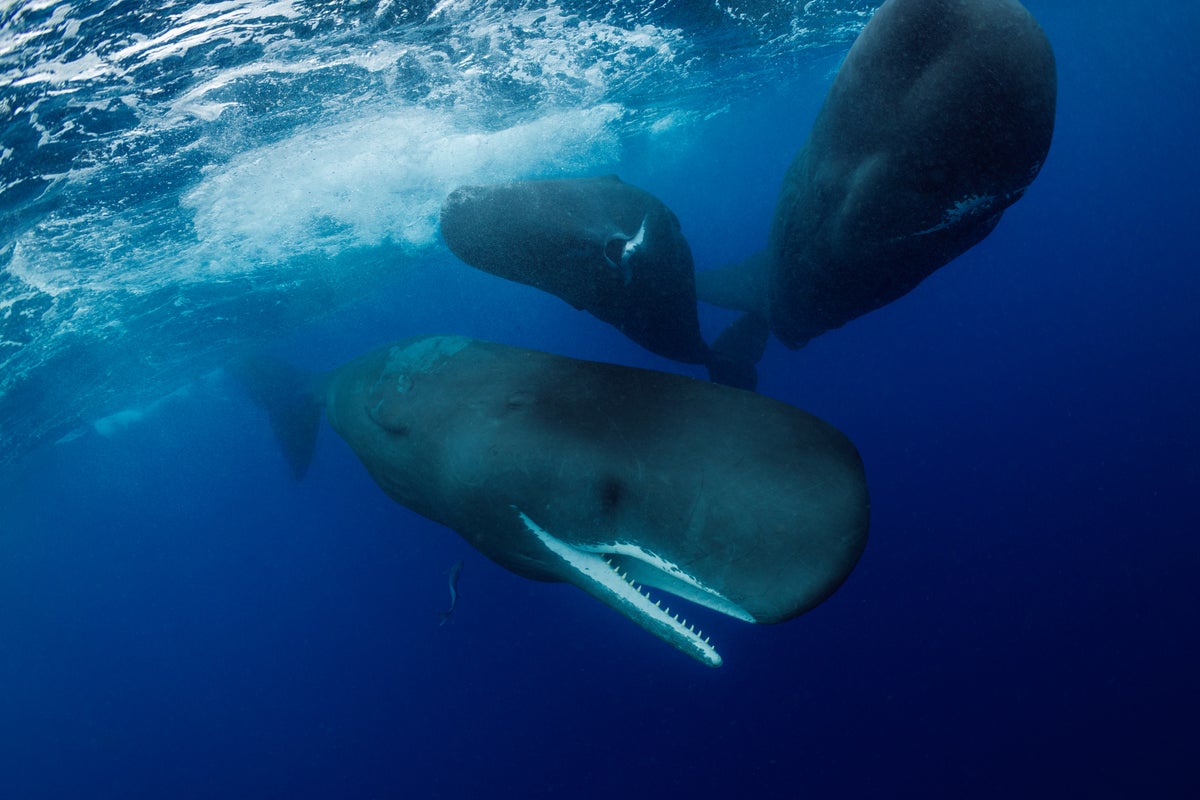
A sperm whale family swims together as part of a culturally distinct clan near Dominica in the Caribbean Sea.
Photo by Brian J. Skerry/National Geographic
On July 8, 2023, whale biologist Shane Gero was on a boat off the coast of Dominica when he realized something “strange” was going on. A group of sperm whales known as “Unit A” that he and his colleagues were tracking appeared to be floating calmly near the Caribbean Sea’s surface.
“That’s not the kind of behavior you normally see,” Gero recalls. The whales didn’t seem to be socializing with one another, and they were not asleep because that happens underwater. “It was something different,” he says.
And that’s when things took a sudden turn. The whales began diving and rolling in the water, and there was “a big gush of blood,” Gero recalls.
On supporting science journalism
If you’re enjoying this article, consider supporting our award-winning journalism by subscribing. By purchasing a subscription you are helping to ensure the future of impactful stories about the discoveries and ideas shaping our world today.
His first thought was that there must have been an attack: earlier that day his team had spotted pilot whales, which are known to show aggression toward sperm whales. But then a “little head” popped into view—bloop—and a fluke, Gero says. It wasn’t an attack at all—it was a birth.
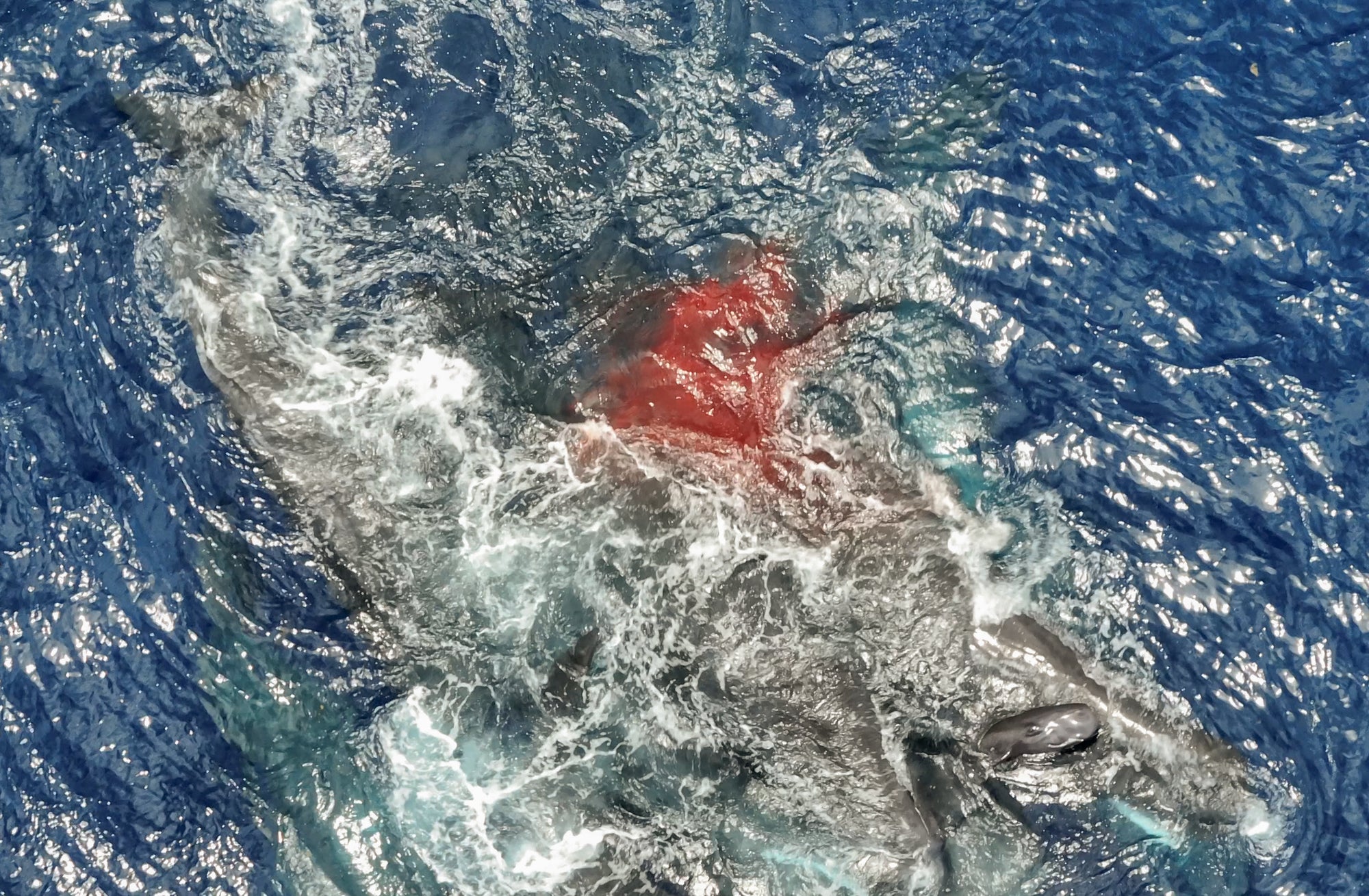
A newborn sperm whale emerges from the water post-birth (bottom right) and is supported by female sperm whales from a group called Unit A.
“I was in total shock and awe,” he recalls. Gero and the rest of the crew “jumped into high gear.” They scrambled to collect photographs and drone footage of the event, at some points even cooling the overheating drone batteries in a freezer on their boat.
Now, in a new analysis of that footage using machine learning, Gero and his colleagues show that two “matrilines”—independent, female-led groups—of sperm whales in Unit A appeared to cooperate to assist in the calf’s birth. This behavior has never been observed in such detail before in this species. The findings could help scientists better understand sperm whale behavior and communication during birth.
“This is really the first time that someone was there before the birth, during the labor, during delivery, after and that was able to quantify what was going on,” Gero says. He is lead biologist for Project CETI (Cetacean Translation Initiative), an organization working to decode whale communication, and a scientist in residence at Ottawa’s Carleton University.
With video footage, Gero and his team showed how the group worked together to lift and hold the newborn sperm whale near the surface with their bodies. All 11 members of Unit A assisted in the process at one point or another—most of the work was done by Rounder, the calf’s mother, her half-sister Aurora and Ariel, a young female that was not directly related to the mother. After a few hours, the two groups returned to their usual segments. The results were published on Thursday in the journal Science.
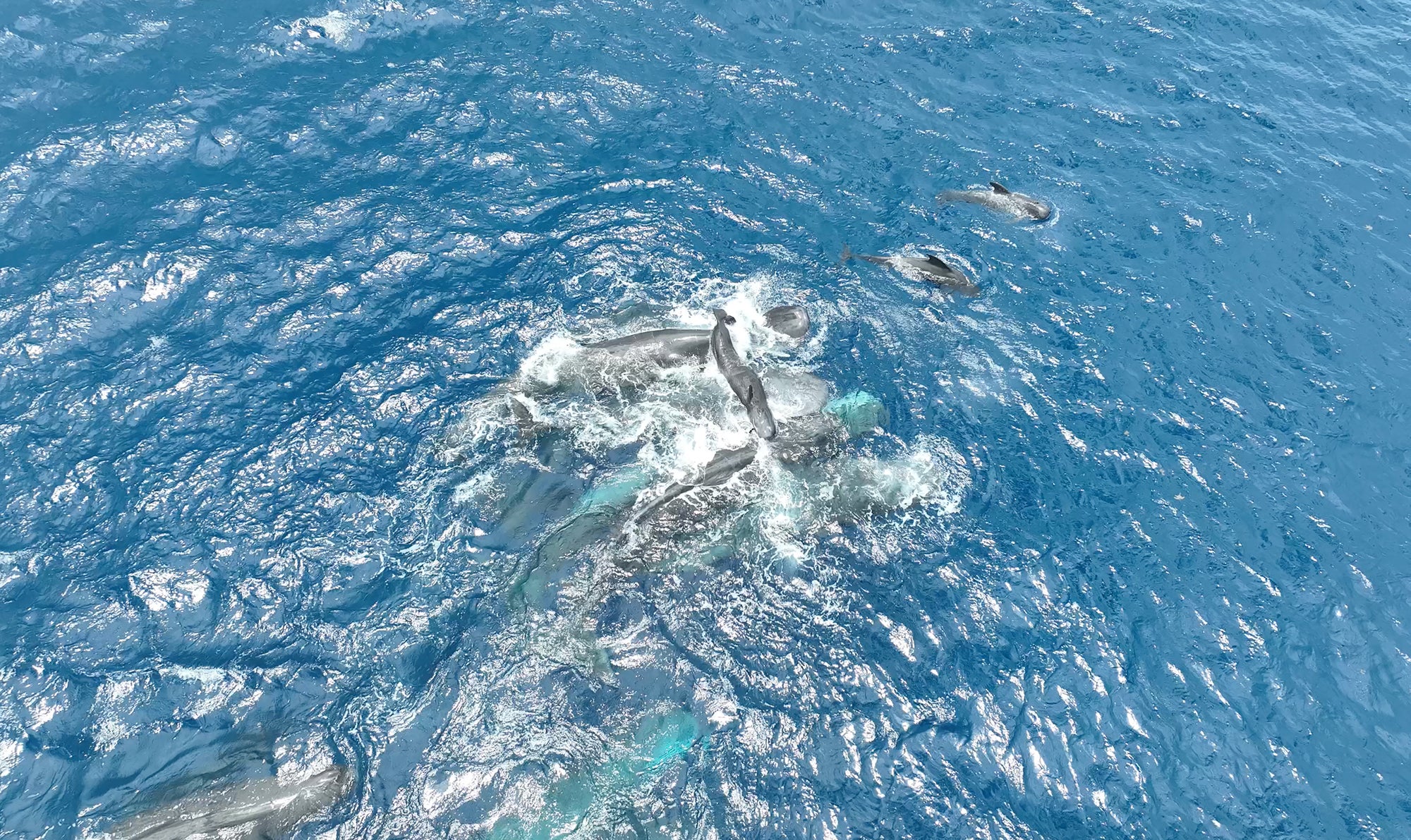
Female sperm whales from Unit A hold the newborn sperm whale calf above the water.
Of course, humans typically assist one another during birth. And so do some primates, such as bonobos and snub-nosed monkeys. But this kind of behavior had previously been “considered characteristic only of humans and their close relatives,” the study authors note.
It’s unclear why, exactly, the whales gathered to help the birth. Part of the reason could have been as a defense strategy to protect the calf from danger, Gero says. (The lurking pilot whales did eventually show up to the scene, something he and his team are working to better characterize in the footage.) Or the move could have been to help the calf stay afloat—unlike adults, young sperm whales tend to sink and need to swim harder to reach the surface to breathe.
The team hopes to further analyze the footage alongside recordings of the whales’ clicks to better understand how the group communicated during the birth.
The researchers also plan to keep tracking the calf, which is still zipping through the Caribbean, “alive and well,” according to a Project CETI spokesperson.
It’s Time to Stand Up for Science
If you enjoyed this article, I’d like to ask for your support. Scientific American has served as an advocate for science and industry for 180 years, and right now may be the most critical moment in that two-century history.
I’ve been a Scientific American subscriber since I was 12 years old, and it helped shape the way I look at the world. SciAm always educates and delights me, and inspires a sense of awe for our vast, beautiful universe. I hope it does that for you, too.
If you subscribe to Scientific American, you help ensure that our coverage is centered on meaningful research and discovery; that we have the resources to report on the decisions that threaten labs across the U.S.; and that we support both budding and working scientists at a time when the value of science itself too often goes unrecognized.
In return, you get essential news, captivating podcasts, brilliant infographics, can’t-miss newsletters, must-watch videos, challenging games, and the science world’s best writing and reporting. You can even gift someone a subscription.
There has never been a more important time for us to stand up and show why science matters. I hope you’ll support us in that mission.