
If more capability can fit into smaller budgets, designers may need to rethink what truly defines entry-level microcontroller performance today. What does STMicroelectronics have for them?
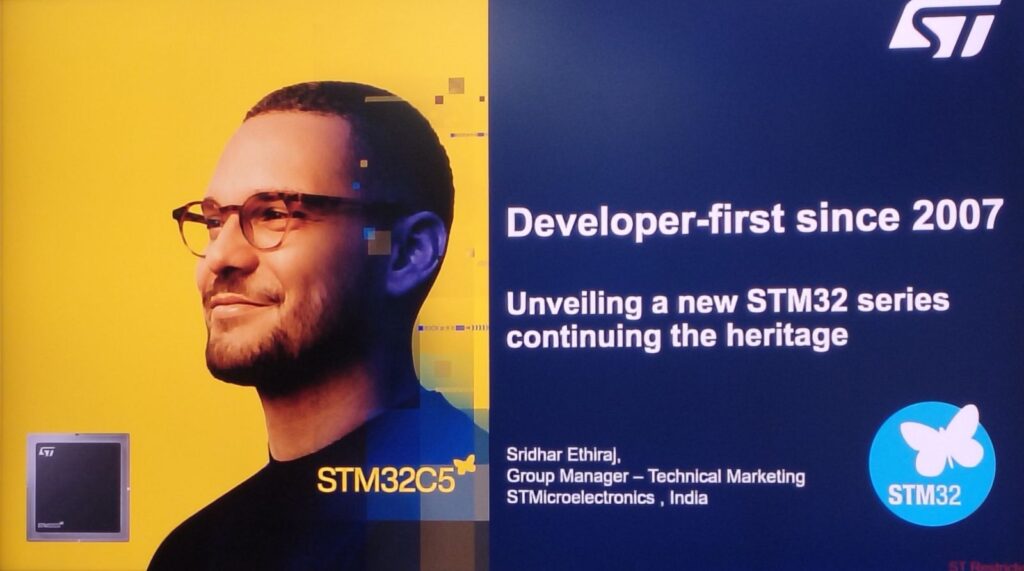
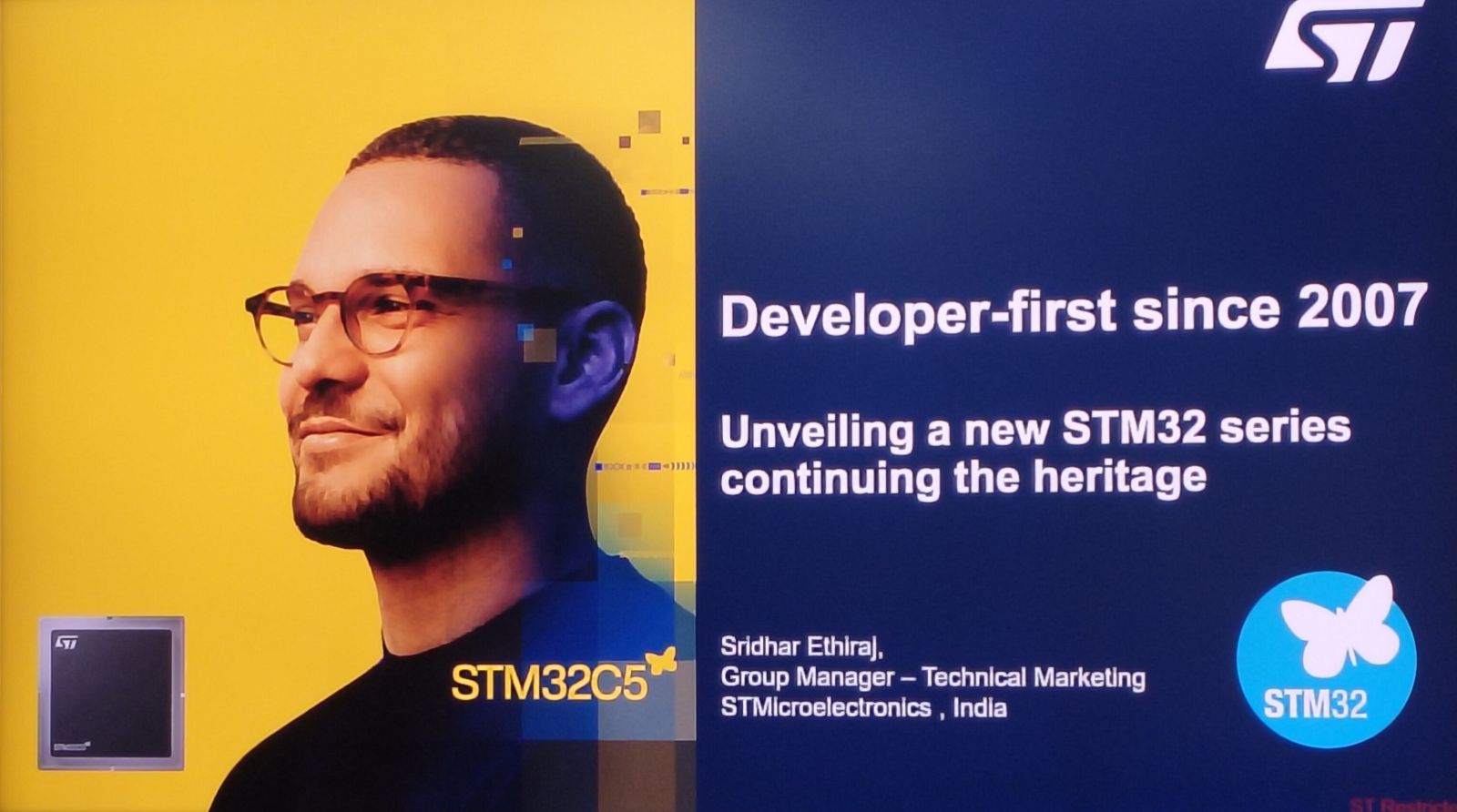
STMicroelectronics has introduced a new entry-level microcontroller series designed to bring higher performance, connectivity, and scalability into cost-sensitive designs. With pricing starting at around 87 cents in volume, the STM32C5 series is positioned to reduce BOM costs while enabling more capable embedded systems across industrial, consumer, and infrastructure applications.

The announcement reflects a broader shift in embedded design priorities. Instead of trading capability for cost, the new series brings advanced processing into segments that have traditionally relied on simpler architectures. As Sridhar Ethiraj, Group Manager, Technical Marketing, explained during the briefing, “Customers earlier had to move to higher series for better performance, which increased cost. With this, we are bringing that capability into an entry-level space.”
At the application level, this translates into greater flexibility for developers working across smart home systems, industrial automation, EV charging infrastructure, and control applications. The ability to integrate more processing, memory, and connectivity within a constrained budget allows designers to consolidate functions, improve responsiveness, and avoid unnecessarily migrating to higher-end MCUs.
One of the key advantages lies in the balance between performance, power efficiency, and cost. Built on a 40 nm process, the device delivers higher clock speeds while maintaining low dynamic power consumption, making it suitable for energy-conscious designs. Timer optimisations further support applications such as heating systems, where precise control and timing are critical for both efficiency and safety.
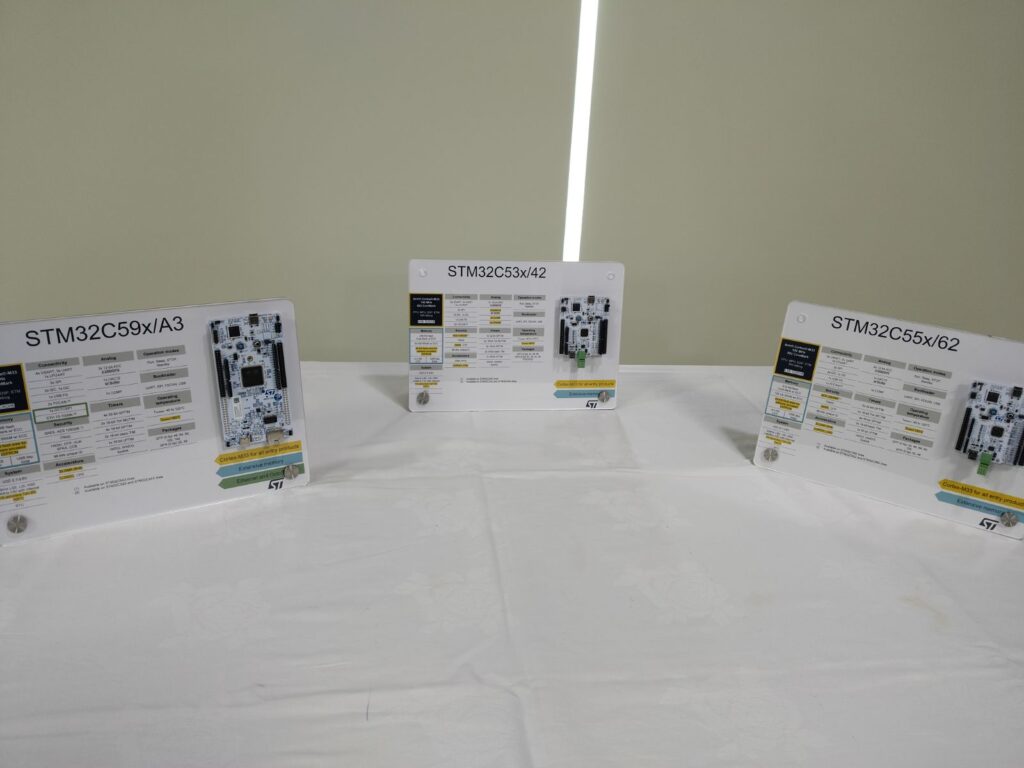
From a system perspective, integration plays a central role. The device incorporates memory, peripherals, and a high-accuracy internal oscillator, reducing the need for external components and directly contributing to BOM optimisation. Platform-level integration within the broader STM32 ecosystem also enables easier migration, code reuse, and faster development cycles.
The series also combines an Arm Cortex-M33 core running up to 144MHz with up to 1 MB of Flash and 256 KB of SRAM, along with floating-point and DSP capabilities. Connectivity options such as USB, FD-CAN, I3C, and Ethernet in select variants extend its usability in networked and real-time environments. Security features, including cryptographic support and certification readiness, further strengthen its position in connected applications.
Additionally, the series is supported by an updated STM32Cube ecosystem with enhanced configuration tools. This improves code generation and compatibility with modern development environments, aimed at accelerating time to market.
Summing up the intent behind the launch, Sridhar said, “The idea is not just to reduce cost, but to bring meaningful performance, integration, and efficiency into entry-level designs, so customers no longer have to compromise between capability and affordability.”