
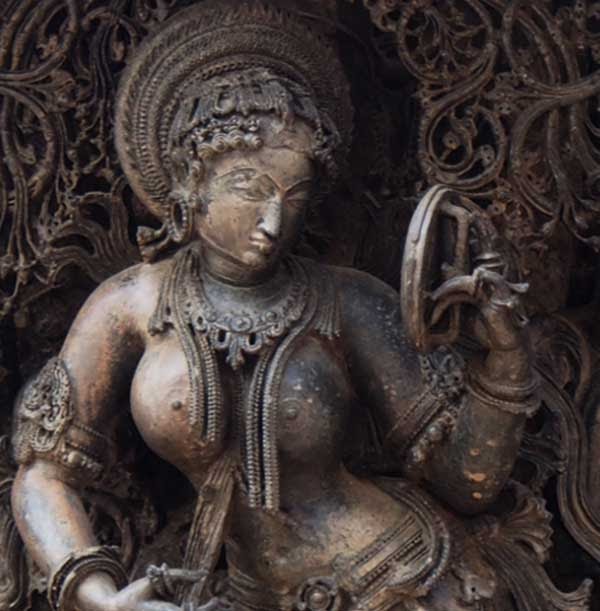
Celestial Grace in Stone: Understanding the Sacred Symbolism of Madanikas in Hindu Temples
Introduction to Madanikas
Madanikas, also known as Salabhanjikas, are exquisitely carved celestial nymphs that adorn Hindu temple architecture across India. These feminine figures represent one of the most captivating aspects of temple art, showcasing divine beauty, grace, and spiritual symbolism. The most celebrated examples are the 42 magnificent sculptures at the Chennakesava Temple in Belur, Karnataka, constructed during the illustrious Hoysala Empire in the 12th century. Each sculpture stands as a masterpiece, depicting women in various elegant poses—dancing with abandon, playing musical instruments, adorning themselves, or engaged in daily activities—all carved with extraordinary precision and artistic excellence.

Spiritual and Religious Significance
In Hindu tradition, Madanikas embody multiple layers of meaning. They are often identified as attendants of Kamadeva, the god of love and desire, who inspire delight, beauty, and divine love in the hearts of devotees. These celestial beings bridge the earthly and divine realms, reminding worshippers of the sacred feminine energy that permeates creation.
The presence of Madanikas in temple architecture reflects the Hindu philosophical principle of balance between masculine and feminine energies—Purusha and Prakriti. Just as temples feature sculptures of warriors and gods representing masculine strength and valor, Madanikas celebrate Shakti, the divine feminine power. This duality is essential in Hindu cosmology, where neither aspect is complete without the other.
Representation of Feminine Excellence
The Madanikas serve as historical testimonies to the elevated status and accomplishments of women in ancient Indian society. These sculptures depict women as skilled practitioners of the 64 Kalas—traditional arts and sciences that included music, dance, painting, poetry, and various other refined skills. The intricate portrayal of musical instruments like the veena, flute, and drums, alongside various dance mudras, demonstrates that women were not merely decorative figures but were celebrated for their intellectual and artistic achievements.
The sculptures show women engaged in activities that required years of dedicated practice and mastery—playing complex musical instruments, performing sophisticated dance movements, and displaying refined aesthetic sensibilities. This artistic documentation challenges any notion that ancient Indian women were confined or restricted; instead, it reveals a society that honored and celebrated feminine talent, beauty, and accomplishment.
Architectural and Aesthetic Purpose
Beyond their symbolic significance, Madanikas serve an important architectural function. These sculptures transform temple walls into living narratives, creating a visual symphony that elevates the devotee’s experience from the mundane to the sacred. The Hoysala artisans, in particular, achieved unparalleled excellence in rendering the human form with realistic proportions, fluid movement, and delicate ornamentation including jewelry, hairstyles, and garments.
The positioning of Madanikas on temple brackets and pillars also demonstrates sophisticated engineering knowledge, as these sculptures often appear to support the weight of the structure above them, symbolizing how the feminine principle upholds and sustains creation itself.
Enduring Legacy
Temples across India—from Khajuraho to Konark, from Hampi to Halebidu—feature variations of Madanikas, each reflecting regional artistic traditions while maintaining the core symbolism of divine feminine grace. These sculptures continue to inspire artists, scholars, and devotees, serving as eternal reminders of the sacred feminine principle in Hindu spiritual tradition and the rich cultural heritage of temple architecture in India.