
A weary caregiver and her successful sister clash over sacrifice and faith, only to discover that each has been quietly carrying a life the other cannot see.
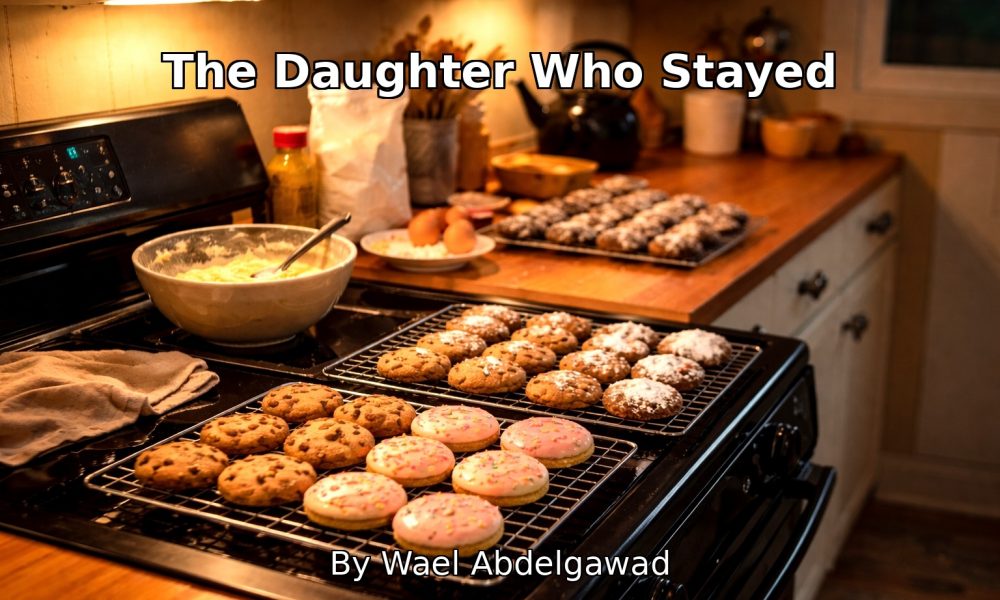
The kitchen smelled faintly of sugar and vanilla, with something warmer underneath, perhaps yeast and butter lingering from the cookies that had come out of the oven an hour ago. Two cooling racks sat on the counter, with four varieties of cookies waiting to be decorated or frosted, while a smear of icing clung to the edge of a metal bowl, half-whipped.
Zaynab wiped her hands on a dish towel, then wiped them again, though there was nothing left on them. She felt jittery and bottled up.
Keep supporting MuslimMatters for the sake of Allah
Alhamdulillah, we’re at over 850 supporters. Help us get to 900 supporters this month. All it takes is a small gift from a reader like you to keep us going, for just $2 / month.
The Prophet (SAW) has taught us the best of deeds are those that done consistently, even if they are small.
Click here to support MuslimMatters with a monthly donation of $2 per month. Set it and collect blessings from Allah (swt) for the khayr you’re supporting without thinking about it.
She hadn’t been to the gym in three days. In that time she had lifted her mother in and out of bed, gone on grocery runs, made midnight deliveries, measured flour, cracked eggs, and answered the same questions more than once because her mother forgot or pretended to forget. She had been moving constantly without ever feeling spent, and the energy had nowhere to go. It sat in her chest and shoulders and jaw, making her restless, irritable, as if something inside her needed to break loose or it would harden into something worse.
She glanced at the clock. Her sister Heba would be here soon. She visited every Friday night.
Part of her looked forward to the interruption, the presence of another person in the house, someone who could take over for a few minutes even if only symbolically. But another part of her resented it. She resented the neatness of it, the way her sister could arrive, perform some act of kindness, and then leave again, returning to a life that moved forward instead of circling the same small rooms.
She knew it wasn’t fair, but that knowledge did nothing to soften the feeling.
“I’m going to the gym,” she said, tying her hair back with a rubber band she had stretched too many times. “Heba should be here soon.”
 From the recliner in the adjoining room, her mother shifted, the fabric creaking, while the television murmured low, some silly sitcom with canned laughter rising and falling in tired waves. It was an old-fashioned, non-digital TV. “I like a TV with a knob that I can turn,” her mother would insist. “Not one of those flat black monstrosities that look like portals to Jahannam.”
“If you stop at the store,” her mother said without looking away from the screen, “get me—”
“Eggs?” Her mother always wanted eggs.
“What?”
“Eggs.”
“No. Toilet paper.”
She paused, one sneaker half on. “So you don’t want eggs?”
“I want toilet paper and eggs.”
A small smile tugged at Zaynab’s lips. “So I was right.”
Her mother’s eyes flicked toward her then, still sharp. “About what?”
“About the eggs.”
A dry breath escaped her mother. “What do you want, a prize? If you wanted a prize, you should have gone to college. I would have bought you a graduation gift.”
Zaynab’s smile disappeared. There was no point in responding. If she did, an argument would ensue, which would end in her mother weeping and screaming, “I’m an old woman! Why are you torturing me?” Then they’d give each other the silent treatment for three days. Zaynab had been through that cycle often enough to know that she desperately needed to move past it.
The refrigerator hummed in the background as a car passed outside, its tires whispering over asphalt. Zaynab stood still, breathing softly.
“I’ll get your toilet paper,” she said.
A key turned in the lock. The door opened.
Her sister Heba stepped in, carrying a leather Versace tote bag over one shoulder.
“As-salamu alaykum!” she called out. Removing her blue hijab, she hung it on the hat rack near the door.
For a moment the younger sister simply stared, struck again by how much they resembled each other. They had the same eyes, the same shape of mouth, the same dark hair, though her sister’s was smoother, pulled back neatly instead of tied in haste. They were the same height, built on the same frame, but the differences lay in the details: flour on her own sleeve, a faint smear of icing near her wrist, scuffed sneakers, while her sister wore a pressed blouse, designer slacks, and shoes that looked expensive without needing to say so.
She’s the sister who matters, Zaynab thought bitterly. The one who made the right choices, went to law school, and pays all the bills. Mom’s favorite. The lawyer. Looking at her was like looking into a mirror that reflected a different life – the one she might have had if she had been less rebellious, stayed in school… and of course if Mom had not gotten ill.
“I said,” Heba repeated, “As-salamu alaykum. What is this, a house of zombies?”
“I was just about to go out for eggs and toilet paper,” Zaynab said.
Her sister winced slightly. “Don’t use the T-word, please.”
“The what?”
“Toilet paper. Just… say something else.”
She stared at her. “Like what? That’s what it is.”
Her sister set her bag down by the wall. “Hygienic paper.”
“That’s not a thing. No one says that.”
“They do in Spanish,” her sister replied as she slipped off her shoes. “Papel higiénico.”
A short laugh escaped. “You can’t help yourself, can you?”
“What do you mean?”
“Reminding me you went to college. I know you minored in Spanish. That doesn’t mean you have to come in here and try to change how we talk.”
Her sister held her gaze briefly, then looked away. “I didn’t mean it like that.” She crossed the room, bent, and kissed their mother on the cheek. “How are you, Mama? A bit heavy on the menthol skin cream, no? It’s like I’m in a mint factory.”
“It helps with her arthritis,” Zaynab said defensively. She was the one who’d applied it. Of course.
“You’re late,” their mother said.
“I came as soon as I could.”
“Are you pregnant yet?”
Heba winced as if she’d been slapped. But her voice remained soft as she said, “No, Mama.”
The older sister straightened, stepped back, and then hugged the younger one briefly. She smelled of perfume and hushed office spaces.
“Good to see you, Zuzu,” Heba said.
“Don’t call me Zuzu. I’ve told you that many times.”
“Sorry.” Heba swallowed, touched Zaynab’s shoulder. “Could you – could you be nice to me tonight, please? I really need it.”
Zaynab was about to utter something caustic, but, looking in her sister’s eyes, she saw the same confusion and loss that she saw in her own eyes in the mirror sometimes, as if she had been carrying the secret to life and death in a little glass ball, but had dropped it and watched it shatter.
So instead she turned away and gestured to the kitchen. “Have a cookie. It’s an order for tomorrow, but I always make extras.”
“They smell delicious.”
They wandered into the kitchen. Zaynab watched as Heba took a semi-sweet chocolate chip cookie, bit into it and moaned in pleasure. “You could go places with this.”
“What’s that supposed to mean? I’m doing my best.”
Heba sighed. “I know.”
Her sister moved to the sink, rolled up her sleeves, and turned on the faucet. Water splashed against a stack of plates. Grabbing the sponge, she began washing the dishes.
“I was going to do that,” Zaynab objected.
“I know. I’m just… staying busy. Moving my hands.”
The younger sister watched her, listening to the clink as Heba loaded the dishes into the dishwasher.
“I said I was going to do it.”
Her sister nodded, but continued.
“Why do you do that?” Zaynab asked.
“Do what?”
“Come in here and act like everything’s fine.”
“I’m not acting.”
“You are.”
Her sister rinsed another plate.
“You come in, you hug her, you kiss her, and you ignore the cruel things she says.”
“She’s our mother,” her sister said quietly.
“And I’m the one who’s here,” Zaynab countered. “I’m the one who stayed. I have to hear it every day. The put-downs and negativity.”
“I know.”
“No, you don’t. You can’t fathom what it’s like. I’m drowning in it.”
“It’s the illness talking. She doesn’t mean it.”
“I know that!” Zaynab snapped. She let out a breath in a huff and rested her elbows on the prep island in the center of the kitchen. “I feel like knocking someone out.”
Heba shot her a worried glance. “Not me or Mama, I hope.”
Zaynab gave an annoyed cluck of the tongue. “Of course not. Someone else. Some robbers. I want some robbers to break in so I can knock them out. Maybe even stab them.”
Her sister laughed loudly, then covered her mouth. “You can’t always get what you want,” she said, turning off the faucet.
Zaynab blinked. “But if you try sometimes…” She gestured to her sister, but only got a frown in return. “You just might find..” Still no response…. “you get what you need.”
Heba nodded. “That’s surprisingly profound.”
“It’s the Rolling Stones.”
“The what?”
“You’re kidding. You don’t know the Rolling Stones?”
“I don’t know music.”
“What do you listen to in the car?”
“The Quran.”
Zaynab felt the words settle between them like a recrimination. “You can’t know both?”
“I don’t have a lot of free time. I choose to invest it in the Quran.”
“So you’re a good Muslim and I’m not?”
“Not at all.” She met Zaynab’s eyes with a serious look. “It’s the other way around. You’re the one taking care of Mama. You’re the one earning Jannah. You stayed. You put your life on hold.”
“Someone had to.”
“I know.”
“And it wasn’t you.”
“I know.”
The younger sister frowned. “You say that like it’s nothing. You come here once a week, wash a few dishes, say a few nice things, then go back to your life.”
“My life isn’t -”
“What? Perfect? Yeah, right.”
Her sister’s breath caught. “Do you want my life?” she asked. “Do you want to trade? You want what I have? Working twelve hours a day, sometimes all night, coming home to -” She stopped.
“What?”
Heba looked down at her hands. “He left.”
“What do you mean?”
“My husband Basim,” her sister added quietly. “He left me.”
The refrigerator hummed, and a clatter sounded as ice cubes dropped into the tray in the freezer. In the living room, the canned laughter rose from the TV.
“You didn’t tell me.”
“I didn’t tell anyone.”
“Why?”
Her sister gave a faint, tired smile. “Because I come here and I see you, and I think… what right do I have to complain? You are the hero of the family, not me.”
Zaynab pursed her lips. “You’re mocking me.”
She was stunned when Heba suddenly seized her cheeks in both hands and brought her face almost nose to nose. “I’m not! I mean it. You are the believer here. You are doing what matters.”
She heard the truth in her sister’s words, and tears welled in her eyes. It felt like something was breaking inside her. “Okay,” she said. “Let go.”
But Heba did not release her. Zaynab smelled the sweetness of chocolate on her sister’s breath.
“Do you want my life?” Heba asked again, more gently. “Wallahil-atheem I will trade with you. I swear by Allah. You take my apartment, and I will quit my job and live here with Mama. Just say the words.”
“I don’t know! No I don’t! Let go now, majnoonah!”
With this, Zaynab burst into tears. Her sister released her, and she slid down to the floor with her back against the cabinets, face in her hands. Heba lowered herself to sit beside her, and put an arm around her shoulders.
“What’s going on in there?” Mom called from the living room. “Did you get my toilet paper?”
The younger sister exhaled. She wiped the tears from her cheeks with a flour-stained sleeve.
“Not yet,” she called back, then added, louder, “And call it papel high-jenico, Mom.”
A pause.
“What the devil is that?” their mother called back.
Zaynab turned toward her sister, and something unguarded passed between them. Heba smiled, and Zaynab felt a laugh rise up in her own chest before she could stop it.
“Happiness is where you find it,” Zuzu,” Heba said.
Zaynab wanted to say, “At least you have the opportunity. I’m stuck here.” But that argument had already passed. And studying her sister now, she saw what she had missed earlier: the dark circles beneath her eyes, the worry lines, the sadness.
So instead she quoted:
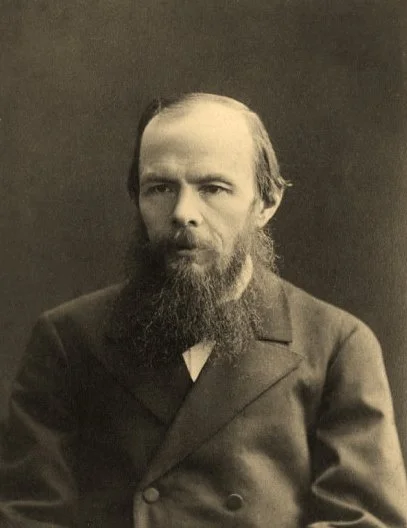
Dostoevsky
“Man is fond of counting his troubles, but he does not count his joys.”
Her sister looked at her. “What is that? Your Running Stones again? They’re actually quite profound.”
Zaynab chuckled. “It’s Dostoevsky.”
“You read Russian literature?”
“Just because I didn’t go to college doesn’t mean -”
“Zaynab,” Heba said in a low, threatening tone. “Don’t start that again.”
“Sorry. You’re right.”
“Wanna know what the Quran says?”
“Sure.”
“It says, Surely in the remembrance of Allah do the hearts find contentment.”
“So it’s that easy?”
“Why not? Allah created us. He knows what we need.”
“Then why aren’t all Muslims happy?”
Heba pursed her lips. “I suppose they’re attached to other things besides Allah.”
“Like thousand dollar Versace purses?”
Heba nodded slowly. “Yes. Like that.”
Zaynab stood, then sat back down with two cookies in her hand. She gave one to Heba. “Dark chocolate with macadamia nuts.”
They ate in silence. After a minute, Heba said, “You’re talented, mashaAllah.”
“I know. I’m the best.”
“And humble too,” Heba added.
Zaynab gave a snort of laughter.
“Do we have any nonfat milk?” the elder sister asked.
“No. We have two percent like normal people.”
Heba stood and poured them each a glass. They sat on the floor, eating their cookies and drinking cold milk. Warmth radiated from the oven even through the closed door, and water dripped softly from the sink.
THE END
Reader comments and constructive criticism are important to me, so please comment!
See the Story Index for Wael Abdelgawad’s other stories on this website.

Wael Abdelgawad’s novels – including Pieces of a Dream, The Repeaters and Zaid Karim Private Investigator – are available in ebook and print form on his author page at Amazon.com.
Related:
A Wish And A Cosmic Bird: A Play
Searching for Signs of Spring: A Short Story