
Politics
/
February 24, 2026
The 6-3 decision was a rare victory, but it was crafted out of conflicts that leave almost nothing certain—including future tariff rulings.

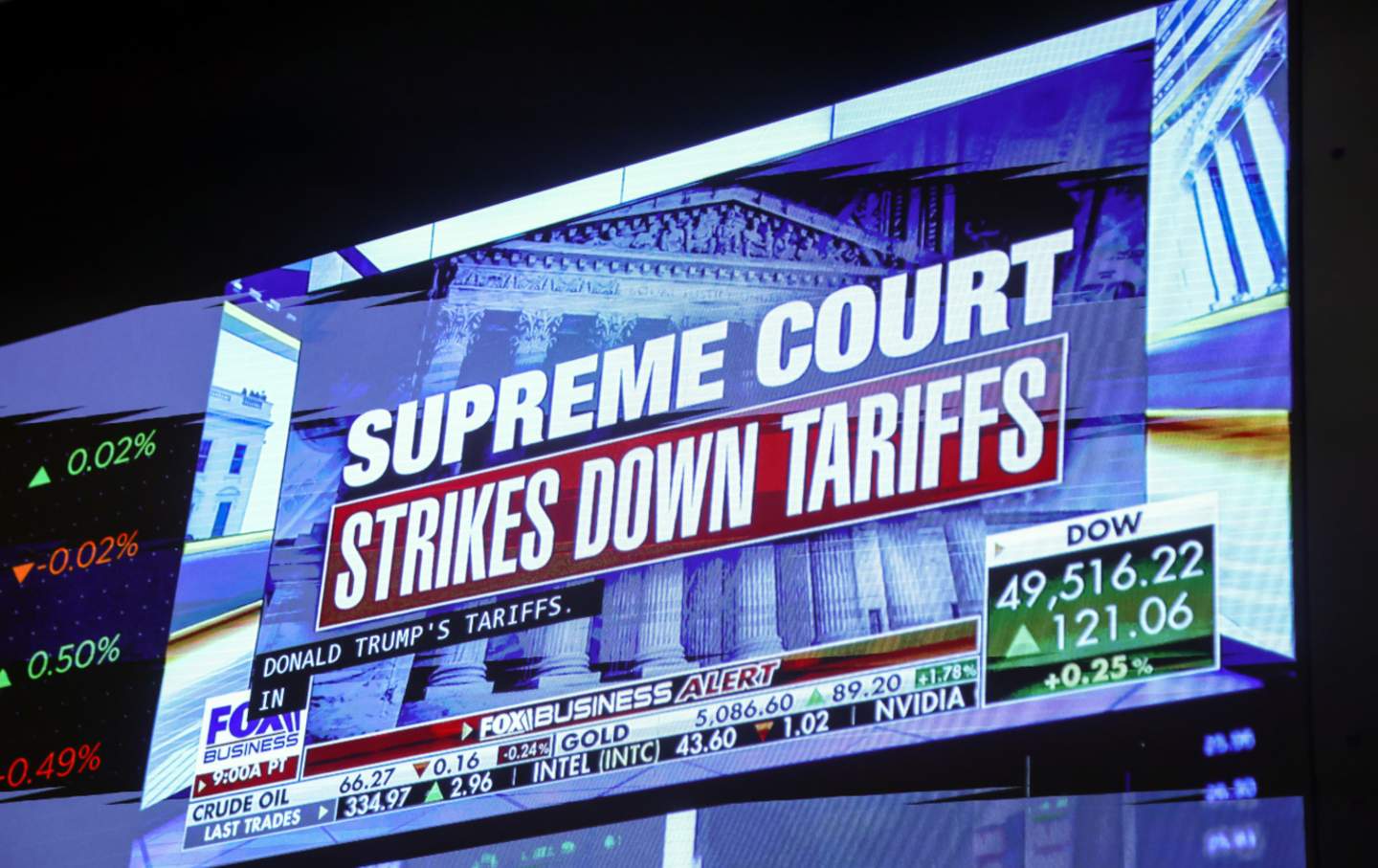
A television on the floor of the New York Stock Exchange broadcasts news about the Supreme Court striking down Donald Trump’s global tariffs.
(Michael Nagle / Bloomberg via Getty Images)
On Friday, Donald Trump delivered a characteristically unhinged press conference in the wake of his 6-3 defeat in Learning Resources, Inc v. Trump—better known as the tariffs case. The court ruled that the tariffs Trump issued under the International Emergency Economic Powers Act were unconstitutional, and the loss sent Trump into a rage. He castigated the justices who ruled against him, including the Republican ones, calling them “sleazebags” and “slimeballs” and accusing them of being under the influence of foreign powers. He praised the dissenting justices, specifically calling out alleged attempted rapist Brett Kavanaugh as a “genius.” He then seemed to treat the dissent as if it were the winning, majority opinion and imposed new 10 percent global tariffs under a different statute (which he raised to 15 percent over the weekend… because, why not), brushed off the statutory language dictating that his new tariffs must expire in 150 days, and said that the law is now “clear” about his authority to issue tariffs without going to Congress first.
Friends, nothing is “clear.” It’s not clear if the government will have to make restitution to the businesses that have been hit with illegal taxes under the Trump administration’s tariff regime. (This is what the plaintiffs in Learning Resources were actually asking for). It’s not clear if the majority of the Supreme Court will approve of these new tariffs. And if they don’t approve, it’s not clear that Trump will follow the court’s orders when it rules against him. The only thing that is clear is that the global trade economy remains beholden to the whims of a madman, while American consumers will continue to pay the price for Trump’s petty international squabbles.
One reason for all this confusion is that the Supreme Court’s conservatives are split on how to apply what they call the “major questions doctrine.” The court didn’t actually use the doctrine in this case, but the conservatives wanted to. The liberals held firm and Trump lost on different grounds, but most of the hundreds of pages of the decision involved the Republicans sniping at each other over this idea.
According to those who believe in it, the major questions doctrine holds that for issues of economic or political “significance,” the Constitution does not intend for the president to act unilaterally. “Major” issues must be decided through legislation, and if Congress wants to give the president unilateral powers, it must do so through clear, precise statutory language.
In theory, the major questions doctrine limits what a president can do without the support of Congress. That has been a long-term goal of conservatives since at least Lyndon Johnson and the Civil Rights Era. But in practice, it puts all the power in the hands of the Supreme Court. Whenever Republicans on the Supreme Court talk about restoring power to Congress, they’re really talking about grabbing power for themselves: What’s an issue of economic or political significance? Only the Supreme Court knows. What constitutes clear and precise statutory language? Only the Supreme Court knows. A reasonable person, president, or legislator cannot know what a “major question” is, or what language is clear enough to avoid running into a problem. Under the major questions doctrine, all roads lead to the Supreme Court. To paraphrase George W. Bush, the Supreme Court, not Congress or the president, becomes “the decider.”
The reason Republicans on the court spent so much time yelling at each other over this doctrine that didn’t actually decide the case is because the major questions doctrine has a critical flaw: it’s entirely made-up. It’s not written down anywhere—not in the Constitution, not in the Declaration of Independence, not in the Magna Carta, not in the Bible or the Mahabharata, it’s just not a historical thing. Nobody currently on the court learned about major questions doctrine in law school, because it hadn’t been invented back when they were in law school. Conservative law professors essentially concocted this “doctrine” circa 2014 (they say necessity is the mother of all invention, and the existence of a Black president certainly seemed to necessitate the invention of ways of curtail Barack Obama’s powers) as they were trying to find some way to limit the effectiveness of Obamacare. Justice Neil Gorsuch soon became the idea’s champion.
Current Issue

You can see why this doctrine is useful to a power-hungry Supreme Court justice. At its core, it allows the unelected members of the court to overrule the policies of an elected president because it deems those policies important. That’s a wild, unrestrained power. Imagine going through the trouble of winning an entire presidential election only to be told by the court that you can’t enact your policies because they are “politically significant.” The major questions doctrine places the Supreme Court first among allegedly equal branches of government.
All of the Republicans on the high court now agree that their imaginary power is real, but, luckily for those of us who would like to vote for our leaders, that’s all the Republicans can agree on when it comes to this doctrine. They don’t agree on where, legally speaking, the major questions doctrine comes from, when it should be used, or what (if any) limitations should be placed on the power they’ve given themselves. That’s why the doctrine has thus far only been used to stop the policies of Joe Biden. In the case of Biden’s student debt relief policy, for instance, the Republicans could agree that they didn’t like the policy—and, since they didn’t have any constitutional or legal reasons to block it, they invoked the major questions doctrine to stop it.
The tariffs are a different matter. The Republicans on the court didn’t agree that Trump’s tariffs were bad policy, so they couldn’t agree on whether or even how to use their new “Democrats lose” button against Trump. Justices John Roberts, Neil Gorsuch, and Amy Coney Barrett all said that the doctrine could be used to prohibit Trump’s tariffs, but the liberal justices—Sonia Sotomayor, Elena Kagan, and Ketanji Brown Jackson—refused to invoke the doctrine. Trump lost the case, 6-3, on the point that the International Emergency Economic Powers Act did not give Trump the authority he claimed to impose tariffs. That’s it, no major questions required.
Democrats in Congress could learn something from the liberal women on the Supreme Court. Despite being in the minority, and despite being offered a whackadoodle theory that would have secured them a short-term victory in this case, the liberal justices held firm, didn’t blink, and forced the conservative supermajority to try to find the votes for their anti-democratic “doctrine” among themselves.
The Republicans couldn’t. They fractured on how to use the major questions doctrine in the tariffs case, with justices Roberts, Gorsuch, Barrett, Kavanaugh, and Clarence Thomas all writing separately, each with their own pet theories on how it should work. I’ve seen this kind of splintering of a narrative before because… I watch all Star Wars content. The major questions doctrine is just as much of a fiction as “the Force.” If you watch Star Wars and its trillions of spinoffs, you know that the different writers give Jedis and Sith different powers, abilities, and weaknesses, based on what they need the Force-users to do in their stories. It’s the same with Republicans on the Supreme Court. One of the principal benefits of basing your universe on a fictional power is that it can do whatever you say it can do; the drawback is that different people will say it can do different things.
Only three Republican justices thought that the major questions doctrine should be used in the tariffs case, but even they disagreed about how and why. Chief Justice Roberts said that the major questions doctrine must apply to tariffs, if it applies to anything, because the power to tax (which is what a tariff is) is the most “major” economic issue to the country. Gorsuch said the doctrine is a bedrock constitutional principle (it’s not) that must be strictly applied in nearly all cases where the president acts without explicit Congressional authority (including this one). Barrett, in contrast, said that using the major questions doctrine is a “common sense” analytical tool, but need not be the only thing the court considers.
Popular
“swipe left below to view more authors”Swipe →
The dissenters also couldn’t come to a consensus. Kavanaugh said that the doctrine “does not apply in the foreign affairs context,” meaning that presidents can do as they please in foreign matters (like imposing tariffs) as long as there is a sliver of Congressional authority for them to do so. Kavanaugh’s formulation is a completely new thing that had never said about the doctrine until Friday, and reeks of him making something up on the fly to please Trump. Thomas, meanwhile, agreed with Kavanaugh, but went even further, basically crowning the president a pirate king completely untethered from Congress as soon as his desires hit the water’s edge. Justice Samuel Alito joined Kavanaugh’s dissent but didn’t write separately—I assume because he was too busy planning his retirement party.
All of this chaos means I really can’t tell you how the Supreme Court will decide the next tariff case. Will the Republicans band together to decide that the language in other statutes supports Trump’s tariffs “more clearly”? Or will they continue their sectarian war over whose imaginary friend is more powerful? And what about all of the non-tariff cases where major questions might also apply? Is birthright citizenship a “major question” or is it a foreign policy issue where the president is a god-king? Will Luke Skywalker ever be able to shoot lightning from his fingertips, or is that something only “bad” people do? Who can know? Who can ever know when the Supreme Court is just making it all up as it goes along?
What I can know is this: During tonight’s State of the Union address, Trump will threaten new authoritarian policies. Republicans will clap like trained seals for those policies, but they won’t use their legislative authority to pass them. Instead, Trump will make unilateral executive declarations, Congress will do nothing, and it will set off another round of lawsuits and appeals.
Eventually, the Supreme Court will tell us if the State of the Union is a “major question” or a pointless exercise.
More from The Nation
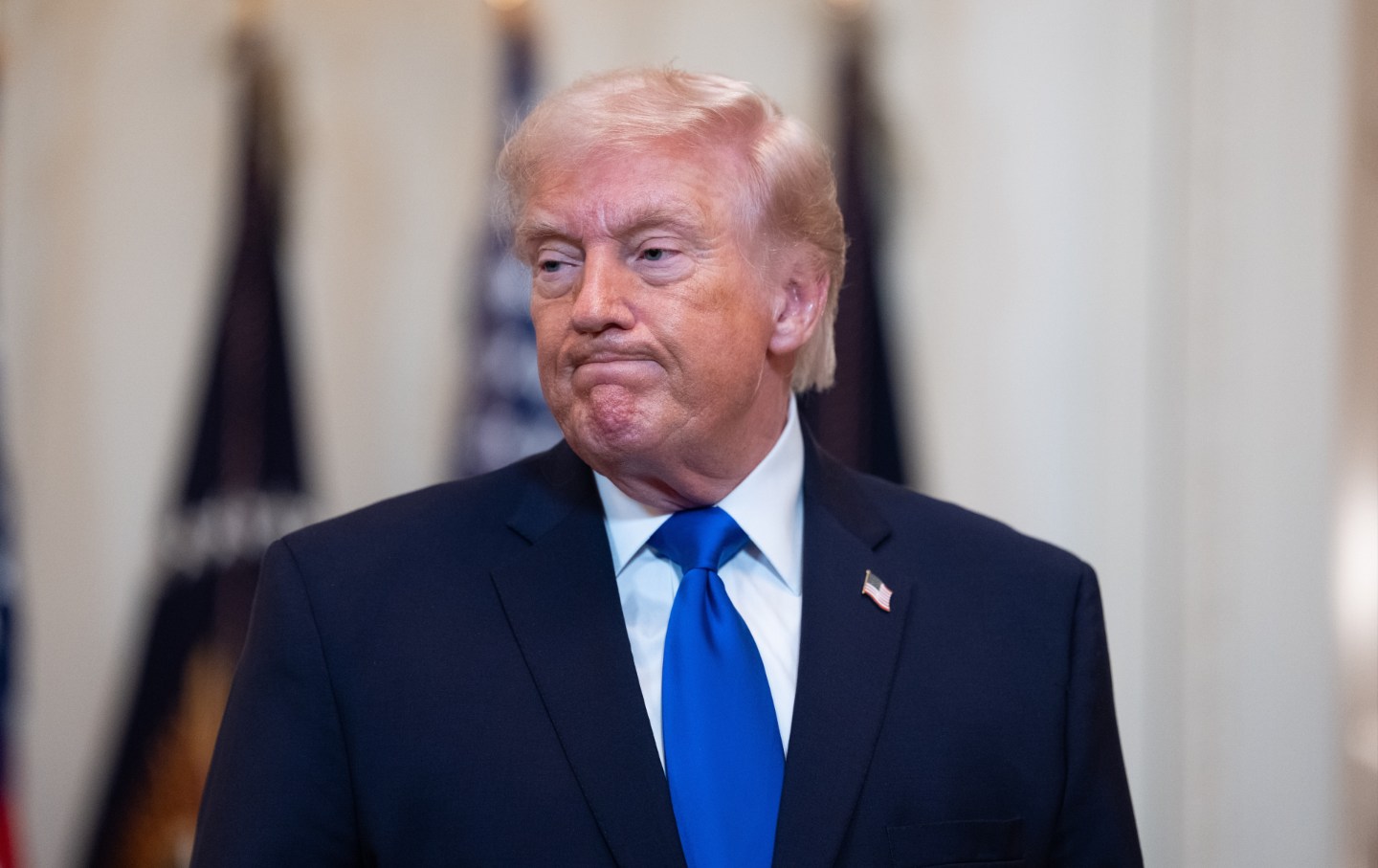
What’s a flopping demagogue to do? Lash out at his enemies, pretend he’s doing great, and bore us all into submission.
Jeet Heer
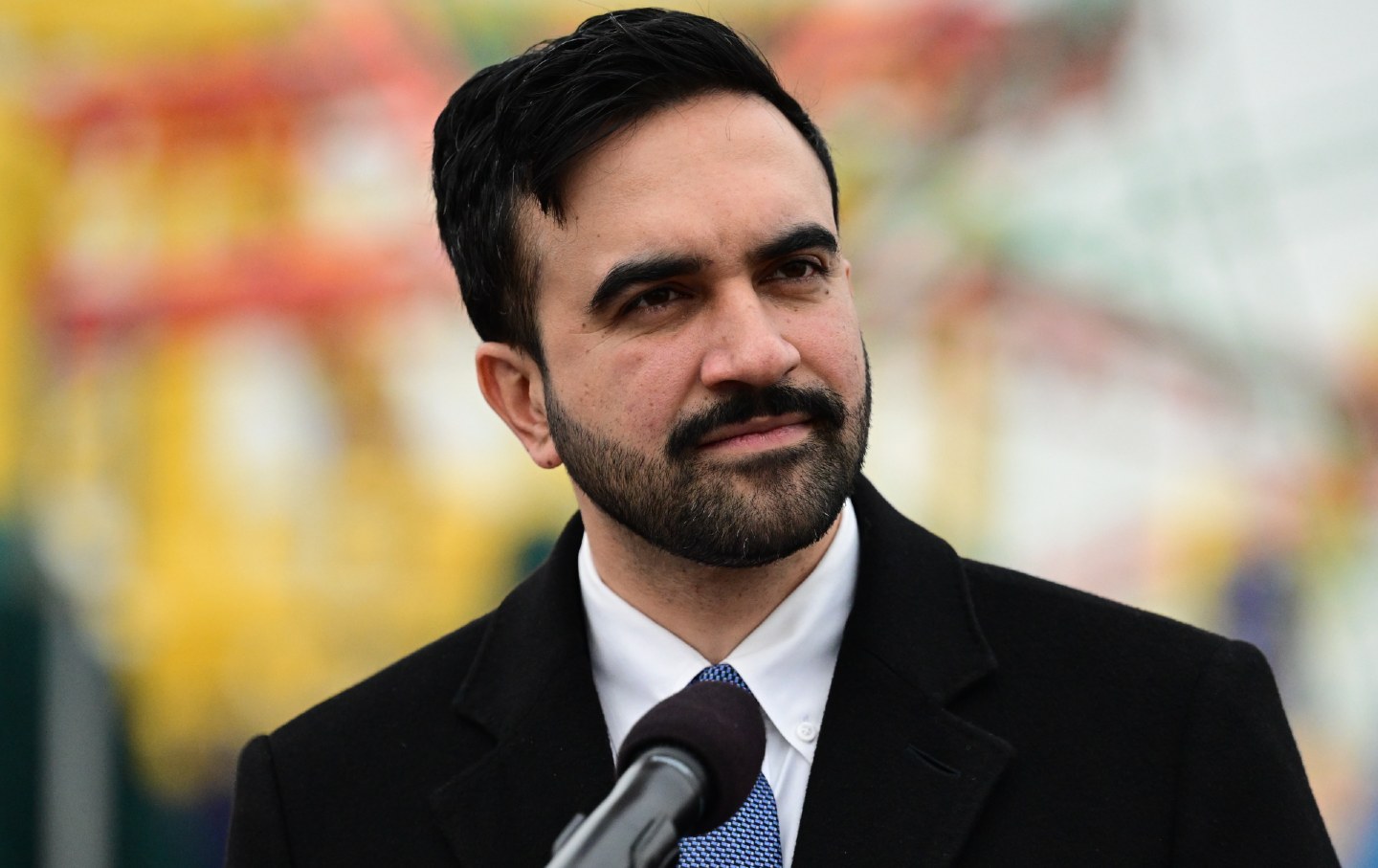
Zohran Mamdani announced that the Department of Consumer and Worker Protection will investigate employers where more than half their workers take no paid time off in a given year….
Prajwal Bhat
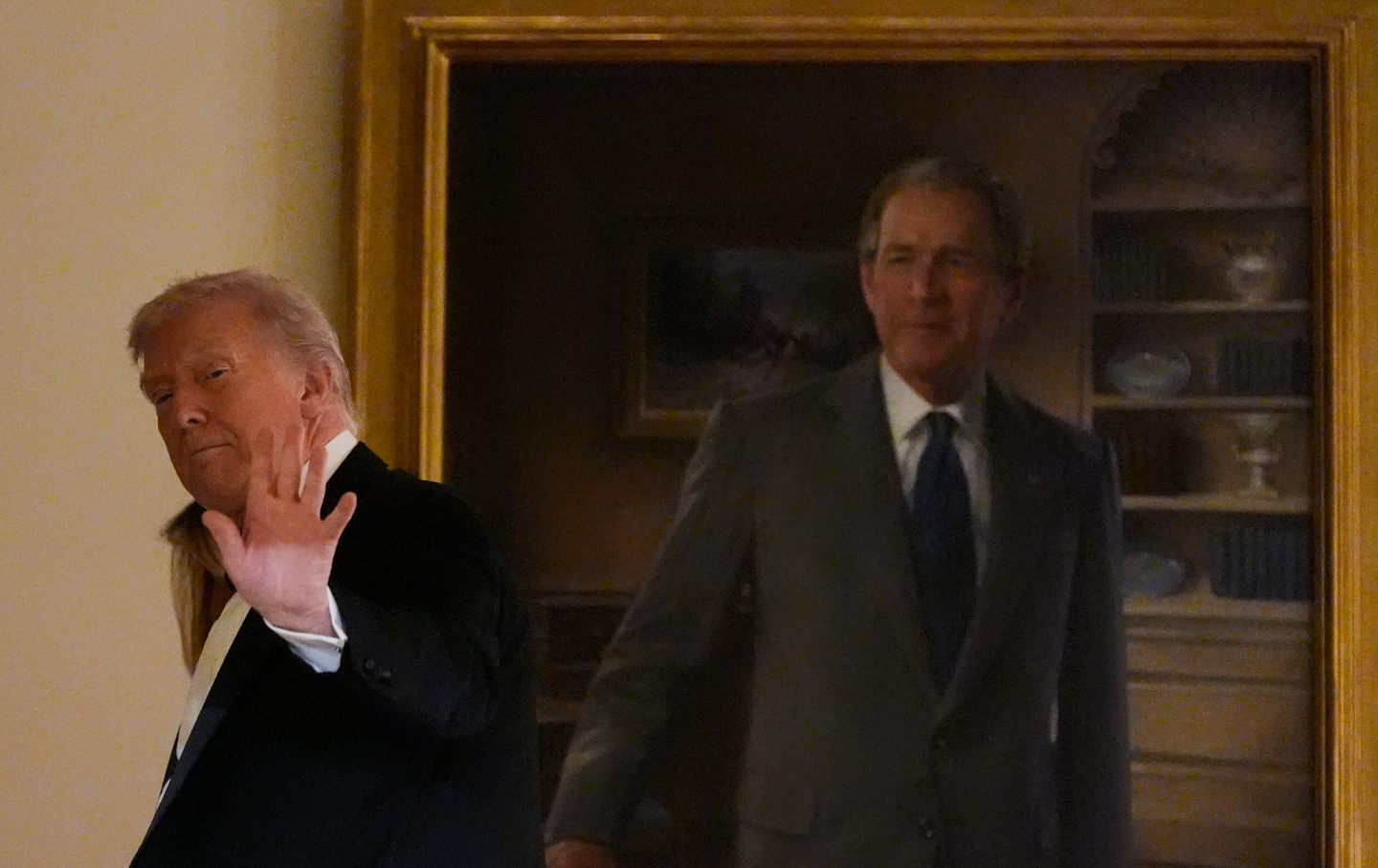
Remarkably, Trump seems on the verge of outdoing George W. Bush in reckless, stupid militarism.
Jeet Heer

As for virtually all SNAP recipients, my benefits have never been enough to cover monthly food expenses. Meanwhile, Trump calls any food aid at all “un-American.”
Gabbriel Schivone
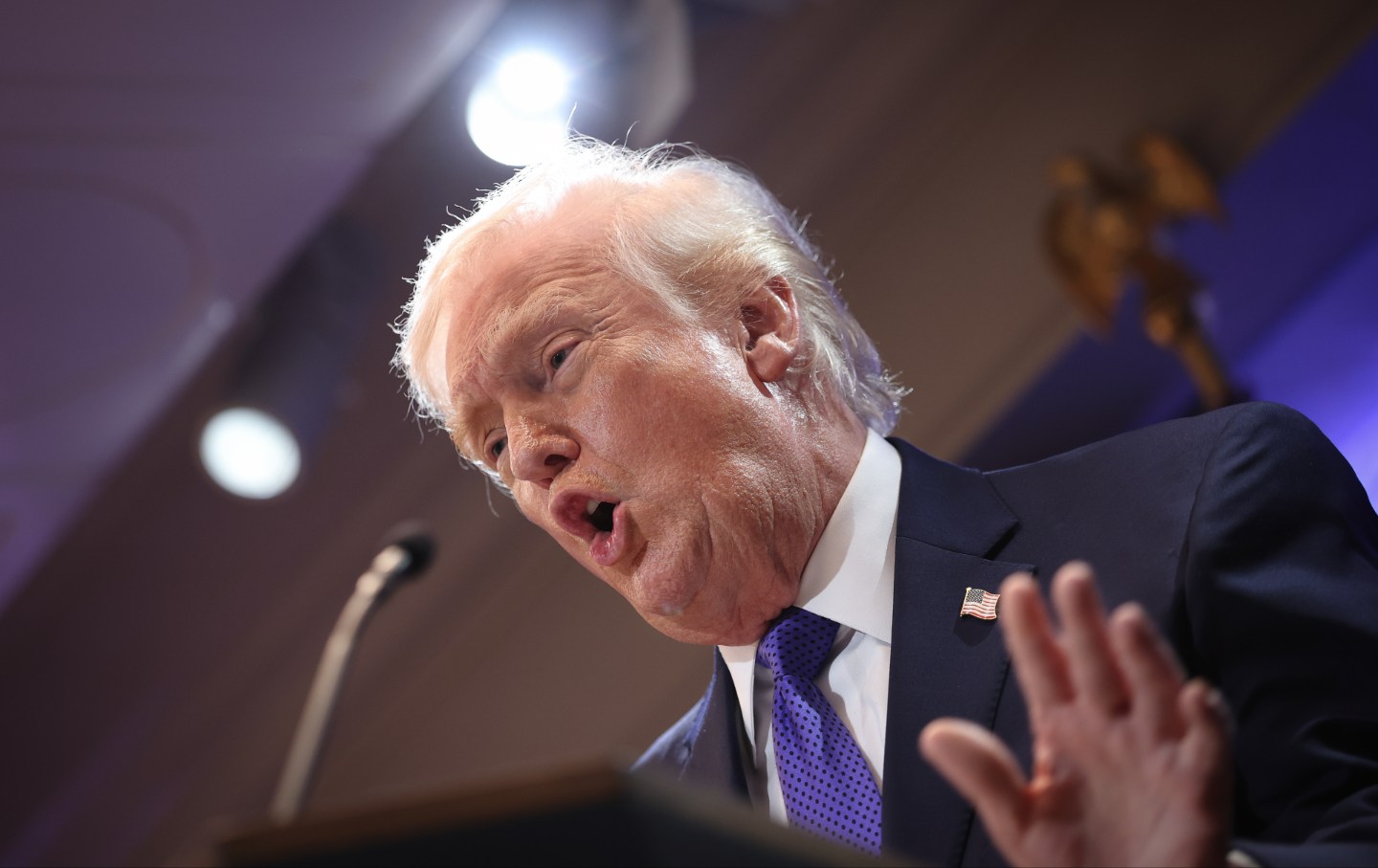
The president went on a wild rant alleging that the justices who struck down his tariffs were part of a vast global conspiracy to destroy him.
Chris Lehmann