
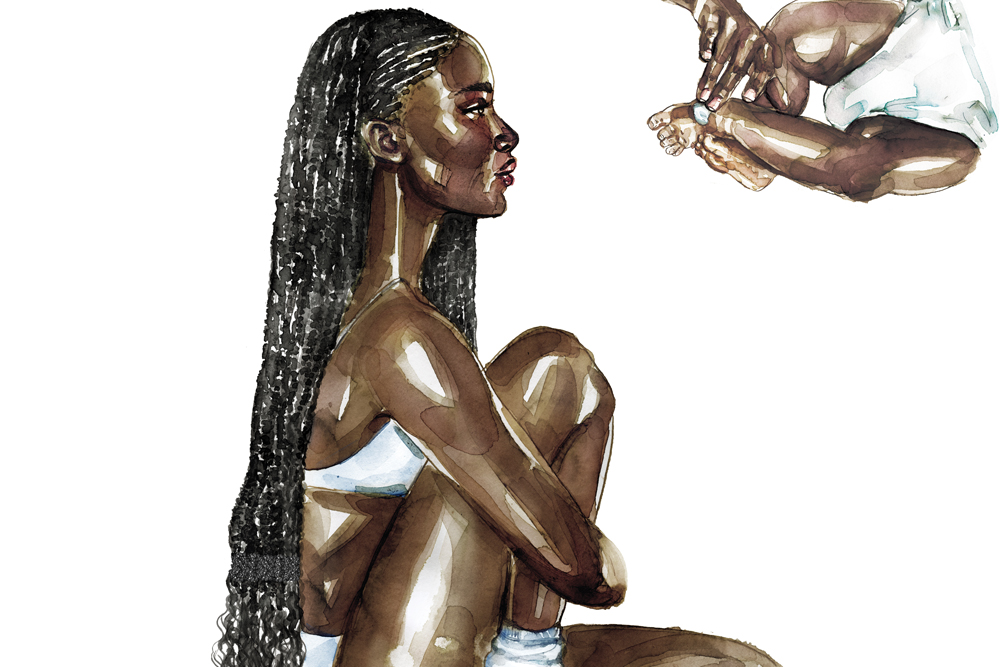
In my house, lotion was never optional. It was, and still is, a requirement. After every shower, before school, after gym class, or even stepping out of the house, my mother made sure I was moisturized from head to toe. There was always a bottle of Palmer’s Cocoa Butter or Vaseline within reach. If I even thought about leaving the house with ashy elbows, she’d stop me at the door. “You’re not about to go outside looking ashy,” she’d say, half-loving, half-serious. At the time, I didn’t think much of it. But looking back, I realize moisturizing was never just about appearance—it was about pride.
Growing up Black, moisturizing wasn’t a suggestion, it was a standard. It was how we showed up for ourselves. Our mothers, grandmothers and ancestors made it an unspoken rule: If you’re moisturized, you’re cared for. If you’re ashy, you’re slipping.
My mother didn’t have a 10-step routine or fancy ingredients. She had what worked: cocoa butter, shea butter and good ol’ petroleum jelly. She’d warm the lotion in her hands before rubbing it into my arms, making sure every inch gleamed before I left the house.
There was something grounding about it: the soft, rhythmic motion of care. Moisturizing wasn’t a chore; it was a language. It said, I see you, I love you and I’m protecting you.
Now, years later, as a beauty editor surrounded by shelves of serums, oils and luxury body creams, I realize how deeply that lesson shaped me. The act of moisturizing still feels sacred, but it’s also political, especially when the world once ignored our needs and now profits off our rituals. What was once dismissed as “too heavy” or “too greasy” is now repackaged as “rich” and “nourishing.” What they called “shine,” we’ve always known as glow.
And yet, it’s easy to forget how powerful that ritual is until you stop doing it. During one particularly hectic year, I fell out of the habit, rushing through showers, skipping lotion altogether. My skin grew dry, but so did my energy.
When I finally slowed down and returned to the ritual, it felt almost spiritual. I realized that moisturizing wasn’t just about hydration; it was a reminder that my body deserves time, attention and intention. Every stroke of cream across my arm was a reclaiming of self.
To moisturize is to insist on softness in a world that asks you to be hard. It’s a refusal to let yourself crack under pressure. For Black men and women, especially, that softness feels radical. We’re not often encouraged to take care of our bodies with tenderness, but there’s something revolutionary about doing it anyway—about saying, I deserve to be soft, too.
Now, my vanity looks a little different. There’s my staple, Vaseline Glazed & Glisten Vanilla Cocoa Shimmering Gel Body Oil, right next to more modern luxuries like Fenty Skin’s Butta Drop and Nécessaire’s Body Serum. I move slower now when I moisturize, taking time to massage the product into my shoulders and legs, watching the sheen appear. It’s no longer about hiding dryness; it’s about honoring my skin for carrying me through everything.
Moisturizing wasn’t a chore; it was a love language.
The older I get, the more I understand that moisturizing connects me to my past while grounding me in the present. It’s how I care for myself, how I remember my mother’s lessons and how I pass that quiet wisdom down to future generations. For me, to be moisturized is to be seen. To be moisturized is to belong to yourself.