

You’re lying on a hospital gurney, waiting for the anaesthesiologist to send you under so you can be taken into theatre and the operation can begin. Naturally, you’re nervous. But mixed with the quiet buzz of surgeons moving about is the soothing sound of piano, as classical music plays in the background, calming you, note by note.
You won’t hear it, but the music will deliver its biggest benefits once you are unconscious – lowering your blood pressure, heart rate and respiratory rate and leading to fewer complications and dramatically less pain when you wake up. The idea of seeing such impressive results from such a small intervention might sound fanciful, but those were the findings of research published last year.
“It finally provides scientific proof for something heart doctors have noticed for years: the mind can influence the heart, even during major surgery. Showing that a simple intervention like music can change physiological responses supports how deeply the heart and mind are connected,” says Girish Viswanathan, a cardiologist at University Hospitals Plymouth, UK, who wasn’t involved in the study.
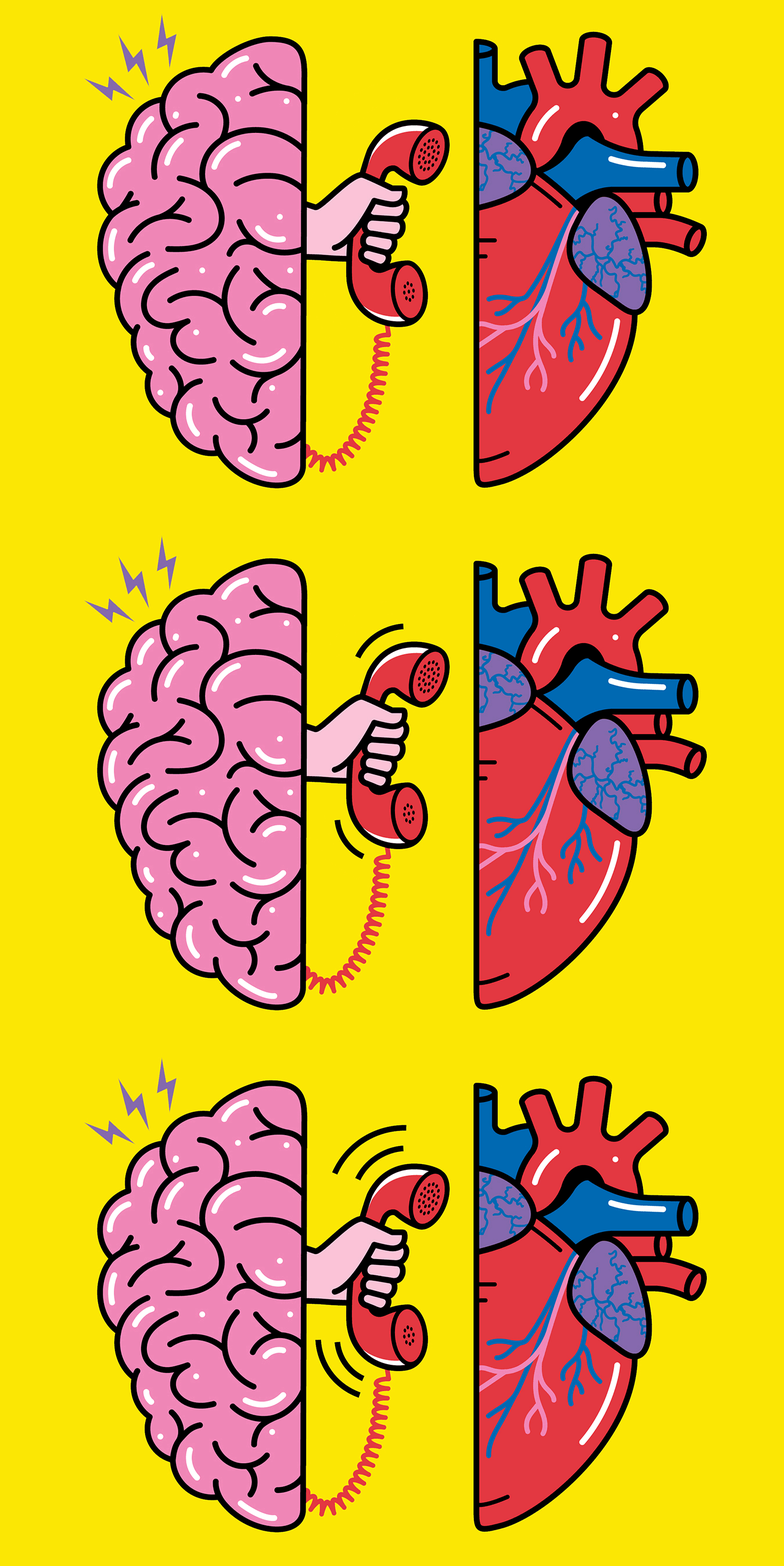
That the heart and mind are linked has been known for decades, of course. These findings, though, are part of a wave of research revealing that the connection is deeper and more powerful than was previously understood – and that it is something we can all tap into to boost our well-being.
“We’re beginning to understand that the brain and the heart are part of one integrated system. And that changes how we think about prevention, treatment – really everything,” says Mitchell Elkind at the American Heart Association, who won a Gold Heart Award last year for significant research contributions on the heart-brain connection.
Uncovering the heart-brain axis
Doctors have long noticed that when the heart is sick, often the brain isn’t far behind, and vice versa. Depression substantially increases the risk of heart disease, and people recovering from heart attacks frequently develop depression. Meanwhile, anxiety conditions are linked with irregular heartbeats, or arrhythmias, and stroke is a major risk factor for heart disease.
But for years, it was assumed that the traffic ran one way: under stress, the brain fires signals to the heart, speeding it up and priming the body for action. Then, in the early 2000s, researchers started to uncover a two-way conversation. Sensory fibres in the heart relay information about blood pressure, the rhythm of the heartbeat and strain on the organ back to the brain – largely through the vagus nerve – where it is integrated in areas that regulate bodily state.

Music played ahead of heart surgery affects physiological responses and pain rates
Anastasiia Smolienko/Ukrinform/Future Publishing via Getty Images
The connection was only formally recognised in 2019, however, when the World Stroke Organization described the axis as a two-way communication network between the brain and the heart. Long overshadowed by the “gut-brain axis”, the heart-brain connection began gaining traction in clinical and scientific communities, with researchers acknowledging the crucial role it plays in mental health conditions – including temporary periods of extreme emotional stress – as well as in neurological problems and cardiac conditions like atrial fibrillation.
“The mechanisms by which the heart and brain communicate in dysfunction are many,” says Elkind. “Some degenerative disorders, like Parkinson’s disease, are an example of how the brain and heart talk to each other. We generally think of Parkinson’s disease as a disease of the brain, but it turns out the nerve degeneration actually affects the heart as one of its first targets, and the brain involvement may come later.”
In recent years, the neural components of the axis have been pieced together, showing that people with mental health conditions, such as anxiety and depression, have significantly reduced activity in their vagus nerve, meaning their parasympathetic nervous system – which promotes rest and relaxation – is weaker. They are also less attuned to the signals from the heart.
“Every time your heart beats, it sends a signal to the brain indicating how fast and strong the heart is beating,” says Sarah Garfinkel, who researches brain-body interactions at University College London. “The brain can then use that signal to regulate the heart, so the system is fundamentally bidirectional.”
The heart-brain axis forms a major part of interoception, the sense that allows the brain to interpret signals from the body, like hunger or the sensation of anxiety. This close relationship means there is potential to diagnose conditions that affect both the heart and brain more easily.
Changing diagnoses and treatments
Elaine Chew, a concert pianist and researcher in computational music perception at King’s College London, is one person working in this area. Since childhood, she had lived with an arrhythmia. As an adult, she had two ablations, which remedied her condition and sparked a fascination with fusing her expertise in studying musical structures with cardiology. Luckily, her cardiologist was interested in the heart-brain axis, too.
The two started collaborating, working to monitor data from inside the hearts of people fitted with pacemakers while they listened to live concerts. Music is the “perfect thing to study heart-brain interaction because it affects the brain and the heart and allows us to probe both”, says Chew. “The heart-brain axis is what allows us to experience music through perception, but also through bodily reactions like chills down the spine or having the heart rate increase.” Earlier this year, Chew was part of a team that published research indicating that music can be an accessible way to detect hypertension.
From the team’s previous research, she knew that high blood pressure significantly dampens the body’s reactivity to music. “In hypertension, the blood vessels might be stiffer,” she says. “So the cardiovascular system is less able to respond to the brain’s neural activity when listening to music.”
Chew and her colleagues found that, because reactions to musical features like tempo and volume variations exaggerate the cardiovascular differences in people with hypertension, playing music to them while monitoring their cardiovascular signals via electrocardiograms helped to identify the condition more reliably, increasing accuracy by around 10 per cent in a relatively short amount of time compared with smartwatch hypertensive warnings. Because so many people wear wearable tech like smartwatches, and because many earbuds have biosensors, Chew says data could be collected to give people an early warning to visit their doctor because they might have the condition.

Headphones could potentially be used to monitor blood pressure
Alan Fraser/Alamy
Based on other research she has been part of, she is also hopeful that music could be used as a treatment: using details about a person’s autonomic nervous system, which controls unconscious bodily functions like breathing and heartbeat, it could be personalised to raise or lower a person’s blood pressure. Both of these ideas are in their early days, and clinical trials are needed to test their efficacy in large numbers of people in real-world settings, but Chew is optimistic. “It’s a long process, but the technology is here,” she says.
She isn’t alone in hunting down ways to use new tech in diagnosis. Cardiologist Pier-Giorgio Masci, also at King’s College London, leads a programme uncovering the ways in which cardiovascular and neurodegenerative conditions are related. “With an ageing population, we are going to see more and more patients with heart failure and dementia,” he says. “So, I wanted to look for insights into both conditions to find a treatment that can help to prevent or treat either, and prolong the number of years lived in good health.”
Research on the heart-brain axis has broadened in recent years, he says, moving from looking at issues linked solely with the autonomic nervous system – like the modulation of blood pressure and response to stress – to discovering links between the heart and the brain via blood vessels. Because the two organs are connected via a vascular network, issues with the heart can lead to brain problems. Stiffening of arteries can not only cause vascular damage in the heart, for instance, but also harm tiny blood vessels in the brain, which may contribute to cognitive decline over time.
This insight has led Masci to search for a new, easy-to-scale measure linking the health of the brain and the cardiovascular system. Currently, many people with hypertension are undiagnosed and untreated, and the condition is a risk factor for both heart failure and dementia.
Masci and his colleagues developed a new way to detect arterial elastance, namely how hard your heart has to push to get blood into the body. This measure is tightly linked with hypertension and could be tracked via wearable technology, rather than current expensive methods. The team’s methods of detecting the metric, which make use of data from the UK Biobank study, are currently submitted for publication.
Arterial elastance is far more comprehensive than simply reading someone’s blood pressure to detect hypertension, says Masci. While a person’s blood pressure could be brought down with medication, other issues highlighted by arterial elastance, like the risk of damage to the brain, could remain untreated, because arterial elastance remains high. Finding ways to detect arterial elastance at scale, then, is crucial for a more integrated understanding of heart and brain health.
Old drugs, new uses
As promising avenues for enhanced diagnosis using the heart-brain axis are opening up, so, too, are new treatment options. Elkind says that the wiring between the heart and brain can become disrupted due to things like inflammation, degeneration, hormonal changes or underlying common genetic mutations. But some pharmaceutical drugs already on shelves may partly remedy faulty connections. “A lot of the medications that we use to treat mental health disorders can influence the neurotransmitters and the nerves that talk back and forth between the heart and the brain,” he says.
Specifically, evidence suggests that antidepressants may affect the vagus nerve, altering the autonomic signals that regulate heart rate and stress responses as mood symptoms improve. “I could imagine that, in the future, we treat depression in patients with heart failure in order to improve their cardiac outcomes,” he says.
He also nods to the axis’s role in impulsive behaviours, such as those seen in ADHD, with research showing how reduced interoceptive accuracy can contribute to poor decision-making. A potential solution, he says, lies in beta blockers, which are traditionally prescribed to manage hypertension and anxiety. Researchers have previously noticed how these drugs can also sharpen decision-making, increase aversion towards aggressive behaviour and boost moral judgement. Research published last year suggests this is partly because of their interoceptive effect. By stabilising the heart’s signals, beta blockers appear to “dampen these impulsive responses, too”, says Elkind.
“The heart-brain connection, if mis-wired, can adversely affect your ability to make sensible decisions,” he says. “So, for those who struggle with impulse control and make poor financial decisions, beta blockers seem to help.”
The medication may also be useful in other instances. Following a stroke, for example, people can become unusually hyperactive or aggressive, sometimes even threatening loved ones, says Elkind. “A beta blocker can help to, again, take that away. It lowers the heart rate, it lowers the blood pressure. But at the same time, it also has an effect on the mood and the brain.” When the heart isn’t shouting, the brain can listen more clearly.
The mass adoption of GLP-1 agonist drugs like Ozempic and Wegovy has also had unexpected implications for the heart-brain axis. These medications normally lead to significant weight loss, in turn reducing the risk of cardiovascular disease. But a study published last year showed that weight loss alone doesn’t fully explain the drugs’ benefits. Viswanathan says they appear to reduce low-grade inflammation, so, over time, they prevent damage to the important blood vessels in the heart-brain connection and help blood flow between the two organs. This reduces strain on the heart, as it receives enough blood to pump around the body, and so the risk of heart disease drops.
In the future, everyone might take a GLP-1 for their “life-prolonging effects”, he says. “Whether healthy, normal‑weight people will take them routinely depends on long‑term safety, cost and need, but the field is definitely moving in that direction. Emerging research suggests they may offer benefits well beyond weight control, including metabolic stabilisation, anti‑inflammatory effects, improvements in emotional well‑being and even potential cognitive enhancements.”
Strengthening the axis at home
The benefits of maintaining a robust heart-brain connection extend beyond medical use. Take making better decisions: researchers have tested a common form of interoceptive training in which people are asked to count their heartbeat without touching their pulse and then compare their perception with a visual readout or a tone synced to their actual heart rhythm. Over time, that comparison allowed them to recognise which internal sensations reliably signal a heartbeat, improving emotional regulation and helping them make more rational decisions.
A 2020 study, meanwhile, found that volunteers who underwent training for one week improved their interoceptive accuracy, felt less “baseline” anxiety and made smarter decisions in a simulated gambling task. More recently, research in 2023 showed that interoceptive training significantly boosted emotional regulation and emotional self-awareness. Structural changes in the brain were discovered, with imaging scans showing increased connectivity in the insula – the area responsible for interoception, emotional regulation and aspects of cognition.
Such training can make a huge difference for people with neurological differences, too, says Garfinkel. “I’ve had emails from people with autism and ADHD saying how even learning about the word ‘interoception’ changed their life,” she says. “There was one individual who believed he was a psychopath because he didn’t know if he was feeling the right things. But, actually, we’re able to say that maybe he just didn’t have the insight into his body’s signals.”
Other cognitive benefits are also on the table. Last year, researchers reported giving participants a gambling task in which not only did having a heart rate that responded more flexibly over the course of the game predict good decision-making, but also cardiac activity was linked with many aspects of cognitive performance. Those with greater activation of their parasympathetic system – responsible for slowing down a rapid heartbeat – were found to be more flexible thinkers, have stronger working memory scores and to be more effective planners.
“What we observed was striking,” says co-author Maria Casagrande at Sapienza University of Rome in Italy. “People whose hearts could adapt more efficiently also appeared to have a brain that adapted more efficiently. It shows cognition doesn’t just come from the brain – it’s more of a dynamic dialogue between brain and body. One way to think about it is that the heart and brain operate as part of a coordinated system. A flexible cardiovascular system may provide the physiological stability that allows the brain to remain responsive, focused and capable of adjusting behaviour when situations change.”

Interoception improves the health of both the heart and the brain
Marie D. De Jesus/Houston Chronicle via Getty Images
We can physically hack the axis, too, says Elkind. One study from last year used electrodes to stimulate the vagus nerve and showed that engaging the parasympathetic system in this way creates a calmer physiological state.
You can even try a low-tech version of the same mechanism at home: a breathing technique used in meditation called bhramari pranayama, or “humming bee breath”, produces a gentle buzzing sound during exhalation. “This simple humming activates the parasympathetic nervous system, which helps lower heart rate, increases heart rate variability and lowers stress,” says Garfinkel. With this system engaged, the body shifts into a restorative state that reduces inflammation and promotes physiological recovery.
Harnessing the power of these insights holds huge promise. “We’re moving into a new generation of science where we look at the whole system together,” says Garfinkel. Cardiologists and neurologists will have to start working together, says Viswanathan, as the heart and brain can no longer be considered in isolation. “We now understand that if you look after the heart, you look after the brain, and vice versa,” he says.
For centuries, we have asked whether to trust the heart or the head. Now, the better question is why we ever separated them in the first place.
Topics: