
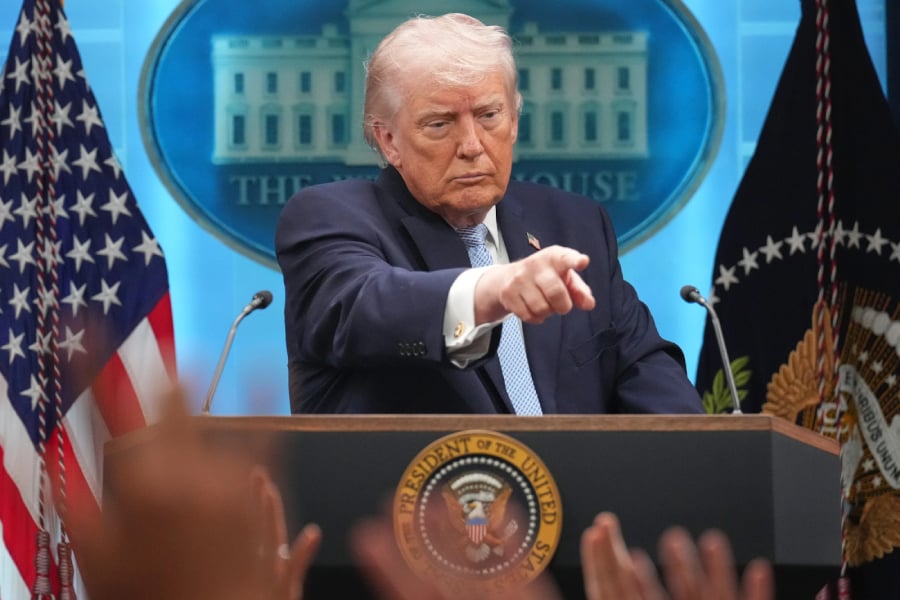
The White House is reportedly considering expanding its ban on the import of Chinese equipment for critical infrastructure, including telecom networks, internet equipment, and data centers.
It is the first time since 2022 that the Federal Communications Commission (FCC) has looked at refining the law, which had previously barred Huawei, ZTE, Hytera, Hikvision, and Dahua from selling equipment in the country. These companies are listed on a “Covered List”, indicating they pose a national security threat.
At the time, the ban was targeted at specific industries, whereas the agency is reportedly looking to expand it beyond phones and consumer technology. It also aims to close loopholes in the purchase of Chinese equipment, potentially making it impossible for any Chinese tech to be deployed, even through resellers or subsidiaries.
It is the latest step in the FCC’s growing effort to decouple the US from China. The agency has recently banned imports of Chinese-made drones, consumer routers, and telecommunications equipment, expanding its restrictions to encompass entire sectors rather than specific critical industries.
The Chinese government has pushed back against these blanket bans, calling the US government a bully. It has also engaged in tit-for-tat bans and tariffs with the US over the past few years.
Like most bans, the short-term effects will be higher costs for telecoms and IT infrastructure operators replacing existing equipment. However, it may open up the US telecom and data center market to operators outside China, especially if the FCC is strict about closing third-party sales loopholes.
AI could be the key critical industry
While not at the forefront of the FCC proposals, there is a sense that the agency’s new target is the AI market.
Critical infrastructure in the form of networking equipment — servers, storage, routers, switches, and exchanges — is embedded into the makeup of data centers. If Chinese companies were banned from participating, they could miss out on the largest infrastructure buildout in decades.
Donald Trump’s administration has clearly focused on AI as a critical market, having already blocked Nvidia from selling its most powerful chips to China. It has recently allowed Nvidia to sell some of its second-most powerful chip, the H200, to Chinese companies, but with the stipulation that 25 percent of each sale goes to the US government in export duties. It has also looked into a 1:1 chip output tariff to reduce its dependence on China.
This appears to be part of the administration’s strategy to improve conditions for American businesses, even if it leads to higher prices and reduced performance.
However, it has not been shy about targeting US companies that go against the administration, recently designating Anthropic as a “supply chain risk”. This is the first US company to receive this label, preventing it from working with any company partnered with the Pentagon.
Also read: The FCC’s ban on foreign-made routers shows how Washington’s national security crackdown is expanding beyond traditional telecom equipment.