
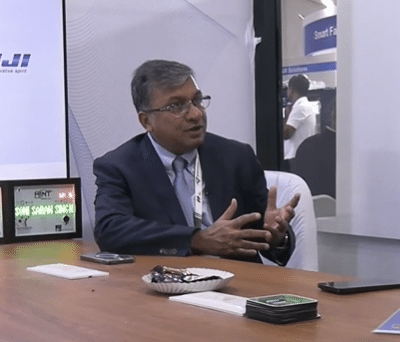
How close are factories to running without operators on the floor? As AI, predictive analytics, and smart machines converge, Soni Saran Singh of NMTronics examines how intelligent manufacturing and dark factories are transforming global electronics production.
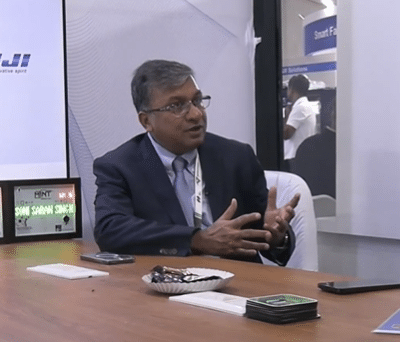
Q. Can you tell us how you have seen the evolution of the electronics manufacturing system in recent years?
A. In the post-COVID years, we have seen sustained growth in electronics manufacturing. It has opened a new chapter for equipment companies, distributors, system providers like us, and the wider ecosystem. India has never experienced this level of expansion, and there is enough business for everyone.
We have also scaled our business beyond India by establishing a company in the Middle East and securing a major contract with a leading firm to manufacture AI servers. Countries such as the United Arab Emirates, Saudi Arabia, Qatar, and Kuwait are now showing strong interest in electronics manufacturing, similar to where India was around twenty years ago. The SMT line we are setting up there meets the standards of major multinational companies, given the extremely high specifications required for server production. It is a demanding effort, but the scale of opportunity makes it highly compelling.
Q. Can the experience and insights gained in India now help equipment suppliers expand into global markets?
A. We have been an equipment distributor for nearly 30 years, and we have also begun building machines in India. These include conveyor systems enhanced with high-tech, AI-enabled software. We established a division, Nest—New, Emerging, and Strategic Technologies, where NMTronics engineers develop in-house software for AMRs (autonomous mobile robots) and design multiple agents that work together to move materials.
Operating a single AMR is relatively simple, but managing many AMRs on the shop floor is complex, much like the software-driven approach Tesla is known for. Our scale has grown both horizontally and vertically. We are expanding quickly and have started building our own products and software to strengthen and complement our existing equipment supply chain.
Q. You also mentioned that a UI product has been developed. Could you share more details about that?
A. Yes, we developed it in collaboration with a German company, and the results have been encouraging. It received early approval from several global companies. We are now working on optimising the cost. While quality is essential, customers are equally focused on cost efficiency, and we are actively working towards achieving that balance.
Q. Do you see Made-in-India brands gradually entering this manufacturing space?
A. If the capability exists, customers will always prefer it. Ultimately, it comes down to who enters the market first and who delivers effectively. For instance, our conveyors are entirely developed in-house. We managed the complete process—design, software, supply chain, and assembly—without replicating any existing systems.
All earnings have been reinvested into the company. We have opened a large factory in Noida, and next month we are opening a 2200-square-foot (204.38 square metres) campus in Bengaluru, located in Devanahalli near the airport. This will enable parallel operations across both northern and southern India.
Q. What will your new Bengaluru facility focus on?
A. The campus includes dedicated demonstration and training rooms, along with a specialised software lab. Machine assembly and all new technology development will take place here, including AMRs, MES platforms, and AI solutions.
Most platforms, such as ChatGPT or Google Gemin,i rely on internet connectivity, but large corporations do not want confidential or proprietary information processed through external systems. To address this, NMTronics engineers have developed an offline solution that delivers equivalent functionality without requiring internet access.
Q. Can you explain how your AI-enabled engine will work on the edge?
A. The AI-enabled engine is installed directly on the machines. If an issue arises, for example, during night shifts on a Heller machine when a service engineer is unavailable, operators can use a chat-style interface similar to ChatGPT. They can enter the problem or symptoms they observe, and the system generates a complete video-based explanation.
The interface supports multiple languages, including Gujarati, Kannada, Tamil, and Hindi, ensuring ease of use for operators who may not understand English. The entire system operates fully offline.
Q. How many employees do you have, and do you only hire engineers?
A. We currently have around 550 employees, of whom approximately 525 are engineers, with the remainder supporting backend operations. There is a common perception that electronics manufacturing primarily suits diploma holders or technicians rather than engineers, but our organisation accommodates both.
We were early recruiters at IIT Delhi and IIT Kanpur, bringing in highly capable engineers. At the same time, we actively hire from diploma programmes to maintain a complete spectrum of talent. We value individuals with strong intellect, analytical ability, and excellent hands-on skills.
Q. Are there any new product categories gaining demand in India beyond standard offerings?
A. The industry is steadily shifting towards software, and most new machine development is now software-driven. Recently, our company, along with Sharma SJS and our partner Arts System, adopted a data analytics, AI-driven tool. They operate more than 35 SMT lines across six factories, supported by a highly diversified equipment portfolio.
This tool enables the corporate office to access real-time data through a unified dashboard across all SMT lines. It tracks yield, overall efficiency, active products, and data from pick-and-place machines, SPI, and AOI systems. This immediate visibility enables faster identification of areas for improvement. When accurate data is available in real time, management can take corrective action promptly and with confidence.
Q. How does the AI engine support decision-making and prediction?
A. The system is primarily predictive. It collects large volumes of data and analyses patterns over time. When a particular board is run, the system learns the types of challenges encountered. After processing multiple runs across different boards and products, the AI can anticipate previously observed issues when that board is run again and advise operators on what to monitor. This leads to more accurate and efficient operations.
Q. Is the growing demand now focused on connecting machines and adding an intelligence layer for smarter manufacturing?
A. Yes, the emphasis is on connecting machines and building an intelligence layer above them. Fuji, for example, has developed the Fuji Smart Factory concept and introduced the dark factory concept, which represents the factory of the future.
The concept is straightforward. If there are no humans on the production floor, lighting becomes unnecessary. Fuji has already demonstrated this approach in Japan, and we are taking some of our customers there to see how the factory of the future—the dark or lights-out factory—operates in practice.
Q. Is this approach a concern for countries like India, and how could it work locally?
A. Policy discussions often focus on job creation, but employment will continue to evolve as economies grow. This shift is already underway in Japan, and our international experience suggests that the future will combine advanced technology with substantial manual work.
Such solutions are not inexpensive, particularly in regions where manpower is scarce. In India, however, the primary challenge is skill development rather than availability. With a skilled workforce, implementation becomes far more practical and cost-effective.