
From skating to curling, the thrilling sports of the Winter Olympics have plenty of science behind them. Follow our coverage here to learn more.
Food is fuel. It sounds like a cliché, but if you are a Winter Olympian, that phrase is more like a mantra. And with every Olympic Games, there is an inevitable slew of articles detailing what athletes are eating, what they’re craving and what “forbidden foods” they plan to reward themselves with after their events are over. But food rules and strict diets aren’t actually so important as one, cardinal truth: Olympians simply just need to eat enough.
“People often think that athletes need to be really strict with their diet and be very careful about what they eat,” says Rebecca Hall, a dietitian who has worked with both the Canadian and Australian Winter Olympic teams. More importantly, Hall says, “a lot of winter athletes don’t actually eat enough.”
On supporting science journalism
If you’re enjoying this article, consider supporting our award-winning journalism by subscribing. By purchasing a subscription you are helping to ensure the future of impactful stories about the discoveries and ideas shaping our world today.
Competing in the Winter Games can be grueling: depending on the event, athletes can be exposed to hours of extreme cold, rapid changes in weather, high altitude, and little sunlight—and that’s all before factoring in the incredible physical demand of their sport and the fact that they might have very little time to eat.
How Olympians fuel themselves is based on a combination of nutrition science, personal taste and necessity. Different people can require different combinations of nutrients, and different sports can demand very different caloric intakes. But getting enough calories, period, is crucial to athletic performance.
“Calories can get a negative connotation, but from a scientific standpoint, that is our energy source,” says Lucy Mower, a dietitian who specializes in sports nutrition at the University of Utah.
Carbs, Carbs, Carbs!
Various sports require different amounts of calories. For example, cross-country events such as the individual biathlon, in which athletes ski for miles and then have to shoot at targets, might burn some 7,000 calories, according to at least one estimate. Fueling these kinds of activities necessitates eating a lot—and mostly carbohydrates.
Sports scientists recommend that athletes engaging in that kind of high-intensity, long-duration event should be eating around six to 12 grams of carbohydrate per kilogram of body weight per day. For a 70-kilogram man eating at the upper end of that spectrum, that equates to at least 840 grams of carbohydrates a day—about the same as eating 17 plain bagels from Starbucks.
The reason why is that when we eat carbs, our body breaks them down into glucose, a form of sugar, which the bloodstream transports throughout the body and brain. Our muscles and liver store glucose in the form of glycogen, and that is the body and brain’s preferred source of energy. Keeping those stockpiles high, regardless of the sport, is critical, Mower says—although perhaps not solely with bagels.
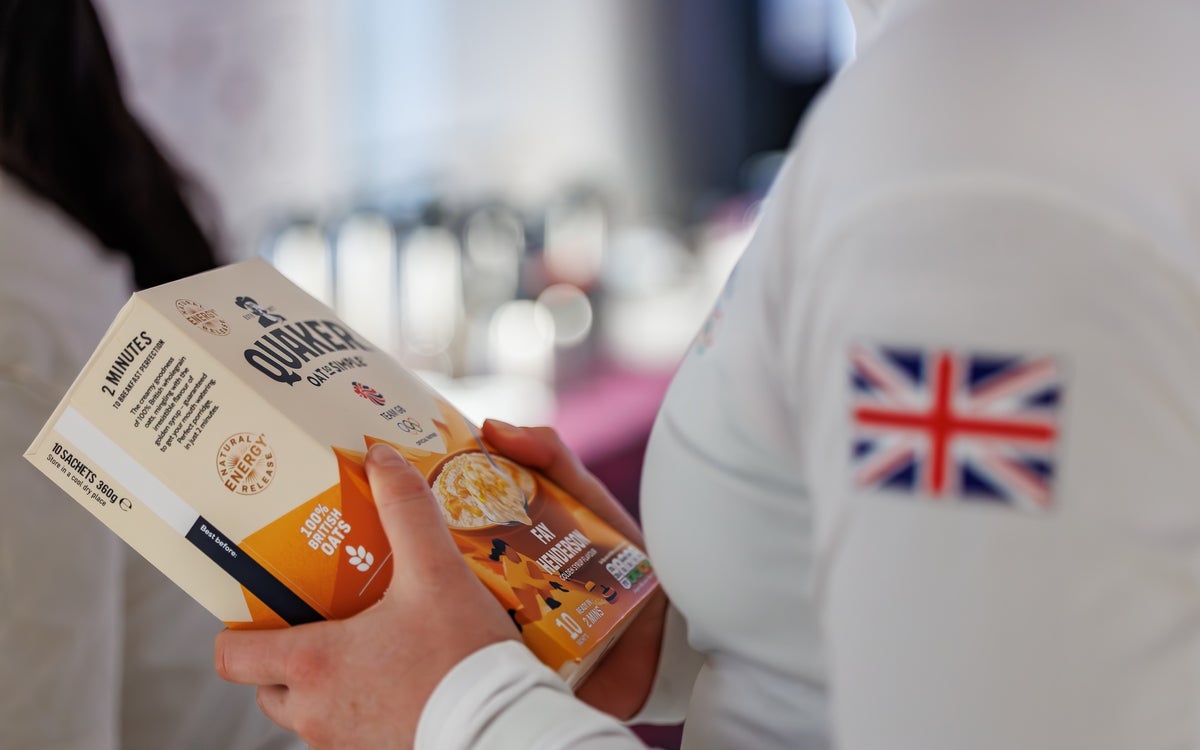
“We think about sources of carbs being things like bread or oatmeal, fruits, lentils, quinoa and other grains, sweet potatoes, regular potatoes,” she says. Hall also emphasizes that eating lots of vegetables and fruits is important not just to boost carbs but also to ensure the body is getting enough micronutrients, such as vitamin C, potassium and fiber.
Athletes generally don’t consume all their required carbs in one sitting, so dietitians recommend that they break them up into meals and snacks eaten throughout the day, including during their events, if necessary.
That’s important because if glycogen levels become depleted, then the brain and body go into survival mode. “It’s called ‘the bonk,’” Mower says. Muscles stop working, the body slows down and even thinking straight is a challenge. Halfway up a mountain, shivering in subzero temperatures is not where you want to bonk. Carbohydrate gels, blocks, bananas or even packs of candy can all help avoid this.
What about protein?
If carbs are the gold medal winner of Winter Olympians’ diets, protein would take silver and fats bronze. Protein is “essential for our muscles to repair and recover, and it also helps with growth,” says Mower.
High-performance athletes are typically advised to eat 1.2 to two grams of protein per kilogram of body weight per day, says Kerry McGawley, a professor of sports science at Mid Sweden University. A man weighing 70 kilograms who eats the upper range would consume about 140 grams of protein per day—the amount in around 23 eggs.
Certain sports at the Winter Olympics demand more explosive movements than, say, a cross-country skier. Athletes competing in these short, fast-burst events may prioritize protein more than carbs—in part because they need less carbohydrates to keep going—but also to ensure their muscles recover and regrow properly.
But fats are also important. They help athletes stay fuller for longer and enable the body to absorb many micronutrients, such as vitamins K and D. They also can help athletes eat enough, because, well, they taste good.
Athletes need vitamins, too
After satisfying their macronutrient needs, athletes need micronutrients, especially vitamin D and iron.
Vitamin D is vital to bone health, immune system function and a whole host of other bodily processes. “Most of the vitamin D that you should actually be able to synthesize in your body comes from the exposure to the sun,” says Tamara Hew-Butler, a sports medicine researcher based in California. Winter Olympians aren’t typically out in the sun wearing shorts and T-shirts, and that limits how much vitamin D they might get from their environment.
A few foods have vitamin D—eggs and fatty fish, for example—but taking vitamin D supplements may be the easiest way to boost levels in athletes who need it, Hew-Butler says.
Iron helps transport oxygen around the body. “If you don’t have [high] enough iron levels, you can’t transport the oxygen,” Hew-Butler says. That’s a problem if you’re an athlete, because you are relying on that oxygen-carrying ability. Competing at altitude, such as on a ski mountain, means there is less oxygen in the air, which makes the body need more iron. Many Olympians—Nordic skiers, for instance—pay a lot of attention to a measure called their VO2 max—the highest volume of oxygen your body can consume and use during a minute of intense exercise. A higher VO2 max essentially equates to higher endurance, and, in turn, higher athletic performance.
Iron is most readily available to the body in meat and certain types of fish. Menstruating athletes, in particular, need to pay attention to their iron levels because they can lose it through blood. High-impact sports can also destroy red blood cells, leading to iron deficiency anemia, while some athletes might also lose blood through their gastrointestinal tract, Hew-Butler says.
And then there is caffeine. Caffeine isn’t a micronutrient, but it is a popular chemical many athletes swear by. Caffeine boosts cognitive performance and can reduce feelings of fatigue. “So if you’re working really hard, it doesn’t seem as hard,” Hew-Butler says. It can also make you more alert—an important benefit for Olympians in high-precision sports, such as curling and figure skating.
Caffeine may also boost the amount of calcium released from muscles, she says, helping them contract more. And it has been shown to increase nitric oxide, which expands your blood vessels, enabling you to utilize more oxygen.
There is no one-size-fits-all diet
All the nutrition recommendations, diet diaries and sports science summaries miss something important, however: every Winter Olympian is an individual. They each have different needs, tastes and cultures. And an individual might not match perfectly up to nutritional guidelines or results of scientific studies.
Athletes might enjoy adding their own flourish to a plate of food, too. Hall recalls adding cinnamon and maple syrup to oatmeal for Canadian Olympians’ breakfasts, for example, because the flavors were familiar to them. Other Olympians might need to stick to plain food, such as rice and eggs or smoothies, for example, to make sure their gut isn’t bothered on competition day. She also recommends not eating anything new for a few weeks before the big day, just in case.
Hall offers a recommendation that can apply beyond athletes with extreme nutritional needs. Ask yourself these questions: “How do I make the environment that they’re in the environment that helps them make the easy choice, the one that’s going to best support their training? And how do I make what is in the environment something that they would desire as well?”