
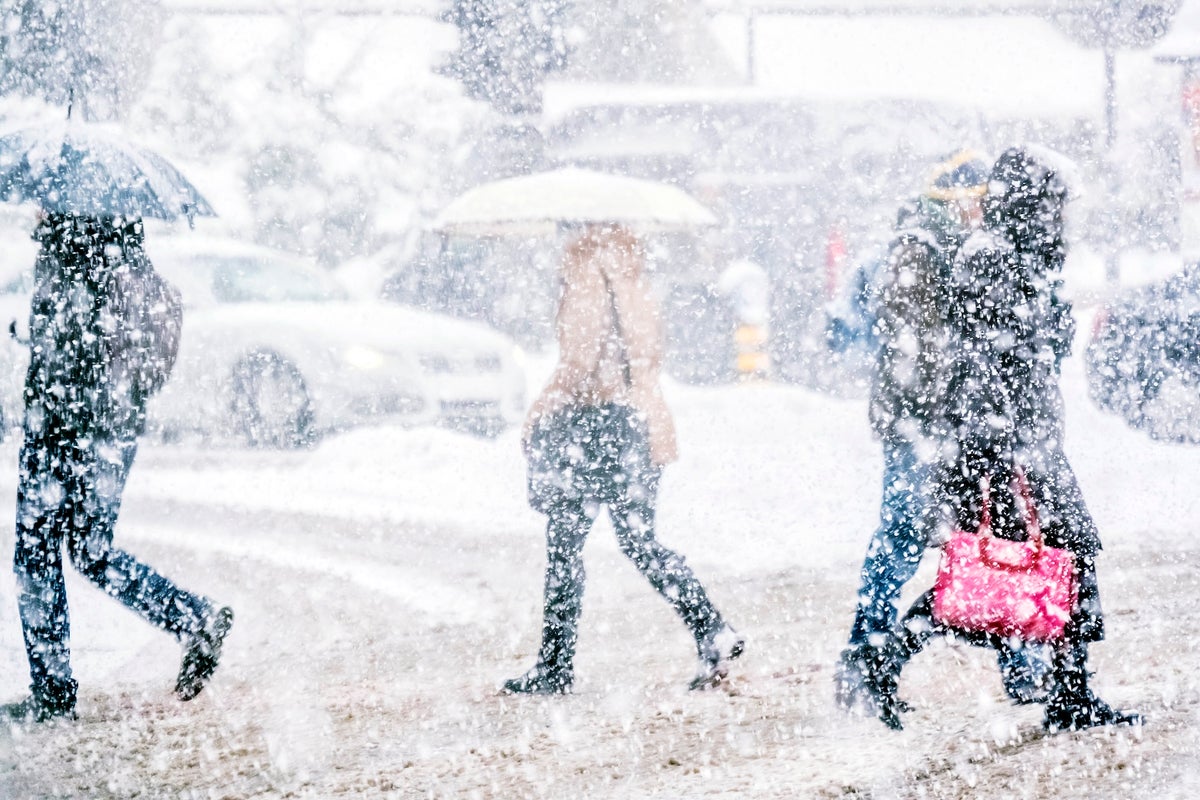
A winter bomb cyclone is expected to bring blizzard conditions across parts of the East Coast from Maryland up through southeastern New England Sunday night into Monday morning. But what, exactly, is a blizzard?
A blizzard doesn’t always mean “a lot of snow,” though it can certainly bring heavy snowfalls, as this storm is expected to along parts of the East Coast. Rather, the National Weather Service defines it as a snowstorm with winds regularly above 35 miles per hour and “considerable falling” or blowing snow for at least three hours. This weekend’s storm could dump one to two feet of snow in the worst-hit areas, and snowfall rates could reach 2 to 3 inches per hour. Wind gusts could reach 40 to 70 mph along the coast from New Jersey through New England.
Blizzard conditions can reduce visibility to less than 0.25 mile, which makes travel especially hazardous. New York City has put a travel ban on its roads starting at 9 p.m. on Sunday night.
On supporting science journalism
If you’re enjoying this article, consider supporting our award-winning journalism by subscribing. By purchasing a subscription you are helping to ensure the future of impactful stories about the discoveries and ideas shaping our world today.
The winds and heavy, wet snow with this storm could also cause power outages by weighing down power lines and tree branches.
Blizzard conditions can develop along the northwest side of a very intense storm, as is the case with this system. This is because the major difference between the low pressure at the storm’s center and an area of higher pressure to the west creates very intense winds. This storm will likely become a bomb cyclone—what a storm is called when it undergoes “bombogenesis” defined by a decrease in pressure of at least 24 millibars in 24 hours.
It’s Time to Stand Up for Science
If you enjoyed this article, I’d like to ask for your support. Scientific American has served as an advocate for science and industry for 180 years, and right now may be the most critical moment in that two-century history.
I’ve been a Scientific American subscriber since I was 12 years old, and it helped shape the way I look at the world. SciAm always educates and delights me, and inspires a sense of awe for our vast, beautiful universe. I hope it does that for you, too.
If you subscribe to Scientific American, you help ensure that our coverage is centered on meaningful research and discovery; that we have the resources to report on the decisions that threaten labs across the U.S.; and that we support both budding and working scientists at a time when the value of science itself too often goes unrecognized.
In return, you get essential news, captivating podcasts, brilliant infographics, can’t-miss newsletters, must-watch videos, challenging games, and the science world’s best writing and reporting. You can even gift someone a subscription.
There has never been a more important time for us to stand up and show why science matters. I hope you’ll support us in that mission.