

This key fitness metric is crucial for Olympic ski mountaineering—and regular health, too
VO2 max is an important measure of aerobic conditioning, whether you’re an Olympian or just a person hoping to stay healthy
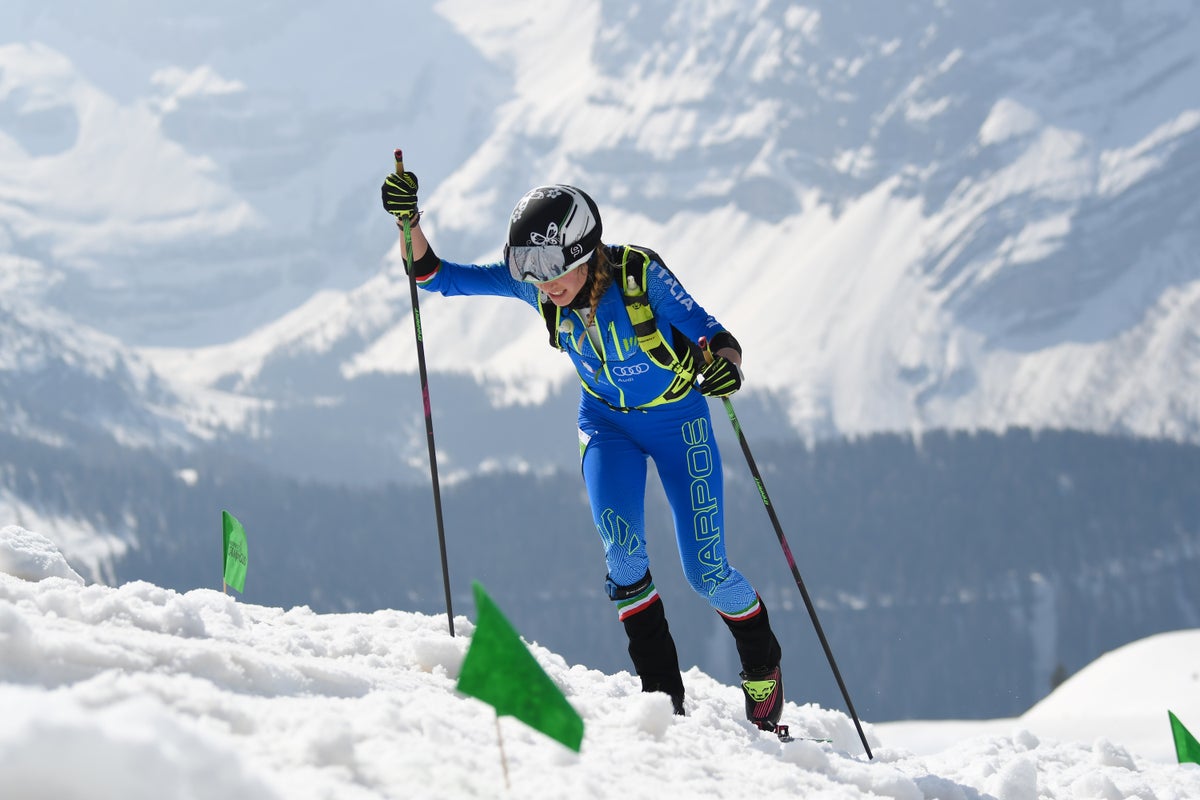
Alba de Silvestro in action during Ski Mountaineering individual World Cup Finals on March 28, 2021 in Madonna Di Campiglio, Italy.
Davide Mombelli – Corbis/Corbis via Getty Images
From skating to curling, the thrilling sports of the Winter Olympics have plenty of science behind them. Follow our coverage here to learn more.
When ski mountaineering, or skimo, debuts at the 2026 Winter Olympic Games Milano Cortina in Italyon Thursday, athletes will face off in a brutal test of aerobic capacity. They will schlep their skis up a snowy mountainside that is twice as steep as a typical incline treadmill’s highest angle. And as they do so, they will move up to 10 kilometers per hour uphill while they suck lower-density, high-altitude air and carry more than 4 kilograms of gear.
Such challenges require off-the-charts aerobic conditioning, as demonstrated by their “VO₂ max”: the maximum amount of oxygen the body can use per minute during all-out exercise. Watching from the couch, many people may see no connection between these physical feats and their own workouts. But VO₂ max is a key marker of performance and health for both high-level athletes and regular people, says Jill Kanaley, an exercise physiologist at the University of Missouri, who studies the key fitness measure. “The higher your VO₂ max, the better you’ll perform in a race or everyday life,” she says.
On supporting science journalism
If you’re enjoying this article, consider supporting our award-winning journalism by subscribing. By purchasing a subscription you are helping to ensure the future of impactful stories about the discoveries and ideas shaping our world today.
Here’s what skimo teaches us about VO₂ max and why it matters.
Olympic-Level VO₂ Max
VO₂ max reflects how efficiently the lungs move oxygen to the blood vessels and how well the vessels relay that oxygen to the muscles for intense exercise. According to the American College of Sports Medicine, VO₂ max is the gold-standard measure of cardiorespiratory fitness.
The average 40-year-old’s VO₂ max is around 35 milliliters per kilogram per minute. For some ski mountaineers, by contrast, it’s in the 80s.
Skimo sprinters aren’t the only VO₂ max phenoms at the Olympics. Elite cross-country skiers have some of the highest VO₂ max values on record, with some having values above 90. Their numbers, on average, are similar to skimo racers, says Verena Menz, an exercise physiologist at the University of Innsbruck in Austria, who studies these athletes. (And it’s not just winter athletes with high VO₂ values—Tour de France cyclists have VO₂ maxes similar to those of skimo sprinters, too, and Norwegian triathlete Kristian Blummenfelt recently set what appears to be a world-record VO₂ max of 101.1.)
In addition to being aerobically-gifted, ski mountaineers must stride with massive force, delivered in under a half second per step—a cadence comparable to that of many recreational runners. Top skimo athletes have both high VO₂ max and explosive upper- and lower-body strength relative to their body weight.
VO₂ Max and Health for the Average Person
VO₂ max isn’t just important for sports: an Olympic-level VO₂ max—whether in elite athletes or regular people—has been linked to exceptional longevity. Even a slight increase in a person’s VO₂ max can markedly lowertheir risk of premature death. Research that analyzed more than 122,000 adults over eight years found that each incremental increase between the lowest and highest VO₂ max was associated with longer survival.
It’s “much easier” to see improvement in low VO₂ max numbers than it is to improve an already higher value, says Kanaley, who trains people with diabetes in cardiovascular fitness. With basic exercise, previously sedentary people can increase their VO₂ max by about 20 percent, which helps them do tasks such as climbing stairs and walking hills, Kanaley says.
If you’re already moderately fit, increasing your VO₂ max requires a more specific training regimen: performing 75 to 80 percent of your exercise at moderate intensities and then doing the rest of your workouts at higher intensities—including maximum exertion—Menz says. For a runner, this might mean focusing a few sessions on relatively short, all-out efforts such as hill sprints.
VO₂ max is measured through a fitness test at a commercial lab, which analyzes gases from the nose and mouth that are captured by a mask. Scientists test skimo sprinters by rigging their labs to simulate uphill ski mountaineering specifically. “We always test athletes in a sport-specific manner,” Menz explains. Because sports-specific tests work the same muscle groups and movements that an athlete has been training, factors such as muscle fatigue won’t limit them before their cardiovascular system does.
VO₂ max isn’t the only attribute worth training for both Olympic and everyday fitness. Strength, balance and flexibility are just as important.
The average person doesn’t need to track their VO₂ max, though; they just need to monitor whether their exercise performance changes during dedicated training. Take running a 5K, for example. “If your time improves over a period of six months,” Kanaley says, “so has your fitness.”
Ski mountaineers don’t judge success by their VO₂ max, after all. They judge it by their overall performance—and by the color of their medal.
It’s Time to Stand Up for Science
If you enjoyed this article, I’d like to ask for your support. Scientific American has served as an advocate for science and industry for 180 years, and right now may be the most critical moment in that two-century history.
I’ve been a Scientific American subscriber since I was 12 years old, and it helped shape the way I look at the world. SciAm always educates and delights me, and inspires a sense of awe for our vast, beautiful universe. I hope it does that for you, too.
If you subscribe to Scientific American, you help ensure that our coverage is centered on meaningful research and discovery; that we have the resources to report on the decisions that threaten labs across the U.S.; and that we support both budding and working scientists at a time when the value of science itself too often goes unrecognized.
In return, you get essential news, captivating podcasts, brilliant infographics, can’t-miss newsletters, must-watch videos, challenging games, and the science world’s best writing and reporting. You can even gift someone a subscription.
There has never been a more important time for us to stand up and show why science matters. I hope you’ll support us in that mission.