
Kendra Pierre-Louis: For Scientific American’s Science Quickly, I’m Kendra Pierre-Louis, in for Rachel Feltman.
The global reality TV show franchise The Traitors has a simple premise: among a cast of, say, 23 people, roughly 20 are “faithfuls,” and about three are “traitors.” The job of the traitors is to lie so they remain undetected. The job of the faithfuls is to suss them out.
All of that led SciAm’s breaking news reporter Jackie Flynn Mogensen to wonder, “What does science have to tell us about how to spot liars? And what can it tell us about how to be more effective liars?”
On supporting science journalism
If you’re enjoying this article, consider supporting our award-winning journalism by subscribing. By purchasing a subscription you are helping to ensure the future of impactful stories about the discoveries and ideas shaping our world today.
She recently wrote about all this and is here to spill the deets. But before we get started, if you’re interested in the current U.S. season of The Traitors and haven’t seen it, be warned there will be spoilers.
Hi, Jackie. Thanks for joining us today.
Jackie Flynn Mogensen: Thank you for having me. I’m so excited to be here.
Pierre-Louis: So for those who haven’t seen the show, can you tell us a little bit about what Traitors is?
Mogensen: Yes, so Traitors is essentially a reality TV game show that is a lot like the party game Mafia, if you’ve ever played it, where there is a group of traitors within the group and everyone else are faithfuls. The goal for the faithfuls is to vote out the traitors, and the goal of the traitors is to pretend to be faithful for the length of the game.
And the cast, it’s usually, for the U.S. version, a cast of celebrities …
Pierre-Louis: Mm-hmm.
Mogensen: Reality TV stars, Olympic athletes, actors, etcetera. And at stake is a prize pot worth $250,000.
Pierre-Louis: I know the season just recently ended. Can you tell us a little bit about how this season went?
Mogensen: This was one of the best seasons that I’ve seen so far, and I have watched the Australia version as well. [Laughs.] And I think it was just overall, really a master class in lying by Rob Rausch from Love Island, who ended up winning the show. He does a fantastic job of blending in as a faithful and ultimately [does] a really great job of lying to his fellow castmates. And he basically goes pretty much undetected the whole season and in the end betrays some of his closest allies, which was very sad to watch, but also made really great television.
Pierre-Louis: What made you decide that this was worthy of, like, scientific exploration?
Mogensen: Well, first of all, I am a superfan of the show. I started watching a few seasons ago. And people in the office I know are also fans, too, and combined with y’all’s Heated Rivalry episode from earlier this year—I was really inspired by that. I felt like it could be a good opportunity to dive into the science of one of my favorite shows, too.
Pierre-Louis: One of the big things in the show and that you really get into [in] your reporting is essentially, like, the science of lying. And I feel like humans have been obsessed with the idea of figuring out how to tell if someone is lying. But one of the things your article points out is, generally, we’re pretty bad at it. I think there was a meta-analysis that looked at a bunch of studies and found that, on average, people are about 50–50 at detecting liars. Why are we so bad at it?
Mogensen: This is a question I did ask some of my sources in my reporting. I think there’s a few reasons. I think one of the main ones is that we let our biases get in the way, and that’s one of their main strategies—if you were to be in the show The Traitors or if you want to be better at detecting lies, something to do is just throw out the biases you have about other people and lying itself.
So for instance, one of the key misunderstandings that I heard from both sources is that liars, if they’re telling a lie, won’t look you in the eye …
Pierre-Louis: Mm-hmm.
Mogensen: But that’s actually not true at all. Liars, if they’re good, know that’s what people expect, and they will purposely look you in the eye, whereas, you know, in this conversation right now I’m thinking about what I might say next; I look to the side. That’s not an indication of lying. [Laughs.] At least I hope you don’t think so. But in general people look to the side when they’re thinking about what to say next, and that, that’s not necessarily lying. So that’s one example of a bias that you might have about lying going into a show like The Traitors.
Pierre-Louis: One of the things that I thought was interesting is that we’re better at detecting lying if we don’t pay attention to physical cues, if we just focus on the voice. That was quite shocking to me.
Mogensen: Yeah, that was interesting. I think that was from one of my sources, Sharon Leal, who’s a senior research fellow at the University of Portsmouth in England. She studies lie detection, and I asked her—and she’s also a fan of the show. I asked her, “What would you do if you were on The Traitors?” And she said [essentially], “I would completely throw out all physical lie-detection mechanisms; I’d basically just listen to what people are saying and try to listen to—for inconsistencies,” because she knows how often our biases or perceptions of what other people’s body movements—how often that gets in the way of lie detection.
And so that was her advice as an expert, and I think I would listen to it, too, if I was on The Traitors [Laughs] because there’s a lot of other things that can get in the way of accurate lie detection. And it’s not a foolproof science. You can never for certain know if somebody is lying or not, as far as we know. But there are other tips that they shared as well.
Pierre-Louis: What are some of the other ones?
Mogensen: So going back to body language, there are some things that they’ve found in research that people who are lying tend to do. I mean, again, it’s not foolproof, but people tend to stop moving as much when they’re lying. They don’t use their hands when they speak as much, or they’re slower. And that might be because lying takes cognitive effort; it takes more cognitive effort to lie than it does to tell the truth. It’s sort of like if you’re walking on the street and you get a text, you’ll often stop to answer the text. It’s your brain saying, “I just wanna focus on this one thing at a time.” And so that’s one thing liars might do.
Another thing is, if you notice someone’s smile, if it ends really abruptly, that could be a sign that it’s not a true smile. You know, true smiles tend to fade more slowly.
And then the other thing is—to be aware of is just, given how much cognitive effort it takes to lie, is something called “cognitive interviewing.” One strategy within cognitive interviewing, for instance, is asking a person to recall what happened to them in reverse. And they actually did a study on this in 2008 and found that police officers were better at detecting lies about an incident when sort of mock suspects told their recollection of that event in reverse. And I think that that’s just because it’s easier to access memories when they’re true, and when you’re trying to stick to one straight story, it’s kind of hard to recollect backwards, essentially.
Pierre-Louis: So I’ve never played Mafia or Traitor, but I have played Two Truths and a Lie, and I’m good at it. And one of the reasons I think I’m good at it is because I tend to pick truths that are kind of, like, outlandish and don’t seem like they’re real. So, like, one of my favorite truths is that I’ve seen a polar bear in the wild, and people just don’t think that a girl from New York City will have seen a polar bear in the wild. And then for my lie I usually pick something that is true and then twist it slightly.
Mogensen: Mm.
Pierre-Louis: So it’s not a big change; it’s a small change, and that small change makes it a lie.
And that raises a question, which is, like, so far we’ve been really focused on how to tell if someone’s lying, but on Traitors some of the people really need to be good liars. So how do we become better liars?
Mogensen: Yeah, that’s an excellent question. I think a lot of the research focuses on lie detection because it’s oftentimes a tool used in the criminal-justice system, for instance, and that’s why the researchers are interested.
Less focus, I think, just based on my, you know, read of the literature for this piece, is that there’s research into how to be a good liar, but a lot of it is kind of taking advantage of what you might already know:What is someone’s biases they may already have? How can you play into that? Like you just explained in your example about Two Truths and a Lie: “How close to the truth can I tell my lie?” You know? “Can I just twist it a little bit?” Because that will make it easier to lie.
The other thing my sources mentioned was to appear open, friendly and approachable. You know, you want people to like you—and this is a thing that comes up on the show The Traitors …
Pierre-Louis: Mm-hmm.
Mogensen: Actually, several times. People say, “I can’t distinguish between whether I trust someone or whether I like them.” And that just plays into the traitors’ hands perfectly because it’s hard to tell sometimes. So being friendly, approachable, sharing things about yourself, that will all make people trust you more.
The other thing is to remind yourself it’s a game, and this is something that the person who actually wins Traitors, Rob Rausch, does during the game, is think, “This is just a game. I feel really bad about all the lying.” But I honestly think that is a good strategy for keeping the emotions out of it because, well, one of my sources told me, is that once you feel emotion about lying, that’s when some tells might start to seep out and people pick up on the fact that you’re lying.
And the other thing to keep in mind is that lying can take a toll. I mean, it’s not an easy thing to do for most of us. I’ll speak for myself—I’m a terrible liar, and I think the stress would just overcome me if I was on a show like The Traitors. [Something that] Rob also mentions on the show is towards the end he says, “This is starting to take a toll on me. I feel bad about all this.” And that’s normal.
And so I think keeping those things in mind will help overall make you a better liar.
Pierre-Louis: So was Rob a great traitor?
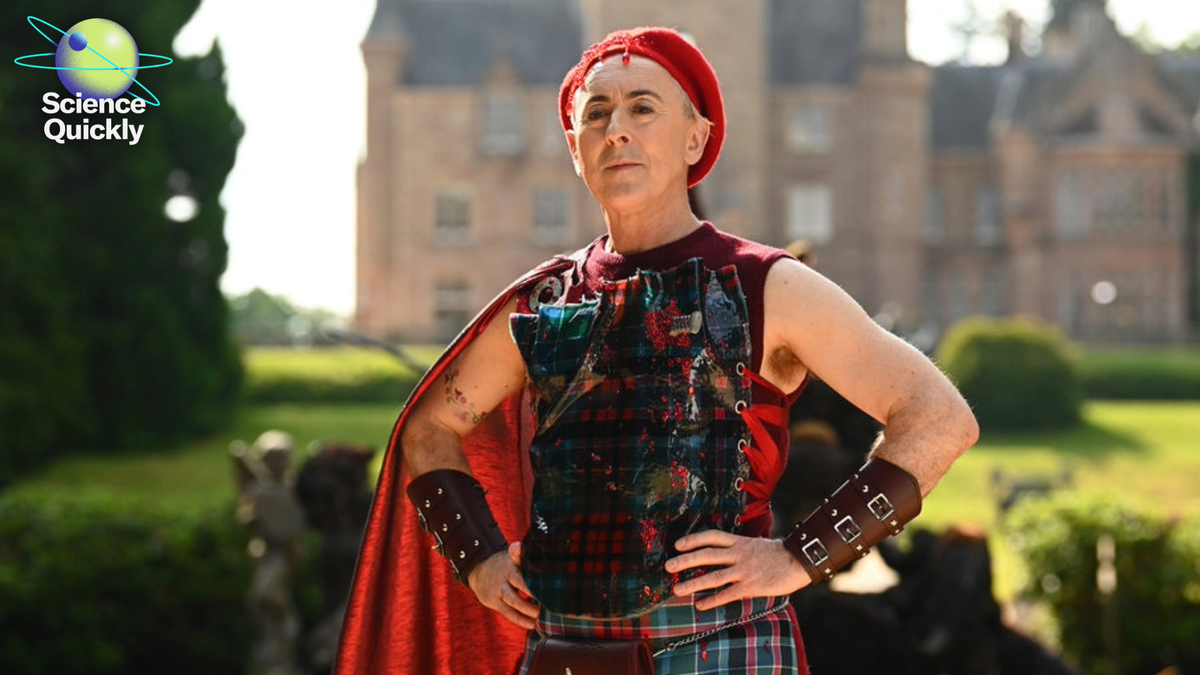
Mogensen: I think he is one of the best traitors on the show, and the host, Alan Cumming, has said so as well on some of the press tour to promote The Traitors. I think it’s because he doesn’t deviate much from his persona, sort of, this kind of little more quiet, a little more soft-spoken guy.
And I think one thing that comes up a lot on the show itself is people are distracted by his looks. Multiple cast members have said they’re distracted by how good-looking he is …
Pierre-Louis: [Laughs.]
Mogensen: Which is a thing in the research [that] plays out in terms of lie detection or trustworthiness. Actually, there’s some research that suggests that the better-looking a defendant is in a criminal-justice case, the lighter the sentence they might get, which is just bizarre to me. I mean, that seems really worrying on its own but something that you could, in a sense, take advantage of in a game like The Traitors.
Pierre-Louis: Pretty privilege is real.
Mogensen: Yeah.
Pierre-Louis: So basically, what I’m hearing is: if you wanna be an effective liar, be pretty, don’t deviate too much from your expected persona, and try as much as you can to keep your emotions out of it. It’s almost in some ways like, on the show, if you can treat it like you’re acting and you’re playing a role, it becomes easier because actors aren’t lying; they’re playing a character.
Mogensen: I definitely think that’s true, although the downside is, on the show, if you are a known actor, it may make people suspicious of you to begin with [Laughs] …
Pierre-Louis: [Laughs.]
Mogensen: But in theory, that would be a good strategy—and be likable. I mean, on the show, Michael Rapaport, an actor …
Pierre-Louis: Mm-hmm.
Mogensen: Was basically voted out very early on, and the cast members were open about why, which was they just did not like him, which, it sounds kind of harsh, but, you know, they essentially said, “You’re either a really bad traitor or just a faithful who’s getting in the way.” And so they voted him out quite early. So something to keep in mind.
Pierre-Louis: Okay, so be likable. I will do my best. [Laughs.] No, this is …
Mogensen: I think you’re crushing it. [Laughs.]
Pierre-Louis: [Laughs.]
Mogensen: You would be great.
Pierre-Louis: This has been lovely. Thank you so much for taking the time to join us today.
Mogensen: Thank you so much for having me. I really appreciated it, and I really had a fun time writing this story, and so I hope people check it out, and they check out The Traitors and come back and read the story and see if they think it played out this season.
Pierre-Louis: Where can they find the story?
Mogensen: It’s on ScientificAmerican.com, and you can look me up—I’m Jackie Flynn Mogensen. You can find it on my author page, too.
Pierre-Louis: Perfect. Thank you so much.
Mogensen: Thank you so much for having me.
Pierre-Louis: That’s our show. Join us on Friday, when we take a deep dive into the secretary of health and human services’ impact so far and the ideology that guides his decision-making.
Science Quickly is produced by me, Kendra Pierre-Louis, along with Fonda Mwangi, Sushmita Pathak and Jeff DelViscio. This episode was edited by Alex Sugiura. Shayna Posses and Aaron Shattuck fact-check our show. Our theme music was composed by Dominic Smith. Subscribe to Scientific American for more up-to-date and in-depth science news.
For Scientific American, this is Kendra Pierre-Louis. See you next time!