
Politics
/
April 13, 2026
The mayor’s proposed Department of Community Safety could radically challenge police power and advance a socialist vision of security. So why is he retreating from it?
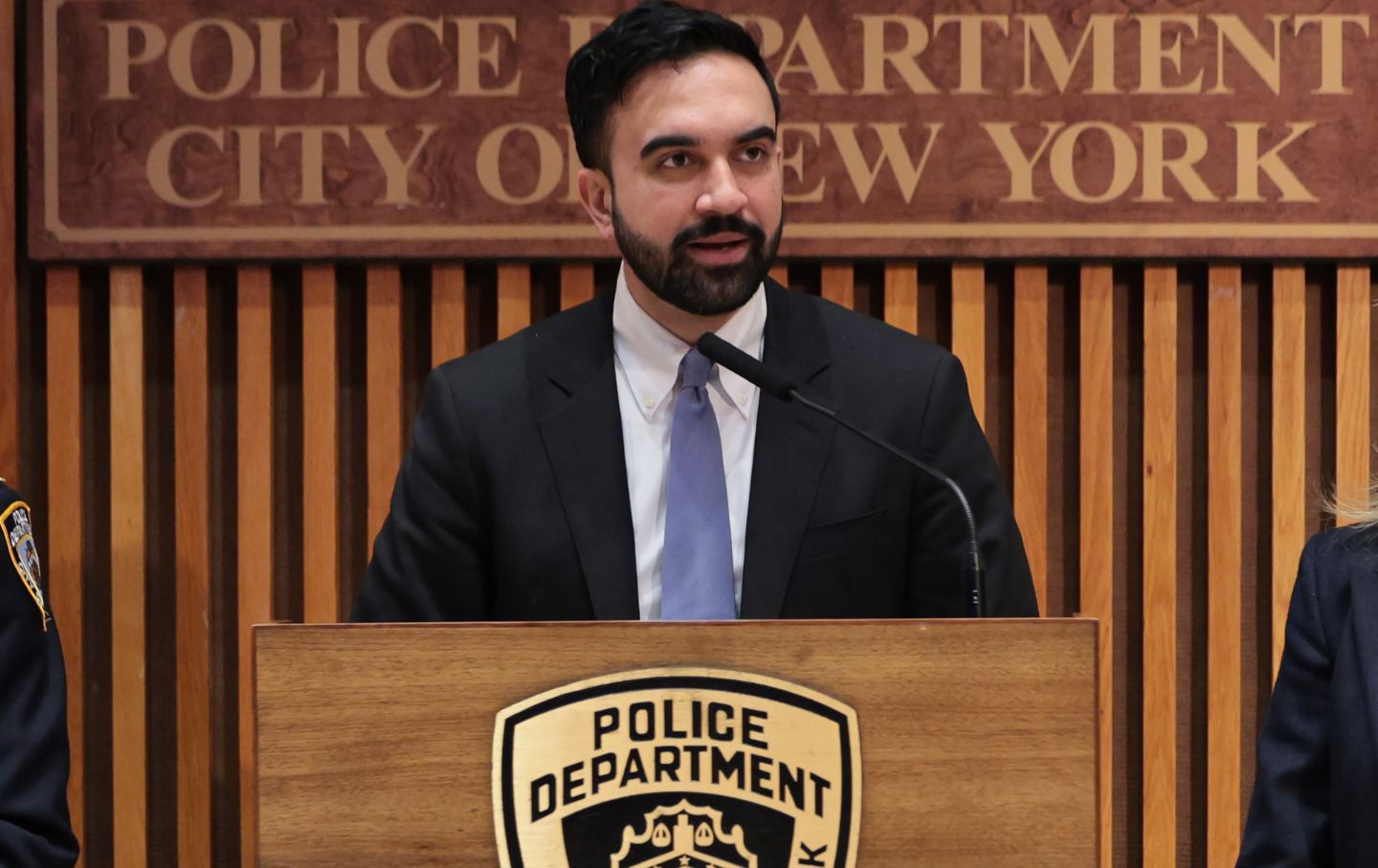
Zohran Mamdani speaks during a press conference at the New York Police Department headquarters on April 2, 2026.
(Michael M. Santiago / Getty Images)
For generations, “socialist” has been among the most effective slurs in American politics—a way to end an argument before it starts. It is against that backdrop that an unapologetic democratic socialist’s decisive election as mayor of the nation’s largest city took much of the country by surprise. But what Zohran Mamdani’s victory in New York City showed is not just that “socialist” no longer lands as the curse it once was, but also that he succeeded in remaking what socialism meant to voters—particularly when it came to ideas of public safety.
Mamdani didn’t win by relitigating abstract debates about the size of government or the management of capital. He won by insisting upon what democratic socialism could look like in practice. Most commentary on his campaign has focused on his affordability platform: rent, daycare, groceries, bus and subway fares. That framing isn’t wrong, but it’s incomplete. Affordability wasn’t a separate campaign plank; it was the most elementary expression of a deeper argument about safety.
In Mamdani’s framing, socialism was an answer to a question about which every New Yorker cares: How can we actually make people safe? Not safe in the narrow sense of crime statistics alone, but safe in housing, community, the ordinary vulnerability that marks all human lives, and in the exceptional crises that so often end up with our loved ones in either an ambulance or the back of a police car.
To be one missed paycheck from eviction, one health crisis from bankruptcy—these are not inconveniences. They are conditions of persistent precarity that shape everything else about how people move through the world, from interactions with neighbors, classmates, coworkers, and city employees to a person’s vulnerability to emotional stress, anger, and mental illness and crisis. They make people unsafe—and, Mamdani insisted, real security cannot exist without addressing these issues.
Mamdani called this governing philosophy “community safety.” We might instead call it safety socialism—the idea that genuine safety is a collective good, rooted in public systems for care and connection rather than coercion and containment. Affordable rent is one part of that. A functioning mental health system is another. So is a care network that shows up when you’re in crisis to meet your needs—and, ideally, long before. These are not different issues. They are instead different expressions of the same underlying problem, and they point to the same necessary remedy.
Despite being attacked as a “defund the police” candidate, Mamdani did not run on cutting the police budget upfront—something that no politician at his level has yet succeeded in doing. Instead, he ran on something that, if successful, would prove even more threatening to the political order by attacking the premise on which police budgets are based—namely, that police should be regarded as the default authority on what safety means, how to achieve it, and who should be allocated public funds to deliver it.
Current Issue
For decades, police lobbies—with help from their allies in news media and academic research—have maintained their power not simply through political muscle but through a story that violence and perpetual crisis are inevitable; that force is the only realistic response; and that anyone proposing otherwise is dangerously naïve. Safety socialism doesn’t attack that story head-on. It displaces it by talking relentlessly about the housing instability, untreated mental illness, poverty, and social isolation that make aggressive policing seem necessary.
Build the material conditions that prevent crisis, and the political ground shifts under the lobbies that depend on it to maintain their continued power. That was the deeper logic of Mamdani’s campaign, and it is what makes his proposed first-of-its-kind Department of Community Safety (DCS) something more than just another reformist social services proposal.
This is why Mamdani’s now-unfolding apparent retreat from his campaign promises around DCS is so alarming. Not only has he allied himself with a vocal opponent of the DCS vision in NYPD Commissioner Jessica Tisch and declined to allocate any funds toward building a Department of Community Safety—or the new work it is meant to do—in his proposed budget, but his administration has also decided, for now, against even taking on the political fight to establish such a department, issuing instead an executive order to create a new mayoral office as more expedient option. With no new funding for the office, it appears to be a symbolic substitute for the bold vision Mamdani promised to make real.
For half a century, Democrats and Republicans alike have shared an almost mystical faith in police, prisons, and punishment. This has produced American cities saturated with insecurity: isolation, gun violence, mass incarceration, rising mental illness and suicide, and a collapse of trust in public institutions. People managing trauma, mental illness, and addiction cycle endlessly through emergency rooms, shelters, and jails without anything resembling relief. A 911 call for a psychiatric crisis still overwhelmingly routes to police officers with no real tools to help—leading to arrest, an emergency-department waiting room, a brief hospitalization, and discharge back to the same conditions that produced the crisis.
This isn’t a result of police “failure.” The police are functioning exactly as designed, maintaining the cycle of crisis that keeps further inflating their departments’ budgets and overtime spending with each passing year. Their force cannot achieve what’s actually needed to produce safety, because the fundamental problem is not “disorder.” It’s deprivation.
Safety socialism, a term that arose out of conversations with my friend the public psychiatrist Gary Belkin, insists that safety doesn’t begin at the moment of crisis. It begins upstream—in affordable housing, universal childcare, well-funded schools, public health grounded in direct care services, and the publicly supported social fabric in communities that catches people before they fall into crisis. Mamdani’s envisioned DCS was an attempt to build that fabric into city government.
At its most ambitious, a fight to build and fully invest in DCS represents a form of abolitionist politics in practice—abolition understood not as mere destruction, as critics caricature it, but as Ruth Wilson Gilmore has insisted, as fundamentally constructive: “Abolition is not absence, it is presence. What the world will become already exists in fragments and pieces, experiments and possibilities. So those who feel in their gut deep anxiety that abolition means knock it all down, scorch the earth and start something new, let that go. Abolition is building the future from the present, in all of the ways we can.” Or, in Mariame Kaba’s formulation, it is “a positive project that focuses, in part, on building a society where it is possible to address harm without relying on structural forms of oppression or the violent systems that increase it.”
This is what makes DCS, as articulated during Mamdani’s campaign, ultimately more threatening to police power than any frontal assault on the NYPD. It represents, in Gramsci’s terms, a war of position rather than of maneuver. The most durable way to diminish policing is not to defund it in a single budget vote that can be reversed the following year, but to construct the material alternatives that render the current funding and authority given to police plainly absurd—and to, over time, insist upon reallocating police funds for the alternative services others are increasingly enabled to perform.
This thinking sits at the heart of the DCS. The department would consolidate and expand what currently exists in small, underfunded fragments—non-police crisis teams, violence interrupters, street outreach workers—into a single agency with a substantial budget, allowing it to span the full arc from prevention to acute crisis response. In his campaign, Mamdani committed to tripling mobile crisis teams with 24/7 citywide coverage, enabling interoperability between the 988 mental health line and 911, and launching a citywide community mental health navigator program. These are specific operational changes to how the city routes people in distress—changes that begin to make policing one option among several rather than the only one available.
The most essential and ambitious piece of the plan was a neighborhood care workforce: residents of the city’s most disinvested communities, hired, trained, and paid to support their neighbors, with the salaries, benefits, and institutional permanence currently reserved for police officers.
New York has glimpsed this approach to public mental health and safety before. In the 1960s, a program at Lincoln Hospital in the South Bronx hired neighborhood residents as community mental health workers. They didn’t run clinics. They stabilized daily life—mediating conflicts, navigating housing and benefits, showing up between crises when intervention actually works. The program was celebrated nationally, then dismantled—not because it failed, but because the psychiatric professionals overseeing it withdrew support rather than cede authority to lay workers. The city spent the next 50 years replacing that model with police, jails, emergency rooms, and default reliance on both voluntary and involuntary use of psychiatric medications that cannot address root causes. It was a choice New York is still paying for.
Now, by using public funds to build vital housing, crisis response, and care infrastructure, DCS can begin to address this damage head-on.
Community-led mutual aid and reciprocal care should remain at the core of any abolitionist vision, and abolitionists must always remain on guard against cooptation by politicians and the state, but a publicly funded system like DCS could represent the point at which abolitionist ambition meets the apparatus of government. Yet none of this can happen without an unflinching fight against entrenched police power.
Without a commitment to that fight, this kind of movement towards transformative change tends to collapse quietly rather than dramatically. A recent example in America’s third-biggest city shows how this can happen.
Like Mamdani, Brandon Johnson ran for Chicago mayor in 2023 as an unapologetic leftist standing against the city’s Democratic establishment. And like Mamdani, he campaigned on a platform to create an ambitious, comprehensive non-police crisis response and community mental health system—one called Treatment Not Trauma.
But today, nearly three years into his mayoralty, Johnson’s Treatment Not Trauma plan lies largely dormant. The non-police crisis response pilot started by his predecessor, Lori Lightfoot, continues to operate only on weekdays between 10:30 am and 4 pm and at a minuscule scale, leaving over 99 percent of mental health calls to armed police officers. It is responding to even fewer calls than it did under Lightfoot. The community care corps at the center of the idea was never built. Only one of the 14 city-run mental health centers closed over the last three decades that Johnson promised to reopen has returned. And the Chicago Police Department’s bloated budget continues to increase each year.
This is precisely the dynamic that safety socialism must be built to withstand. That requires carefully designed metrics and measurement tools that go beyond the reductive terms of safety set by police paradigms, sustained public education, and durable budgetary guarantees. Without such protections, when crisis erupts, those who have always defined safety as a policing problem will move quickly to discredit civilian alternatives and restore the old hierarchy. Reform without institutional protection is politically defenseless.
This is also why Mamdani’s approach to current budget negotiations is so concerning. His team estimated DCS would require at least $1.1 billion annually to operate at a meaningful scale, but the administration’s initial proposed budget contains not so much as a single dollar for the department. Now Mamdani is moderating and backing away from his campaign promise, citing budgetary restrictions and expected opposition in the City Council to justify instead establishing not a city agency but a Mayoral Office of Community Safety created by executive order rather than legislation, which means that it could be shuttered just as easily by the swipe of a pen held by his successor. Furthermore, no new funds are expected to be allocated to the office, which will instead simply take control over an estimated $260 million moved along with existing programs for which it will now assume responsibility. Compromises like these, advanced in the name of realpolitik, are exactly how ambitious reforms have historically dissolved inside routine budget politics, quietly, one fiscal year at a time.
Popular
“swipe left below to view more authors”Swipe →
For Mamdani’s promise for a DCS to become a reality, it needs four things no speech or executive order can provide: City Council legislation defining its mandate and authority; explicit dispatch protocols giving civilian teams genuine first-responder status rather than making them a permanent backup to police; a material commitment to continuous, prevention-focused community care programs and refusing to allow DCS to be reduced to endless crisis response alone; and a protected budget baseline of recurring line items that survive the next manufactured fiscal crisis. Without that foundation, every stumble of an underfunded civilian crisis response and the unchecked increase in crisis needs will be held up as proof that the whole project was destined to fail from the start.
Last Wednesday, Mamdani told The New York Times that he would overrule Tisch if necessary, insisting that he “hold[s] the final decision” on policing. But the context was revealing: The assertion came in reference to disbanding the Strategic Response Group, not to building the Department of Community Safety. Mamdani affirmed his authority over Tisch without connecting it to his transformative agenda for building community safety systems and opposing NYPD’s current monopoly on safety matters. If the mayor is prepared to overrule his police commissioner, the question his supporters should be pressing is: To what end? Disbanding an abusive protest-policing unit is a worthy reform, but it is not the structural reorientation of safety infrastructure that DCS represents. The real test of Mamdani’s willingness to assert control over the NYPD is whether he will use his authority to fight for the department he promised to build.
The Mamdani administration has framed the launch of a mayor’s office in place of a DCS as a pragmatic “first step” toward the eventual realization of the latter. This may turn out to be the case. But history suggests that quick retreats to incrementalism when a progressive executive first comes to office and wields more of a popular mandate than they are likely to ever hold again are far more often the first step toward abandoning transformative agendas in favor of perpetual “pragmatism” defined by accommodation of entrenched police power and its selective austerity, along with well-honed police capacity to quash any threats to their interests. Whether or not the DCS as once envisioned becomes a reality will, as has always been true, hinge on whether Mamdani’s supporters publicly insist that anything less is unacceptable and on whether Mamdani makes use of the political leverage that principled critique and demand from the left can create.
The deepest argument for safety socialism isn’t efficiency. It is about what care does for democratic life.
When the most consistent government presence in vulnerable neighborhoods is an armed officer, people learn to see the state as punishment. When essential care is collapsed into medical care alone and then rationed while forcing people to risk humiliation and bankruptcy to access it, people learn to expect abandonment. And in landscapes of abandonment, authoritarian politics and police-state mentalities find fertile soil—offering simple villains, invented enemies, and force as the supposed answer to social problems. Policing looms so large in urban politics in large part because it is so often the only public institution that reliably shows up when called, because it’s the only one that’s funded to do so. Safety socialism is a strategy for changing that—for making the state present in ways that build trust rather than enforce compliance.
Investments in a large-scale community care workforce can build the daily habits of mutual aid and reciprocal recognition that Jane Addams argued, more than a century ago, were the actual substrate of democratic life—the ordinary experience of being seen and supported by neighbors and government working in tandem.
The power of police lobbies and the panic politics they feed on are not unavoidable features of urban democracy. They are the product of a deliberately constructed vacuum—one that a serious, durable, well-funded community care system can begin to fill.
Whether Mamdani’s administration will ultimately succeed depends on more than a set of policy proposals. It hinges on showing that the same logic linking affordability and housing stability to genuine safety extends further, shaping what kind of civic life a city can sustain. When safety becomes not merely the absence of violence but the reliable presence of supportive public institutions that allow people to rely on one another, a city can become more than just orderly. It can become a shared home that its residents experience as worth defending and caring for together. The question now is whether Mamdani will truly fight to translate that governing philosophy into a lived reality. To do so, he will have to risk losing—the fight itself, any easy relation to NYPD, and, with that, his budding career and influence. But without taking such risks, no truly transformative politics will ever make it from campaign rhetoric to real-world implementation.
More from The Nation
In this week’s Elie v. US, Elie opines on the meaning of the Wisconsin Supreme court election. Plus: should you be able to claim your dog as a dependent on your tax returns?
Elie Mystal

The results from an important race in Wisconsin this week suggest the Republicans could be in very big trouble.
John Nichols
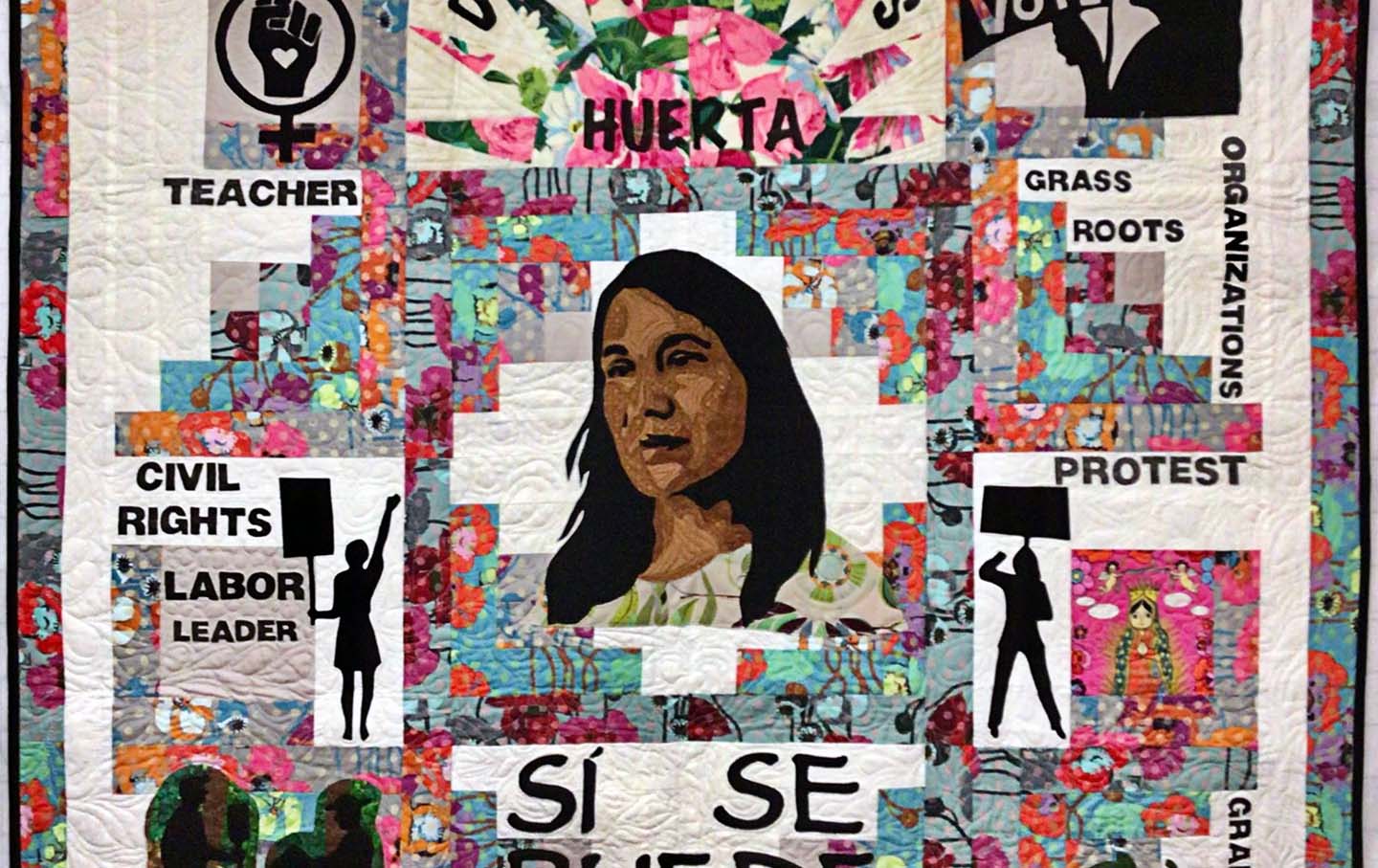
April 10, 2026 marks the 96th birthday of the American labor leader and feminist activist.
OppArt
/
Sylvia Hernández

With his genocidal threats against Iran, Trump has shown the world that he is a terrorist—one with a nuclear arsenal.
Column
/
Sasha Abramsky