
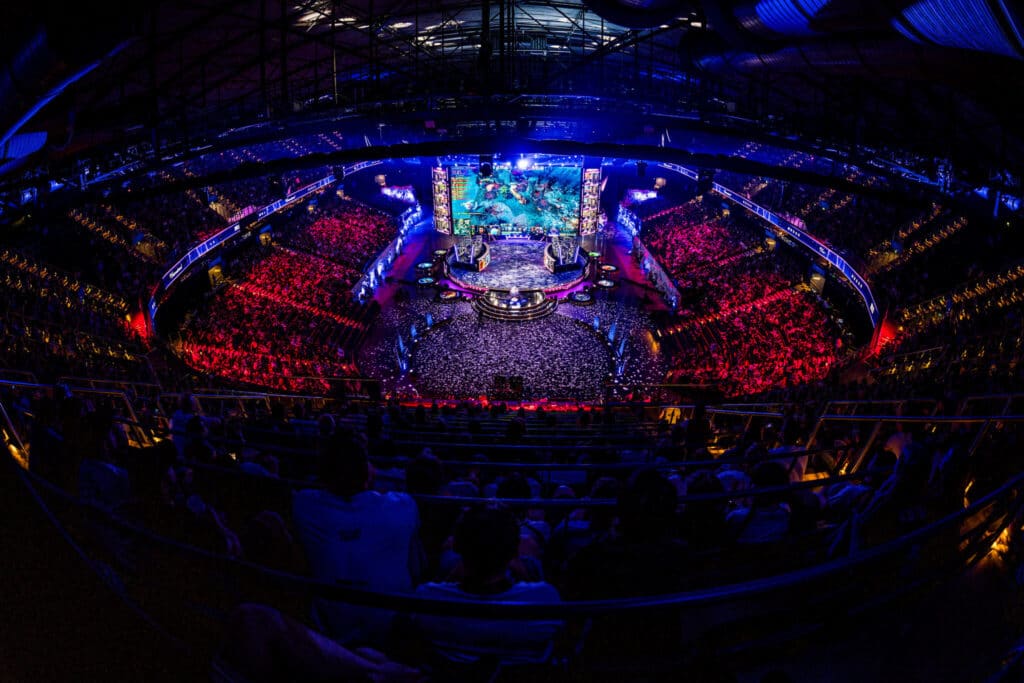
The Dota 2 esports scene is in a healthy place if we’re looking at the sheer number of S-Tier events. We have million-dollar tournaments almost every month, but the issue is — the majority of them are either played in a closed studio or entirely online.
And, even though I’m a hardcore Dota fan, these tournaments can feel pretty dull at times. What’s missing? A crowd.
- The return of Liquid: How two-time TI champions took the BLAST Slam VI title
- “Stop doing yearly cycles and start thinking in terms of longevity”: Former Call of Duty boss discusses esports limitations
Offstage Events Left and Right
There are simply way too many offstage events. Excluding The International and the Esports World Cup, there are three main tournament organizers pumping out events in the scene: ESL, PGL, and BLAST — all of which produce two or three Dota 2 events throughout the year.
The issue is that most of these tournaments are conducted online or in a studio. Apart from one stadium event per year, ESL hosts DreamLeague, an entirely online tournament series. On the other hand, PGL and BLAST tend to stick to studio formats, though BLAST has implemented stadium tournaments a few times.
Though Dota fans will pretty much always have constant action to watch, these games just don’t bring the same spark as those played in front of a crowd. You might see cinema-tier games here and there, but for the most part, these events just don’t feel as engaging.
Let’s not get started with DreamLeague. I believe this tournament series has many flaws. Matches are played online and have an extremely draining format. The event uses two group stages to whittle down 16 participants to just four, stretching it to nearly two weeks. After dozens of games and effort, the playoffs are surprisingly short, only requiring four matches to determine the winner.
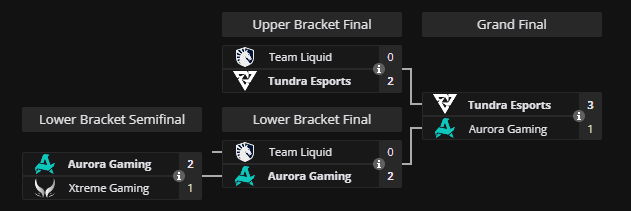
With these events, it just feels like we’re watching the same thing over and over again. We have the same teams, the same players, the same patch, the same heroes, and the same talent showing up event after event. And though these events are produced by different organizers, it just feels like none of them have any identity. There really isn’t anything unique about these events, aside from maybe different formats.
I’m a diehard Dota fan who’s been watching tournaments since I was 13. I’ve barely missed any pro games. But a decade later, I’ve started getting a little lazy when it comes to tuning in. I legit couldn’t tell you who won the 25th season of PGL Wallachia or the 70th iteration of DreamLeague.
Even two-time TI winner Yaroslav “Mipsohka” Naidenov is in agreement. According to Hawk.Live, he mentioned on stream: “I honestly don’t know how you don’t get tired of Dota. There are so many tournaments every single day. You constantly watch the same picks and the same teams. It’s just boring.”
Feeding Off the Breadcrumbs of Stadium Events
However, Dota’s magic never fails when there’s a crowd in play. The most recent LAN was ESL One Birmingham 2026, which was an absolute treat to watch. Sure, it cheated a little with a new patch being dropped in the middle of the tournament, but it was still a very fun event overall. We had the crowd cheering every time Satanic took a sip of his drink.
Dating back to 2025, we also had BLAST Slam IV held in Singapore in November. We were treated to one of the best grand finals we’ve seen in recent years, with Tundra and Falcons getting peer pressured by the crowd to pick the exact same drafts in the fourth and fifth games. I remember this match more vividly than the grand final of PGL Wallachia Season 7, even though that one happened less than a month ago.

And, of course, we had The International 14, which produced crazy games and insane storylines.
LAN Dota just hits differently, as the pros play under pressure. You have thousands of fans sitting in front of you. When the nerves start kicking in, you make mistakes that can open the door for insane comebacks or back-and-forth games. These are the matches where Dota is at its best.
The worst part? We only get these kinds of events three or four times a year when there are 15 to 20 tournaments in total.
We Need Dota 2 Events That Mean Something Again, And It’s Possible
With ESL One Birmingham 2026 already out of the way, we’re only expecting two more stadium events: the Esports World Cup and The International. Unless BLAST comes in clutch and announces a stadium event later in the year, we just don’t have very many arena LANs to look forward to, which, in all honesty, doesn’t feel like enough for me.
What if each of the big tournament organizers pitches in one stadium event per year? ESL already does its share with yearly arena LANs, and BLAST doesn’t seem opposed to the idea. Now, we’re left with PGL. These guys host Counter-Strike tournaments all the time, surely they can spare a single larger-scale Dota tournament per year? And if Valve sprinkles one Major per year, that’d be even better.
Let’s take this scenario. ESL, BLAST, and PGL each contribute one arena event. Valve runs The International and adds a Major in between. Then, we have the Esports World Cup. We now have six arena events per year, spread roughly every two months.
This should be enough Dota to look forward to. These events will mean something, and each tournament organizer will have the opportunity to implement something unique to make them stand out.
And of course, tournament organizers can still host their studio LANs or online tournaments. People who want to watch those still can, and fans who don’t can simply skip them and wait for the bigger events.
I mean, what’s really stopping this idea? One argument could be player fatigue, where competitors would be too exhausted to play this many events. But… they’re flying to these studio events already, so why not have more fun in an arena while they’re there?
Are financial constraints from tournament organizers another issue? Honestly, I don’t really see the need for them to slap $1 million prize pools at every single tournament. Surely they can shave it down to something like $800,000 and use the rest for running costs. People will still watch, and teams will still participate. For reference, Valve Majors from 2021 to 2023 had prize pools of only $500,000, and nobody really complained.
Surely, many cities would welcome a big Dota LAN with open arms. There are several passionate regions, like South America and Southeast Asia, that would love to host one. Events like these could also possibly attract new players from around the world.
But, until any tournament organizers or Valve step in, I’ll just look forward to yet another season of PGL Wallachia, I guess…
The post Dota 2 needs more stadium events: I’m a diehard fan and can’t even remember the last five offstage winners appeared first on Esports Insider.