Key Takeaways
- Mohammed Ali Abdul Rahman Al-Sindi, born in Madinah, has been running a food stall near Masjid an-Nabawi that his grandfather established approximately 70 years ago.
- The family provides free Iftar meals every Monday, Thursday, the white days of each Islamic month, and throughout Ramadan.
- Originally from Pakistan’s Sindh province, the family has become a permanent part of Madinah’s community across three generations.
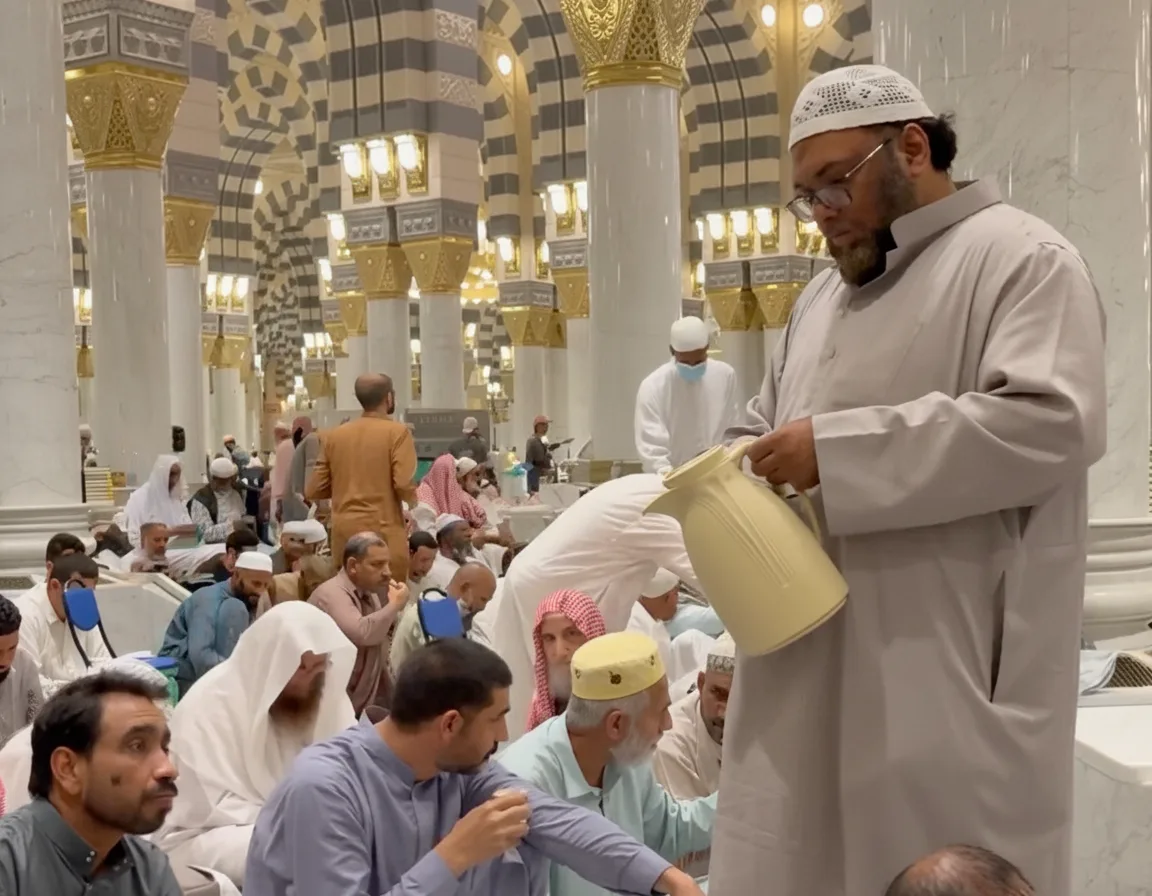
A Pakistani family from Sindh province has been serving tea, coffee, and food to visitors of Masjid an-Nabawi in Madinah for approximately 70 years — a tradition of devotion and hospitality that has passed through three generations and become woven into the fabric of life near the Prophet’s Mosque.
Mohammed Ali Abdul Rahman Al-Sindi, who was born in Madinah, now manages the family’s food stall — known locally as a “safra” — near Masjid an-Nabawi.
His grandfather first established the stall in the Al-Ainiyah Street area. When mosque expansions reshaped the surrounding area, his father relocated the operation.
Mohammed took over the business in 1428 AH — approximately 2007 to 2008 — and has continued the family’s decades-long service ever since.

What began as one man’s act of service near the Prophet’s Mosque has grown into a family legacy spanning 70 years.
The stall has outlasted expansions, relocations, and the passing of generations — its purpose remaining unchanged throughout: to serve the guests who come to the house of the Prophet (PBUH).
Mohammed’s children have all graduated from local high schools in Madinah, cementing the family’s roots in a city that welcomed them from Pakistan three generations ago.
Free Iftar Every Week
Beyond the daily service of tea and coffee, the family provides free Iftar meals — meals to break the fast — on a regular schedule throughout the year. These are served on:
- Every Monday and Thursday
- The white days — the 13th, 14th, and 15th of each Islamic month
- Throughout the entire month of Ramadan
The practice reflects the Islamic tradition of feeding those who fast, carried out consistently by the family regardless of season or circumstance.
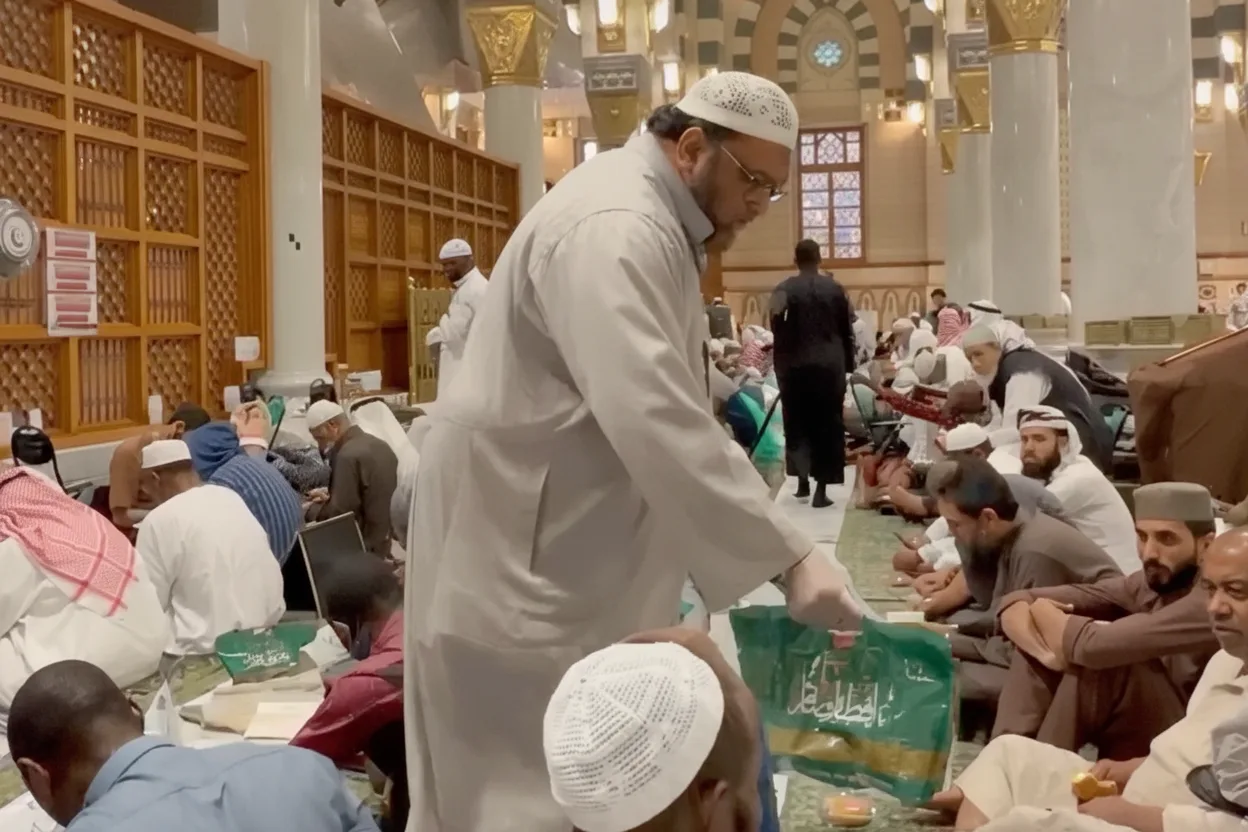
Mohammed speaks about his family’s life in Madinah with deep gratitude, describing the city as a blessed land that has honoured his family for generations. He references the local saying — “Your house closest to the mosque is the best house” — as a reflection of the privilege his family feels in living and serving so close to the Prophet’s Mosque.
“It is an honour to serve the community and provide food for fasting people,” he said, describing the work not merely as a livelihood but as a continuation of a religious and family tradition that he hopes will endure.