
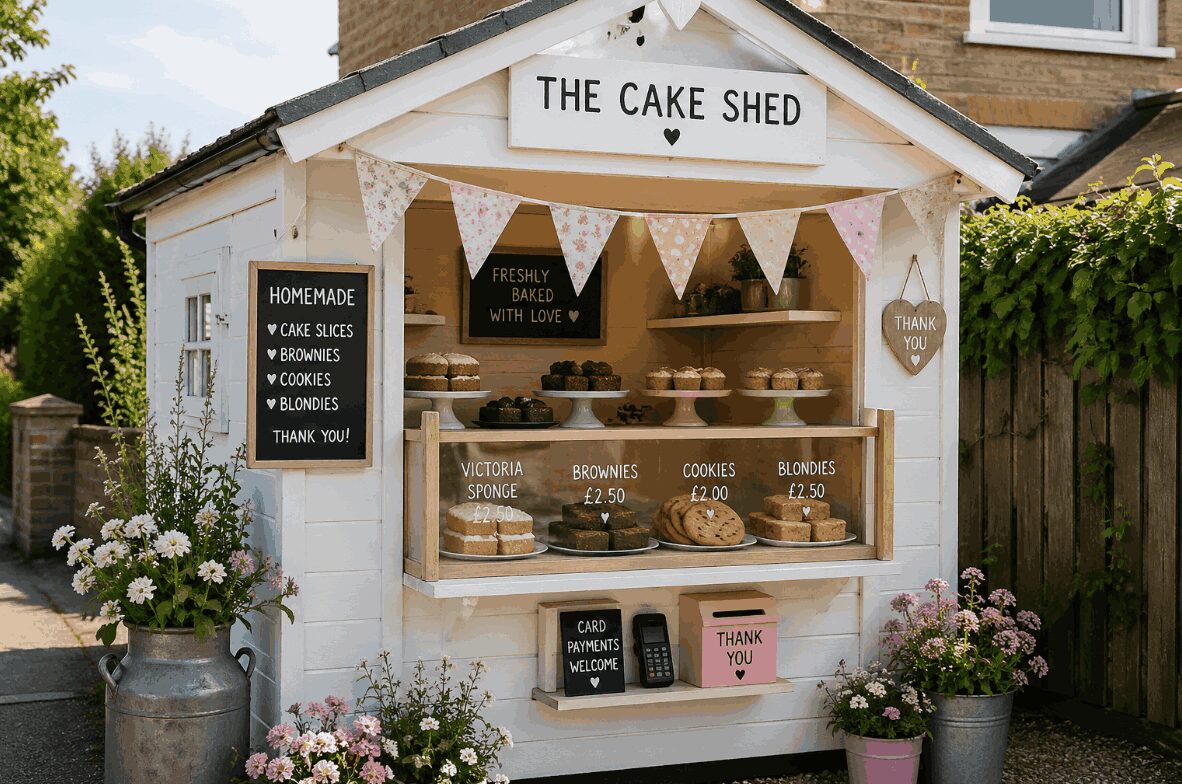
Cake sheds are popping up across the UK – from brownies in garden huts to honesty-box cupcakes at the end of driveways. But before you start selling, there are strict food hygiene, legal and tax rules you need to know.
Cake shed legal checklist UK
- Register your food business at least 28 days before trading
- Prepare for Environmental Health inspection
- Complete food hygiene training
- Provide clear allergen information
- Check landlord, mortgage and insurance permissions
- Keep records for HMRC and the £1,000 trading allowance
- Avoid selling high-risk chilled foods without proper storage
What is a cake shed – and why is it trending?
::contentReference[oaicite:0]{index=0}
A cake shed is a small self-serve bakery setup outside someone’s home, usually stocked with brownies, cookies, cupcakes or traybakes. Customers pay via honesty box, QR code or contactless.
The trend has grown because it combines low start-up costs with strong local demand and social media appeal. It looks simple – but legally, it counts as running a food business.
Real UK examples of cake sheds
In Oxford, The Cake Shed Boars Hill launched in May 2024, selling brownies, cookies and cake slices from a garden setup, typically priced around £2.50 per item.
Meanwhile, Lady Berry Cupcakes has published practical advice for bakers running similar setups, including tips on branding, stock rotation, hygiene and customer payments.
MoneyMagpie warning
A cake shed might feel informal, but if you are selling food regularly, you are legally running a food business. That means registration, hygiene rules and allergen laws apply.
Do I need to register to sell cakes from home?
Yes – if you are selling food as a business, you must register with your local authority.
You need to register at least 28 days before you start trading. This applies even if you:
- only sell at weekends
- use an honesty box
- sell to neighbours or locally
Register your food business on GOV.UK
What happens if I sell cakes without registering?
Failing to register when required can lead to enforcement action from your local authority. It is one of the most common mistakes new home bakers make.
Will my kitchen be inspected?
Yes, it can be. Even if your shed is outside, your home kitchen is where the food is prepared.
Environmental Health may check:
- cleanliness and surfaces
- food storage
- cross-contamination controls
- allergen handling
- pest control
Food Standards Agency guidance
Key point
It is not the shed that gets inspected – it is how and where your food is made.
Do I need a food hygiene certificate?
You must be properly trained in food hygiene. Most home bakers complete a Level 2 Food Hygiene course to meet this requirement.
Allergen rules for cake sheds
You must clearly inform customers if your products contain allergens such as milk, eggs, gluten, nuts or soya.
Example label
Brownie – contains milk, eggs, gluten, soya
Made in a kitchen handling nuts.
Can I sell cakes from my driveway or garden?
Yes, but you may need to check:
- planning considerations
- local council rules
- neighbour impact
- signage restrictions
Can I run a cake shed if I rent?
You may need permission from your landlord. Some tenancy agreements restrict running a business from home.
How much does it cost to start a cake shed?
| Item | Cost |
|---|---|
| Shed/setup | £100–£500+ |
| Ingredients | £40–£150 |
| Packaging | £20–£80 |
| Insurance | £50–£150/year |
Typical startup
£150–£400 for a basic setup using existing equipment.
Best bakes to sell from a cake shed
- brownies
- cookies
- traybakes
- flapjacks
Is a cake shed a good side hustle?
For many people, a cake shed can be a genuinely viable side hustle – but only if it is treated like a real business rather than a casual hobby.
The biggest advantage is the low barrier to entry. Compared to opening a café or bakery, startup costs are minimal, you can work from home, and you control your hours. For confident home bakers, it can be a practical way to turn an existing skill into income without taking on major financial risk.
However, the reality is more complex than social media makes it look. Profit margins can be squeezed by rising costs of butter, eggs and chocolate, and once you factor in your time, packaging, energy use and unsold stock, earnings may be lower than expected – especially in the early stages.
There are also legal and practical responsibilities that cannot be ignored. Food hygiene rules, allergen labelling, insurance and registration requirements mean this is not a “no-rules” side hustle.
When a cake shed works best
- You already bake regularly and confidently
- You have a strong local community or footfall
- You keep your menu simple and cost-controlled
- You treat it as a business from day one
When it might not be worth it
- You underestimate your time and costs
- You rely on unpredictable footfall alone
- You do not want to deal with regulations and admin
- You price too low to compete locally
The bottom line: A cake shed can absolutely make money and grow into a small local business – but it works best as a stepping stone. The most successful setups often evolve into regular order-based baking, event catering or a broader home bakery brand.
Cake shed pricing: how much should you charge?
Typical pricing ranges from £2 to £4 per item depending on quality and location.
Always include:
- ingredients
- packaging
- electricity
- waste
- your time
MoneyMagpie tip
Underpricing is the biggest mistake. Many cake sheds look profitable but pay less than minimum wage once all costs are included.
Before you open: your 10-point checklist
- Register your business
- Complete hygiene training
- Prepare allergen info
- Check permissions
- Set up payments
- Price correctly
- Stock safely
- Label clearly
- Track income
- Launch locally
The bottom line
Cake sheds are a brilliant low-cost way to start a food business, but they are not a legal shortcut. If you treat it properly from day one, it can grow into a reliable local income stream.