
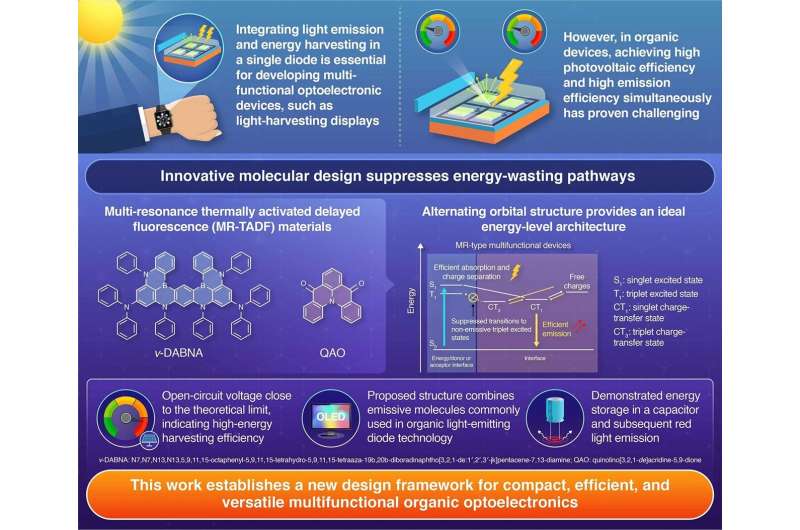
New display technology converts ambient light and touch into usable electrical energy, enabling screens that partially power themselves for wearables, IoT devices, and smart infrastructure applications research field advances rapidly.
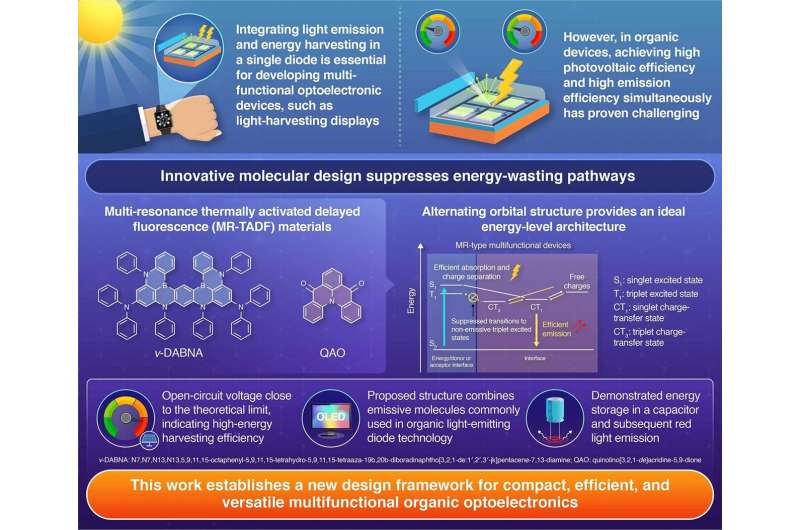
A new class of display technology is moving electronic screens by Institute of Science Tokyo beyond passive information output by enabling them to generate usable electrical energy from both ambient light and physical interaction.

The approach integrates transparent photovoltaic layers with mechanically responsive structures that convert touch, pressure, and micro-deformation into electrical output, allowing the display stack to supplement its own power requirements during operation. Although the energy output is not yet sufficient to fully power high-resolution displays, it can support low-power functions such as standby modes, embedded sensing, and periodic refresh cycles in compact devices.
Researchers highlight potential use cases in wearables, IoT panels, smart signage, and distributed sensor networks, where continuous operation and energy efficiency are critical design priorities. However, challenges remain in improving conversion efficiency, maintaining display brightness, and ensuring long-term durability under repeated mechanical stress, prompting ongoing material and architectural optimization efforts.
The architecture is designed to be compatible with existing thin-film deposition and layered display manufacturing techniques, reducing the need for entirely new fabrication infrastructure.By embedding energy harvesting elements directly into the display stack, designers can minimize additional component footprint while maintaining form factor constraints in modern slim devices. This could reduce dependence on external charging cycles for low-power systems, particularly in distributed electronics where access to continuous power sources is limited or inconvenient.

Early-stage prototypes suggest that while energy gains are modest per interaction, cumulative harvesting over time can meaningfully extend battery life in intermittent-use devices.
Future development is expected to focus on improving material transparency, increasing energy conversion efficiency, and optimizing mechanical resilience without compromising display resolution or color accuracy.
The concept also aligns with broader trends in sustainable electronics design, where energy efficiency and multifunctional components are increasingly prioritized in next-generation device engineering.
If successfully scaled, such systems could reshape how displays are designed, shifting them from purely power-consuming interfaces to partially self-sustaining electronic surfaces integrated across consumer, industrial, and infrastructure environments.
Researchers are also investigating hybrid configurations that combine multiple energy harvesting mechanisms to improve overall efficiency under varied lighting and usage conditions.
These approaches remain experimental but are progressing toward practical deployment in electronics.