
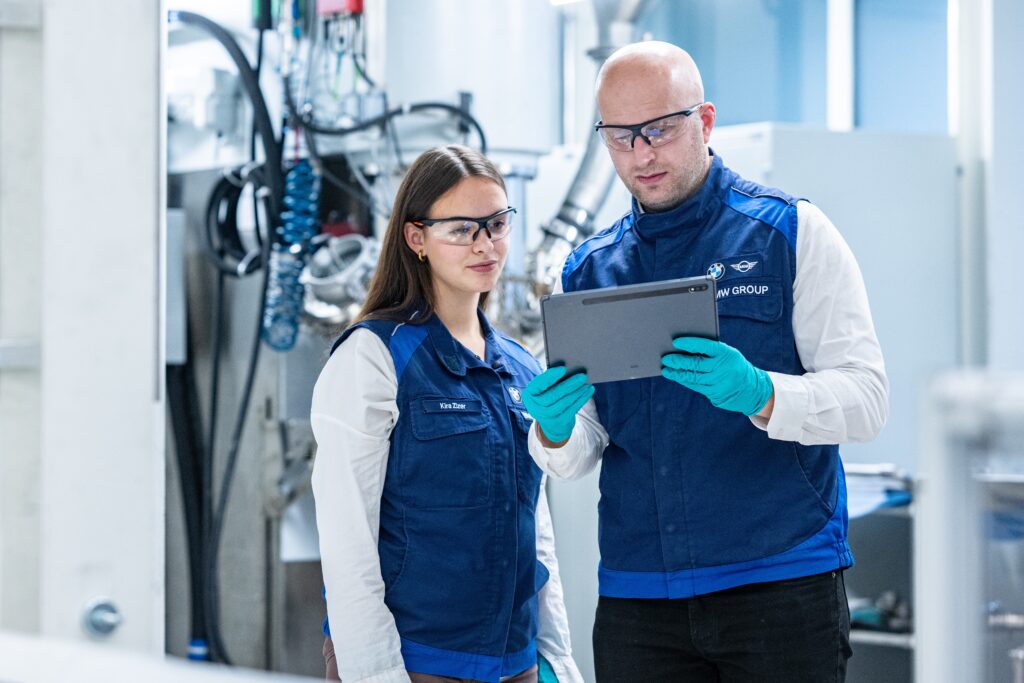
What if battery production could predict outcomes before testing? An AI model reshapes manufacturing by analysing data across every stage of the process
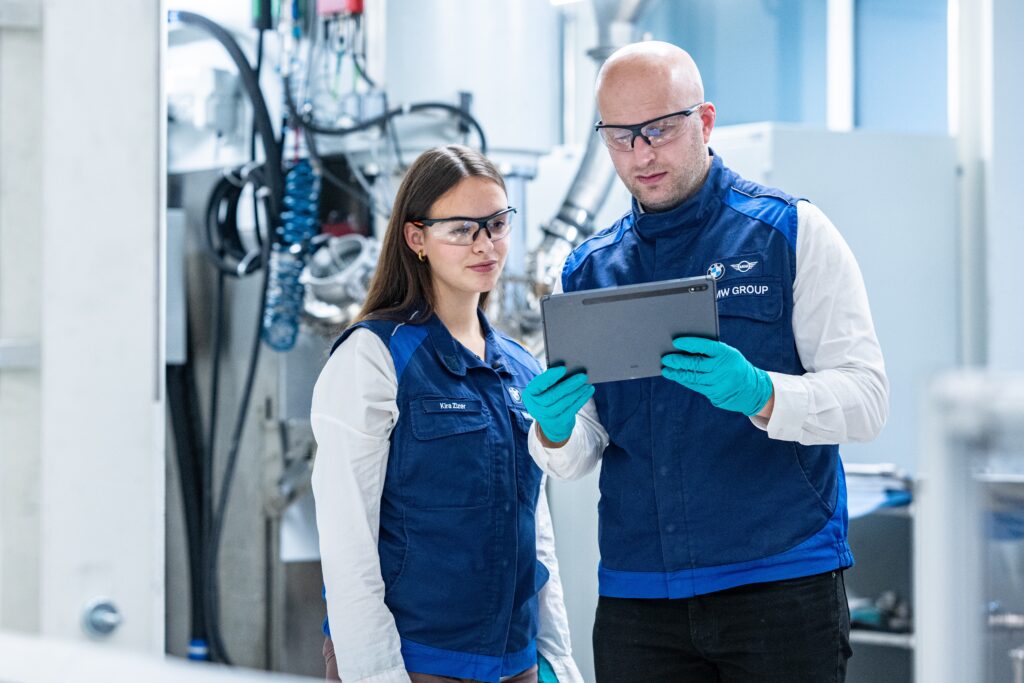
BMW Group and University of Zagreb are advancing battery cell production using artificial intelligence through the “Insight” research project, aimed at improving efficiency, quality, and resource utilisation across the manufacturing value chain.

Developed at the Battery Cell Competence Centre in Munich, the project applies AI driven models across processes ranging from electrode production to end of line testing and in house direct recycling. By combining historical test data with real time production inputs, the system predicts process parameters and battery performance with high precision, reducing dependency on repetitive and resource intensive testing cycles.
A key advantage lies in the significant reduction of testing effort, which traditionally consumes substantial time, raw materials, and manufacturing capacity. The AI models enable a reduction of more than 50 percent in material usage and processing time in individual steps, while maintaining or enhancing output quality. Additionally, the system supports final validation stages by analysing battery cells immediately after initial charging, potentially eliminating the need for the conventional quarantine phase that requires controlled storage infrastructure.
Beyond testing optimisation, the models identify production patterns and enable predictive insights that improve overall manufacturing performance and cost efficiency. Developed in collaboration with doctoral researchers and students, the models are now being scaled beyond prototype environments, with potential integration across wider production networks and applications beyond internal use.
The collaboration also reflects a strong integration of academic research and industrial practice, combining expertise in mechanical engineering, electrical engineering, and computer science with real world production systems. It further supports talent development by providing hands-on experience and industry exposure to emerging engineers and researchers.
“We are working on scaling the newly developed AI models from the prototype environment,” says Christian Siedelhofer, Head of Technology Development Lithium Ion Battery Cells at BMW Group. “We are also examining to what extent these models are suitable for additional use cases within our production network.”