
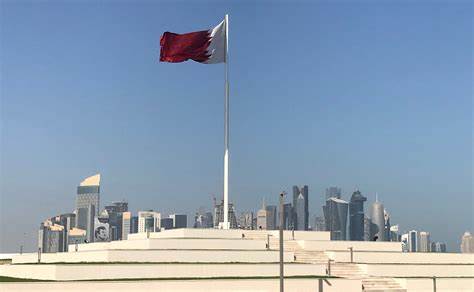
With its role in mediation and humanitarian diplomacy, Qatar could help shape how civilians are protected in modern conflict.
As conflicts escalate across the Middle East, one reality has become increasingly clear: modern warfare is no longer confined to distant battlefields.
Instead, it is unfolding in cities.
In recent weeks, missile and drone interceptions over Qatari territory have brought the dynamics of regional conflict closer to home. Even when interceptions succeed, falling debris and blast effects expose civilian populations and critical infrastructure to real risk.
This is not an abstract concern. It is a lived reality.
Across the region, missiles, rockets, and other explosive weapons are increasingly used in or over populated areas, with devastating consequences for civilians. When such weapons are used in cities, their effects rarely remain confined to a single target. Blast waves spread, infrastructure is damaged, and entire communities are affected.
This raises an urgent question: who will lead efforts to better protect civilians in this evolving landscape of war?
A region disproportionately affected
The consequences are documented. Around 90 percent of those killed or injured by explosive weapons in populated areas are civilians.
Damage to hospitals, water systems, electricity networks, and essential services can affect entire populations for years. From Iraq to Afghanistan, from Gaza to Lebanon, from Syria to Sudan, the long-term consequences are still unfolding.
Muslim-majority societies have been among the most affected by this pattern of warfare.
This lived experience should not only be a source of concern. It should also be a source of leadership.
Qatar’s position in a shifting landscape
In this context, Qatar is uniquely positioned. Over the years, the country has steadily built a reputation as a credible mediator, capable of engaging with a wide range of actors across complex conflicts.
Its role in facilitating dialogue — often between parties that do not otherwise communicate — has become a defining feature of its foreign policy.
Qatar has also invested significantly in humanitarian diplomacy, supporting efforts that prioritises the protection of civilians and the delivery of aid in some of the world’s most challenging environments.
Qatar is a major global humanitarian donor, ranking among the top five donors to the UN Office for the Coordination of Humanitarian Affairs (OCHA) in 2025.
More recently, Qatar has also found itself directly exposed to the spillover effects of conflict.
Yet its response has remained measured, emphasising restraint, avoiding further escalation and prioritising diplomatic engagements, while also ensuring the safety of its population, both citizens and residents.
From principles to practice
The international community has already taken steps to address the humanitarian consequences of explosive weapons in populated areas.
Since 2022, 91 states have adopted the Political Declaration on Strengthening the Protection of Civilians from the Humanitarian Consequences Arising from the Use of Explosive Weapons in Populated Areas.
Qatar is among the countries that have endorsed this declaration — a commitment that now creates an opportunity to help shape how these principles are implemented in practice.
The focus now is on implementation.
This is where Qatar could play a meaningful role.
Leadership in this space does not require reinventing frameworks. It requires helping translate existing commitments into practice.
Several avenues could be explored:
First, Qatar could support the establishment of a regional hub — potentially through one of its academic or research institutions — dedicated to documenting and analysing civilian harm from explosive weapons.
Such a platform would help consolidate data, strengthen evidence-based analysis, and inform policy and operational decisions.
Second, it could contribute to the development of a regional centre of excellence on the protection of civilians, bringing together military, humanitarian, and academic expertise to advance best practices.
Such a centre could focus on training, capacity-building, and the practical integration of civilian protection measures into military and policy frameworks.
Third, Qatar could signal its interest in hosting a future follow-up conference on the Political Declaration. With previous meetings hosted by Ireland, Norway, and Costa Rica, such a step would represent a clear commitment to advancing the implementation agenda.
Fourth, efforts should prioritise the restoration of essential services and long-term recovery in affected communities, particularly where damage to infrastructure continues to affect civilians years after the initial attacks.
Qatar could play a constructive role in advancing advocacy for accountability, helping ensure that civilian harm is properly documented and that pathways toward redress are actively pursued through diplomatic and international mechanisms.
However, responsibility for repairing harm should ultimately rest with those who cause it.
More broadly, Qatar could help bridge conversations between policymakers, practitioners, humanitarian and development actors, military and security actors, academics— including Islamic scholars — to reinforce the ethical and legal limits that govern the conduct of war.
An opportunity for leadership
The principles that aim to protect civilians in war already exist.
International humanitarian law sets clear limits. So do Islamic teachings, which emphasise restraint, proportionality, and the protection of civilian life.
The challenge today is not the absence of these principles. It is the gap between them and how wars are actually conducted.
At a time when conflicts are increasingly fought in cities, and when civilian harm has become both predictable and widespread, there is a need for leadership that is both credible and consistent.
Qatar has, in many respects, already demonstrated the foundations of such leadership — through mediation, humanitarian engagement, and a preference for de-escalation.
The question now is whether it can extend that role further, helping shape how wars are conducted, not only how they are resolved.
Protecting civilians should not be an afterthought. It should be at the centre of how conflict is understood and addressed.
Hajer Naili is Director of Communications at Center for Civilians in Conflict (CIVIC).
This article is an opinion piece and does not necessarily reflect the views of Doha News, its editorial board, or staff.