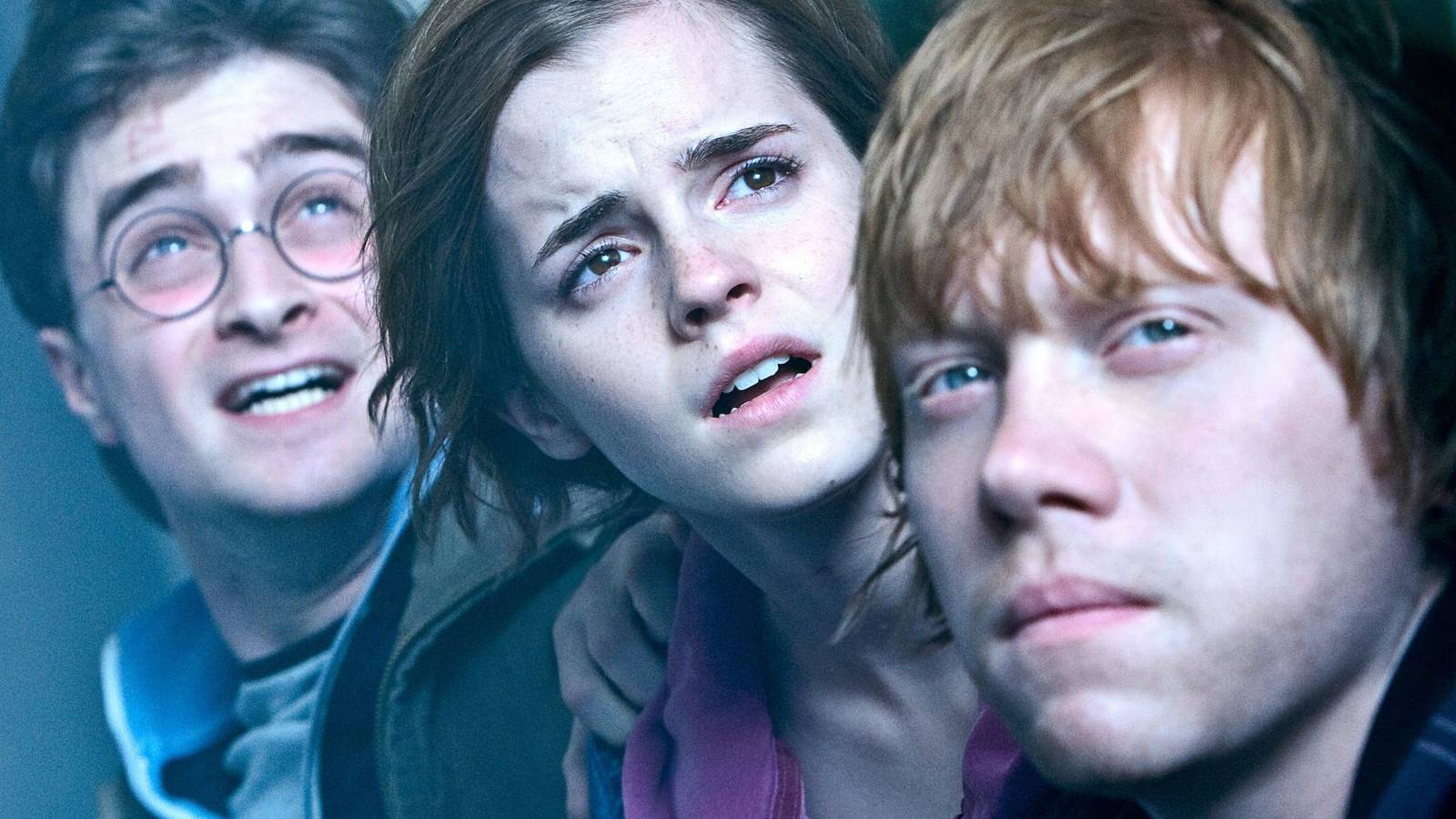
HBO’s Harry Potter reboot train has officially left the station and shows no sign of stopping. The upcoming series is slated for release on Christmas 2026, picking up the holiday trend where the Daniel Radcliffe-led franchise left off. Harry Potter has always been filled with whimsy – no matter what the desaturated and tonally dark reboot trailer may indicate. Harry Potter excels at the holidays, but that doesn’t mean the reboot will stick to all the decisions of the feature film franchise.
With the benefit of more time to devote to the books, the Harry Potter series can include characters left on the cutting room floor. One of the fan-favorite additions is the notorious Peeves, the Poltergeist. A side character who appears in every Harry Potter book, Peeves is the specter of chaos who haunts Hogwarts to the delight of many students. Hating organization — and a few choice Hogwarts teachers — Peeves was a welcome presence and will finally be making a long-awaited appearance.
Peeves’ Inclusion is a Good Sign for ‘Harry Potter’ Book Purists
Revealed in the HBO documentary, Finding Harry: The Craft Behind the Magic, Peeves is officially going to be included in the upcoming series. Initially removed from the feature films due to time and logistics issues, Peeves is an iconic character from the book series. The documentary showed concept art for the poltergeist, highlighting a large part of the books that had been previously left out.
Collider Exclusive · Sci-Fi Survival Quiz Which Sci-Fi World Would You Survive? The Matrix · Mad Max · Blade Runner · Dune · Star Wars
Five universes. Five completely different ways the future went wrong — or sideways, or up in flames. Only one of them is the world your instincts were built for. Eight questions will figure out which dystopia, galaxy, or desert wasteland you’d actually make it out of alive.
💊The Matrix
🔥Mad Max
🌧️Blade Runner
🏜️Dune
🚀Star Wars
01
You sense something is deeply wrong with the world around you. What do you do? The first instinct is often the truest one.
02
In a world of scarcity, what resource do you guard most fiercely? What we protect reveals what we believe survival actually requires.
03
What kind of threat keeps you up at night? Fear is useful data — if you’re honest about what you’re actually afraid of.
04
How do you deal with authority you don’t trust? Every dystopia has a power structure. Your approach to it determines everything.
05
Which environment could you actually endure long-term? Survival isn’t just tactical — it’s physical, psychological, and very much about where you are.
06
Who do you want in your corner when things fall apart? The company you keep is the clearest signal of who you actually are.
07
Where do you draw the line — if you draw one at all? Every survivor eventually faces a moment that tests what they’re actually made of.
08
What would actually make survival worth it? Staying alive is one thing. Having a reason to is another.
Your Fate Has Been Calculated You’d Survive In…
Your answers point to the world your instincts were built for. This is the universe your temperament, your survival instincts, and your particular brand of stubbornness were made for.
The Resistance, Zion
The Matrix
You took the red pill a long time ago — probably before anyone offered it to you. You’re a systems thinker who can’t help but notice the seams in things.
You’re drawn to understanding how the system works before figuring out how to break it.
You’d find the Resistance, or it would find you — your instinct for spotting constructed realities is the machines’ worst nightmare.
You function best when you have access to information and the freedom to act on it.
The Matrix built an airtight prison. You’d be the one probing the walls for the door.
The Wasteland
Mad Max
The wasteland doesn’t reward the clever or the well-connected — it rewards those who are hard to kill and harder to break. That’s you.
You don’t need comfort, community, or a cause larger than the next horizon.
You need a vehicle, a clear threat, and enough fuel to outrun it — and you’re good at all three.
You are unsentimental enough to survive that world, and decent enough — just barely — to be something more than another raider.
In the wasteland, that distinction is everything.
Los Angeles, 2049
Blade Runner
You’d survive here because you know how to exist in moral grey areas without losing yourself completely.
You read people accurately, keep your circle small, and ask the questions others prefer not to answer.
In a city where humanity is a legal designation rather than a feeling, you hold onto something that keeps you functional.
You’re not a hero. But you’re not lost, either.
In Blade Runner’s world, that distinction is everything.
Arrakis
Dune
Arrakis is the most hostile environment in the known universe — and you are precisely the kind of person it rewards.
Patience, discipline, and political awareness are your core strengths — and on Arrakis, they’re survival tools.
You understand that the long game matters more than any single victory.
Others come to Dune and are consumed by it. You’d learn its logic and earn its respect.
In time, you wouldn’t just survive Arrakis — you’d begin to reshape it.
A Galaxy Far, Far Away
Star Wars
The galaxy far, far away is vast, loud, and in a constant state of violent political upheaval — and you wouldn’t have it any other way.
You find meaning in being part of something larger than yourself — a cause, a crew, a rebellion.
You’d gravitate toward the Rebellion, or the fringes, or whatever pocket of the galaxy still believes the Empire’s grip can be broken.
You fight — not because you have to, but because standing aside isn’t something you’re capable of.
In Star Wars, that willingness is what makes all the difference.
Although not necessary to the core story of Harry Potter, the character is one of the many reasons fans have been yearning for a more accurate adaptation of the book series. This inclusion also signals good news for the divisive series. The character of Peeves is just another part of the world-building that drew fans in to begin with. Some aspects of Hogwarts, such as the Deathday Party, were omitted to the disappointment of fans. Including these little tidbits strengthens the series as it branches out from the feature films. Anything that makes the television reboot different from the iconic movies is a benefit.
This should also assuage fears that the reboot will be more of the same. It admittedly has not been that long since Daniel Radcliffe’s Harry hung up his wand. The series would have to justify its existence to pull the same numbers as its predecessor. Being more faithful to the books is one way the show can get ahead. The films stripped down the longer books, such as The Goblet of Fire and The Order of the Phoenix. The latter is famously the longest Harry Potter book, but the shortest film in the franchise.
If the television series prioritizes book moments that were left out of the movies, fans are more likely to tune in. This will matter less in the early seasons but more when there is more content to adapt, such as in the later books. Darker books, when Harry reaches adolescence, will fix moments that didn’t make sense in the big-screen adaptations. While much of the layout of Hogwarts looks similar, it’s promising that not everything will be the same.