
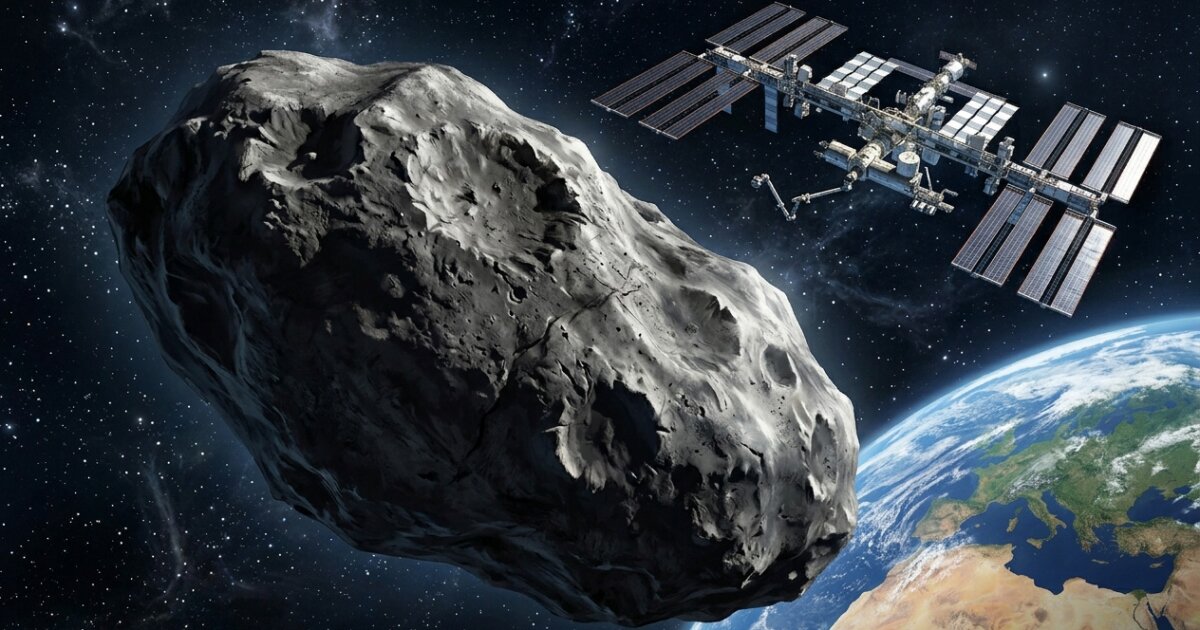
Humanity may be one step closer to space-mining and cosmic self-sustainability, thanks to a secret, tiny weapon: microbes.
In a unique, recently described experiment, scientists used bacteria and fungi to extract precious metals from an asteroid in microgravity, creating a living framework for in situ resource utilization (ISRU).
ISRU is vital for our spacefaring future, as shipping materials from Earth is costly and cumbersome. Fortunately, asteroids contain essential ingredients like water, hydrogen, carbon compounds, and a cornucopia of metals and non-metals necessary for an extended human presence in space.
Making the most of our microbial milieu
Microorganisms live on, in, and alongside us, so they’ll accompany us wherever we go. Accordingly, scientists suggest using the very fungus among us to help harvest resources necessary for industrial, pharmaceutical, and other life-sustaining systems off Earth.
Enter the BioAsteroid project, in which researchers assessed the ability of bacteria and fungi to pull various elements from a pulverized asteroid sample under different gravity levels.
Researchers employed two types of microbes, the Sphingomonas desiccabilis bacterium and the Penicillium simplicissimum fungus (not that Penicillium), because they produce carboxylic acids that leach minerals from rocks. Each of the microbes was tested on its own, and as a bacterial-fungal consortium, under two conditions: on Earth and aboard the International Space Station (ISS).

The researchers then compared the microbes’ ability to harvest asteroidal material with that of an abiotic extraction method (a solution without any biological components) under the previously mentioned conditions.
Team Microbe shows its worth
The results suggest that the microbes, whether alone or in consortium, are more effective than abiotic methods at leaching certain elements from asteroidal material. These include the platinum group elements (PGEs) ruthenium (Ru), palladium (Pd), and platinum (Pt), which have diverse industrial, medical, and electrical applications.
Overall, the fungus fared much better at biomining than the bacteria, especially in microgravity. “Bioleaching outcomes were also notably different between Earth and space. “Although bacterial extraction of palladium remained below the non-biological sample, it increased 13.6-fold in space,” while also displaying an affinity for phosphorus, an element critical for both industrial and life support processes.
However, overall results are mixed. Bioleaching of some elements decreases in microgravity compared with terrestrial gravity. And some elements, like copper, may be more efficiently harvested via abiotic methods, calling for a best-of-both-worlds approach.

A tidy explanation is as-yet unavailable due to the many variabilities involved: “Depending on the microbial species, depending on the space conditions, depending on the method that researchers are using, everything changes,” explains lead author Rosa Santomartino, an assistant professor of biological and environmental engineering at Cornell University.
Microbial byproducts can supply space necessities
Finally, the researchers performed a metabolomic analysis to detect microbial byproducts in the liquid culture from the completed experiment.
The microbes did indeed generate some intriguing byproducts, including multiple compounds of pharmaceutical interest and a precursor to plastics, hinting at the possibility of bioplastic manufacturing in space.
Plus, previous research has shown that microbes produce metabolites with antibiotic properties, as well as a type of polyester, presumably to furnish future outposts with that iconic sci-fi-space-station chic.
These findings aren’t just invaluable for in-space operations, but for humanity’s foray onto alien surfaces. As microbes extract minerals from asteroids, they can do so from regolith, the dirt and gravel that covers the Moon, Mars, and other worlds.
Earth may benefit, too, from improved resource management and recycling strategies informed by microbial processes. Case in point, we owe many everyday inventions to space-minded science experiments, including eye-saving sunglasses and memory foam.
So if humanity’s first asteroid-mining activities don’t resemble the orbital installations of science fiction, that’s because armies of microbes, rather than machines, may be the ones springboarding our species into the cosmos.