
The first human Mars explorers won’t have it easy. Every additional day in deep space will increase their exposure to deadly cosmic radiation, while isolation gnaws at their minds and microgravity erodes their muscles.
That’s one of the main reasons NASA is painstakingly researching new technologies that could shave months off future crewed Mars missions. The space agency’s latest attempt at a technological breakthrough is a lithium-fed magnetoplasmadynamic (MPD) thruster — an experimental ion engine 25 times more powerful than its most powerful operational model.
On the surface, ion engines might seem like a poor choice for faster Mars missions. They rely on continuous low thrust, starting slowly and taking a long time to reach high speeds. As a result, they are usually better suited to years-long journeys into deep space.
Take NASA’s Psyche spacecraft, for example, which uses the most powerful electric thrusters ever operated on a NASA deep space mission. With no atmospheric drag to slow it down, Psyche’s constant, gentle thrust can achieve speeds of up to 200,000 kilometers (124,000 miles) per hour. Nothing to be sneezed at. But it won’t do so until after a Mars flyby this month, meaning it will have taken more than two and a half years to reach its top speed.
According to NASA, existing traditional chemical propulsion technologies take about seven months to reach Mars. So if it takes months to reach top speeds, why consider ion engines at all?
While Psyche uses solar arrays to power a xenon-fueled ion engine, NASA’s new lithium-fed MPD thruster is designed to be part of a nuclear electric propulsion system. Ultimately, the space agency thinks this experimental combination could provide the power necessary for shorter transit times, enabling crewed missions to Mars.
NASA notes that the idea behind its new engine originated in the 60s, though MPD thrusters have yet to fly operationally in space. This is largely down to their vast power requirements, meaning they cannot operate alongside solar arrays. There’s a nice synergy there with NASA’s recently announced nuclear propulsion project, called Space Reactor-1 Freedom — though that mission will use a traditional xenon-fueled ion engine.
Unlike traditional ion thrusters, which use electrostatic fields to accelerate individual ions, or charged atoms (typically in the form of xenon) out through a nozzle, MPD engines combine high currents with a magnetic field to electromagnetically accelerate lithium plasma. To be precise, NASA’s new model runs on lithium metal vapor.
JPL Tests Next-Generation Electric Thruster
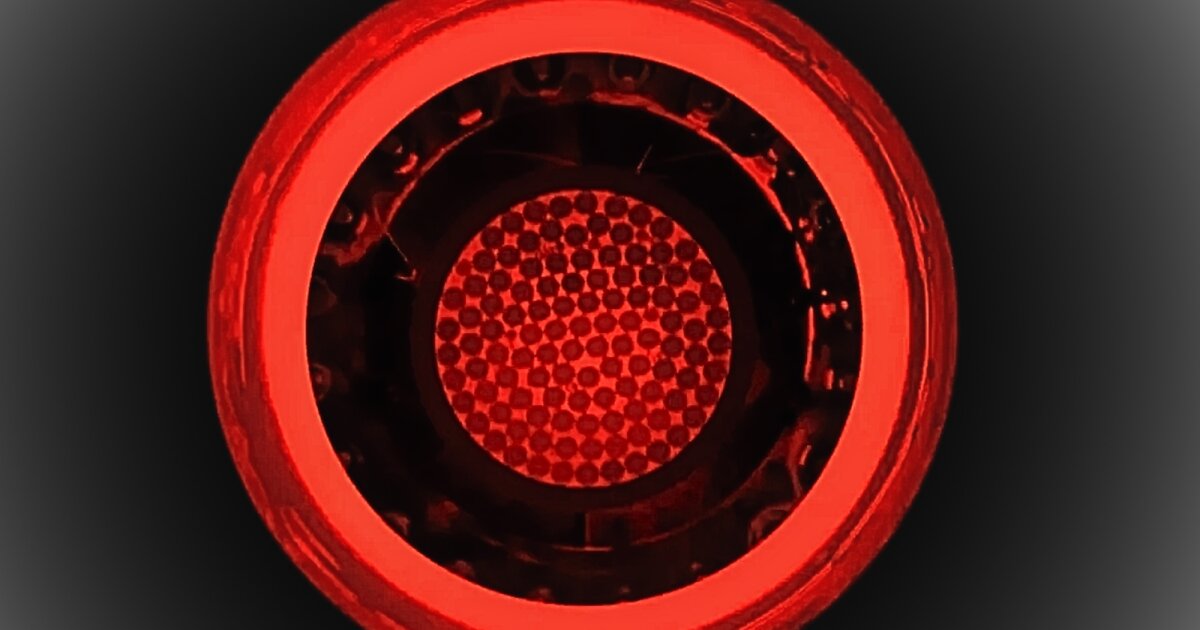
On February 24, 2026, NASA put its new MPD thruster to the test in a specialized water-cooled vacuum chamber at the space agency’s JPL Electric Propulsion Lab in Southern California.
During the test, engineers fired the thruster five times and observed as the tungsten electrode at the thruster’s center burned bright, reaching temperatures above 2,800 degrees Celsius (5,000 degrees Fahrenheit). The data showed that the novel thruster achieved power levels of up to 120 kilowatts — over 25 times the power of the thrusters on Psyche.
“At NASA, we work on many things at once, and we haven’t lost sight of Mars,” NASA chief Jared Isaacman explained in a statement.
“The successful performance of our thruster in this test demonstrates real progress toward sending an American astronaut to set foot on the Red Planet. This marks the first time in the United States that an electric propulsion system has operated at power levels this high, reaching up to 120 kilowatts. We will continue to make strategic investments that will propel that next giant leap.”
And that’s only the start: NASA claims its MPD thruster could hit power levels of up to 1 megawatt in future tests. As the space agency points out, a human Mars mission could require 2 to 4 megawatts of power, meaning they may have to mount several MPD thrusters to a Mars-bound spacecraft.
A key challenge, therefore, will be ensuring the hardware can operate at extremely high temperatures for extended periods. Beyond that, NASA’s engineers will have to overcome electrode erosion, a historical limitation associated with MPD thrusters.
For now, though, the team is satisfied, having cleared the first major hurdle following two years of design and construction.
“It’s a huge moment for us because we not only showed the thruster works, but we also hit the power levels we were targeting,” said James Polk, senior research scientist at JPL. “And we know we have a good testbed to begin addressing the challenges to scaling up.”
Ultimately, it is all about scale. Ion thrusters use 90% less propellant than traditional chemical rocket engines. So pairing the MPD thruster with a nuclear power source could allow a spacecraft to reach higher speeds with the same or less mass compared with a traditional rocket.
By providing significantly more thrust than existing operational electric thrusters, NASA may be taking a bold step towards sending the first astronauts to Mars.
Source: NASA
Fact-checked by: Mike McRae