
Flexible printed electronic neurons now directly communicate with biological brain cells, enabling ultra-efficient neuromorphic hardware and opening new pathways for brain-machine interfaces, prosthetics, and low-power AI systems.
Engineers have demonstrated a major advancement in electronics by creating printed artificial neurons that can directly communicate with living brain cells, marking a step toward bio-integrated computing systems.

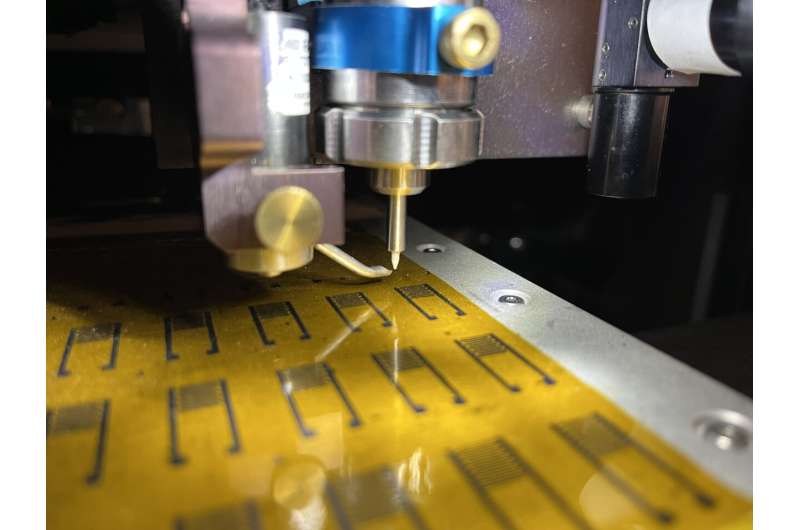
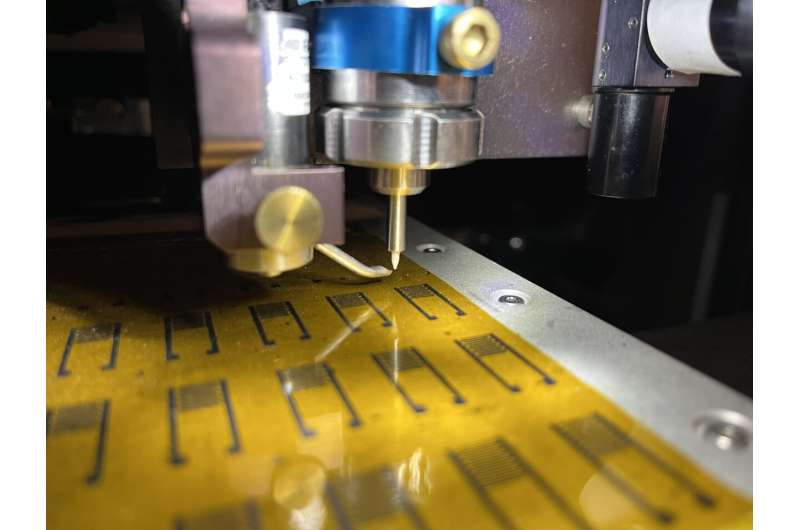
Developed by researchers at Northwestern University, the devices are fabricated using flexible electronic materials and advanced aerosol jet printing. Unlike traditional rigid-silicon circuits, these artificial neurons generate electrical signals that closely mimic real neuronal activity, enabling them to interface with biological tissue.
In laboratory tests using mouse brain tissue, the printed neurons successfully triggered responses in real neurons. The electrical spikes produced by the devices matched key characteristics of natural neural signals, including timing and duration, demonstrating functional compatibility with living neural networks.
The innovation is built on printable electronic inks composed of molybdenum disulfide (MoS₂) semiconductors and graphene conductors. By partially retaining a polymer layer during fabrication—previously considered a flaw—researchers enabled the formation of localised conductive pathways that generate complex neuron-like firing patterns.
Unlike earlier artificial neurons that produced simple signals, the new devices can replicate diverse neural behaviours, including single spikes, continuous firing, and burst patterns. This richer signalling capability allows each unit to encode more information, potentially reducing the number of components required in computing systems.
The development addresses a critical limitation in modern electronics: power consumption. The human brain remains vastly more energy-efficient than conventional computing hardware, and mimicking its signalling mechanisms could enable next-generation AI systems with significantly lower energy demands.
Researchers say the technology could accelerate progress in neuromorphic computing, where hardware is designed to emulate brain functions. It also opens pathways to advanced neuroprosthetics, including implants to restore vision, hearing, and motor function.
By bridging printed electronics with biological systems, the study lays the groundwork for future devices that seamlessly integrate with the nervous system while delivering scalable, low-cost manufacturing.