
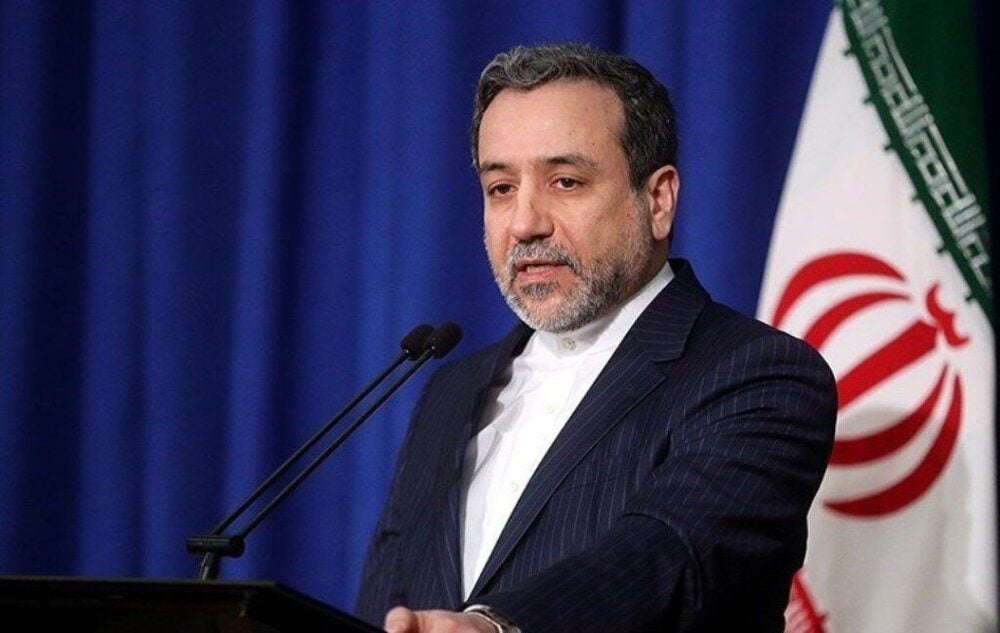
The phone call between the Qatari and Iranian foreign ministers is the fourth since the beginning of the war on 28 February.
Qatar has stressed the need for all parties in the U.S.-Israel war on Iran to engage with the ongoing mediation efforts and ensure that the opening of vital sea lanes is not used “as a bargaining chip or pressure tactic”.
This came in a phone call on Sunday between Qatar’s Prime Minister and Minister of Foreign Affairs, Sheikh Mohammed bin Abdulrahman Al Thani, and Iran’s Foreign Minister Abbas Araghchi.
The call dealt with “efforts to achieve peace and enhance” regional security and stability, according to a statement by Qatar’s foreign ministry.
During the call, Sheikh Mohammed “expressed the need for all parties to engage with the ongoing mediation efforts, which would open the way for addressing the root causes of the crisis through peaceful means and dialogue”.
He noted that this would lead “to a sustainable agreement” that would “prevent renewed escalation”. There was also great emphasis on the need to open sea lanes and ensure the freedom of navigation while not using them “as a bargaining chip or pressure tactic”.
“He [Sheikh Mohammed] emphasised the negative effects of this on the countries of the region and the world’s energy and food supplies, as well as its repercussions on international peace and security”, the statement added.
The same day saw separate phone calls between Sheikh Mohammed and Egyptian Foreign Minister Badr Abdelatty and Saudi Foreign Minister Prince Faisal bin Farhan Al Saud.
Both phone calls dealt with efforts to reduce escalation in the region through dialogue and peaceful means.
The phone call between the Qatari and Iranian foreign ministers is also the third to take place this month—following previous ones on 13 April and 6 April—and the fourth since the beginning of the war on 28 February.
Iran attacked Qatar along with other regional countries since the beginning of the war, claiming to target U.S. interests while the attacks included vital facilities, including energy sites.
The attacks on Qatar have stopped since the beginning of the two-week pause brokered by Pakistan on 8 April.
U.S. President Donald Trump indefinitely extended the truce on 21 April at the request of Pakistani mediators while maintaining the naval blockade on Iran, which was imposed on 13 April.
Pakistan, a pivotal mediator, received an Iranian delegation led by Araghchi on Saturday amid its ongoing efforts to reach a comprehensive agreement between Tehran and Washington.
Trump planned on sending his top negotiators to Pakistan last week, but decided to cancel their travel on Saturday, saying on Truth Social that “too much time” is wasted on travelling.
The U.S. negotiators were going to include Vice President JD Vance, Trump’s son-in-law Jared Kushner, and special envoy Steve Witkoff.
A round of direct U.S.-Iran negotiations in Islamabad on 11 April ended without a breakthrough, dimming hope over prospects for a breakthrough in the stalled negotiations.
Some of the key points of contention have included the unconditional opening of the Strait of Hormuz by Iran and the halt of its nuclear programme. Iran has also been demanding guarantees to ensure it does not get attacked again.
Meanwhile, Araghchi arrived in Russia for talks with President Vladimir Putin on Monday. Araghchi told the media upon his arrival in Moscow that his visit “will be a good opportunity to discuss developments in the war and review the latest situation”.