

RFK, Jr., and EPA announce plan to track microplastics in tap water and humans
The Department of Health and Human Services and the Environmental Protection Agency announced a joint effort to track microplastics in drinking water—but experts say doing so will be difficult
Anna Moneymaker/Dimitrios Kambouris/Getty Images
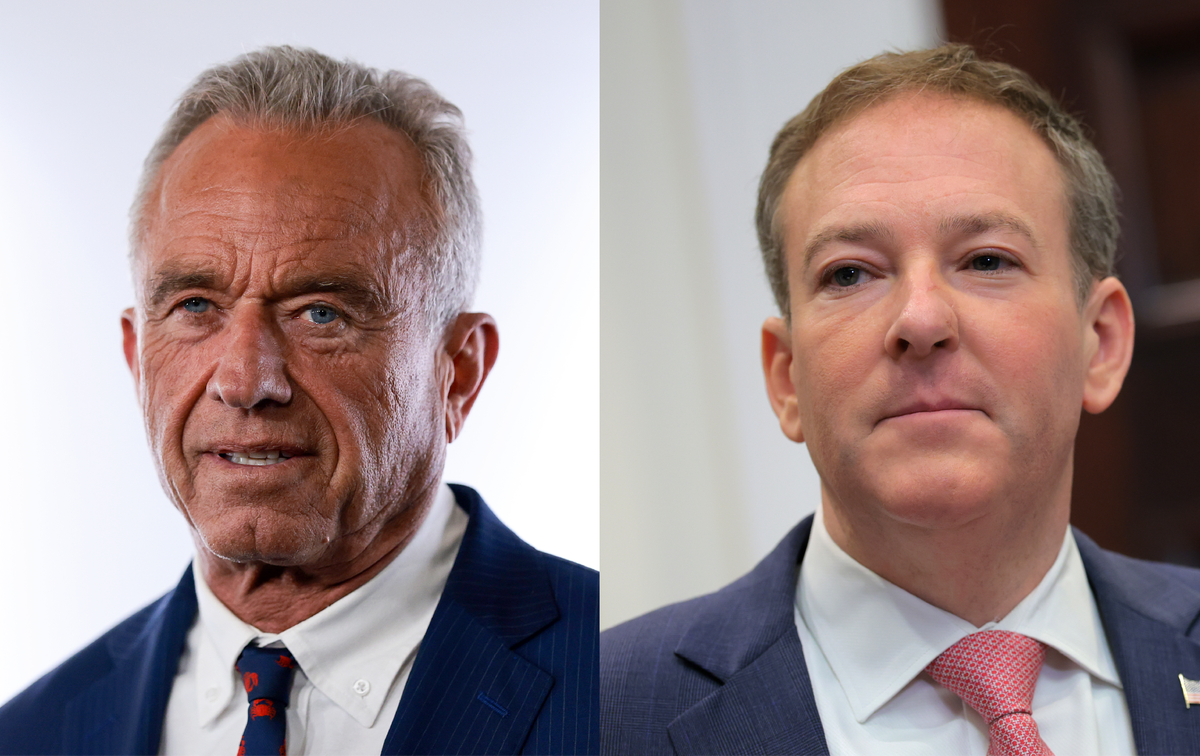
The Trump administration is going after microplastics in drinking water. A new plan to study and regulate plastic pollution was announced on Thursday by Secretary of Health and Human Services Robert F. Kennedy, Jr., and Environmental Protection Agency head Lee Zeldin. The policy is aimed at addressing the growing concern over microplastics in tap water and their effect on health more generally.
“Today we mark a turning point. The EPA and [the Department of Health and Human Services] are acting together to confront microplastics as a human health threat, and we are doing it with urgency and discipline,” Kennedy said at a press conference to announce the plan.
Microplastics are tiny and sometimes invisible shreds of plastic that can be produced by the breakdown of plastic, the shedding of clothing fibers, manufacturing processes, and more. They have been found everywhere on Earth, from rivers to air to plants, animals and food—and our body. It’s unclear whether exposure to these plastics may have health effects, but some research suggests they may be linked to heart attacks and fertility issues. Other research has found that the body excretes at least some of the microplastics it ingests.
On supporting science journalism
If you’re enjoying this article, consider supporting our award-winning journalism by subscribing. By purchasing a subscription you are helping to ensure the future of impactful stories about the discoveries and ideas shaping our world today.
While the science is not settled, there is a growing concern among experts and environmental advocates that proliferating microplastics may be harmful to the environment and our health, even if it is not obvious how. The HHS and EPA did not immediately respond to Scientific American’s request for comment.
The new Trump administration effort places microplastics on the Contaminant Candidate List, classifying them as priority contaminants to monitor under the EPA’s rules on the U.S.’s drinking water. The EPA and HHS will also launch a $144-million national initiative called the Systematic Targeting of Microplastics (STOMP), Kennedy said. The health secretary laid out that the program will build and standardize detection and measuring tools, “map” microplastics in the body and develop strategies to reduce and remove them.
“This is a direct response to the concern of millions of Americans who have long demanded answers about what they and their families are drinking every day,” Zeldin said at the press conference.
In addition to microplastics, Zeldin said perfluoroalkyl and polyfluoroalkyl substances (PFAS), also known as “forever chemicals,” pharmaceuticals and disinfection by-products will be placed on the Contaminant Candidate List. The Safe Drinking Water Act (SDWA) requires the EPA to establish contaminants on this list that public water suppliers must monitor but that are not already regulated.
Initiating this process could lead to further regulation and limits on the contaminants. But it’s important to note that adding a contaminant to the candidate list “doesn’t trigger regulation but assessment,” says Martin Wagner, an ecotoxicologist at the Norwegian University of Science and Technology.
“In general, I think addressing microplastics in drinking water is an important step,” Wagner says. “But mitigation measures should be taken based on solid data on the levels of plastic particles in specific municipalities.”
Some states have already moved to act in response to microplastics: California has been working on a multiyear microplastics reduction strategy that involves establishing a system to monitor trends in microplastics levels, intervening in water sources with high concentrations of microplastics and curbing plastics at the source.
Other experts say the Trump administration’s announcement falls short of establishing clear guidelines to accurately monitor and research microplastics.
Ideally, the EPA “would articulate standard methodologies for conducting the monitoring. I just don’t know whether that’s possible right now,” says Michelle Nowlin, co-director of the Environmental Law and Policy Clinic at Duke University, who studies plastic pollution regulation. “While this is an important step, it doesn’t signify any new research and falls far short of regulation pursuant to the SDWA.”
There isn’t a consistent and agreed upon set of protocols or standards among scientists for monitoring microplastics or studying their effect on human health, she adds.
Wagner is also doubtful of the new plans to establish ways to remove microplastics from the body—and, even if achievable through new techniques, whether that will ultimately lead to health benefits. “We know that preventing or mitigating exposures is a more efficient way to reduce the burden of plastic chemicals and microplastics in the body,” he says. “Humans are constantly exposed to these chemicals and particles, so removing them from the body will not deliver a long-term solution that protects human health.”
Kennedy, a former environmental lawyer, made plastic pollution one of the major priorities of his 2024 presidential campaign. In a 2023 op-ed, he wrote that “global expansion of plastic production, especially with single-use plastics, has created a crisis for human health and the environment.”
But even as this new effort has been announced, the Trump administration has rolled back a myriad of landmark pollution-curbing policies and sought to expand the country’s fossil fuel consumption and production. In February the EPA put an end to the 2009 “endangerment finding,” which established limits on greenhouse gas emissions under the Clean Air Act and directly linked emissions to health.
Experts also note that while limiting plastic exposure is likely helpful, focusing on tap water may not be the most effective way to go about it.
“Based on the current evidence, other pathways contribute much more to the human exposure to microplastics, including particles released from materials into our food,” Wagner says, such as through its packaging or the way it is processed. “The same is true for microplastics inhalation via indoor air.”
“That is to say,” he adds, “that reducing exposures from drinking water is certainly beneficial but not sufficient if one wanted to substantially reduce microplastics exposures.”