

RFK, Jr., says ibogaine holds unprecedented promise for treating depression. Here’s what the science says
At a Senate hearing on Wednesday, Robert F. Kennedy, Jr., referred to ibogaine as the most promising treatment for PTSD and depression “that anybody’s ever seen.” Does the science hold that up?

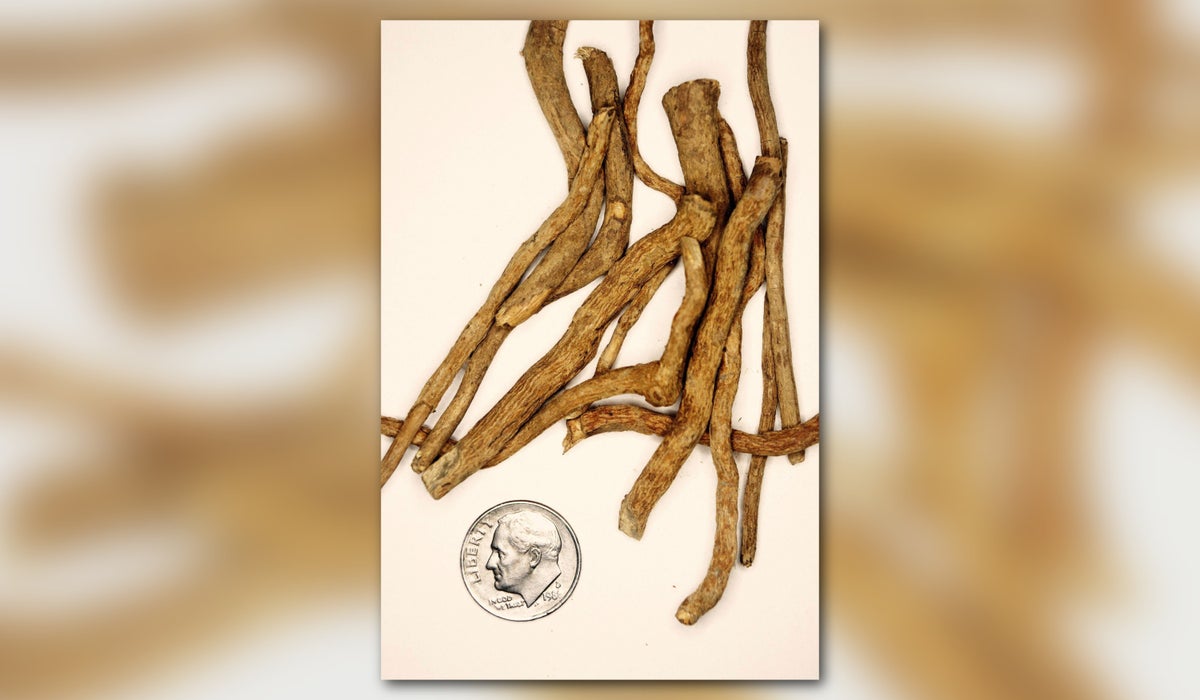
The roots from the Tabernanthe iboga plant are touted for their psychoactive qualities.
The Trump administration is going all in on ibogaine. On Wednesday Secretary of Health and Human Services Robert F. Kennedy, Jr., touted the psychedelic as “the most promising treatment for depression and PTSD [post-traumatic stress disorder] that anybody’s ever seen,” citing an unnamed department chair at Johns Hopkins as his source. The remarks came after President Donald Trump also heralded ibogaine as an unprecedentedly powerful treatment for depression.
But experts say that while Kennedy isn’t wrong that ibogaine holds promise, “most promising” is an overstatement. “The ibogaine research that has been done does not fully match the excessively rosy picture touted by advocates,” says Sandeep Nayak, medical director of the Johns Hopkins School of Medicine Center for Psychedelic and Consciousness Research. “I firmly believe it should be studied and may be a very useful treatment, but the science for ibogaine is in a far more preliminary state than that of, say, psilocybin,” another psychedelic that is being researched as a mental health treatment.
Nayak says he is not aware of anyone in the Johns Hopkins program who has described ibogaine in the glowing terms that Kennedy used.
On supporting science journalism
If you’re enjoying this article, consider supporting our award-winning journalism by subscribing. By purchasing a subscription you are helping to ensure the future of impactful stories about the discoveries and ideas shaping our world today.
Research on ibogaine, especially for treating PTSD or depression, is slim. Studies in the U.S. are few because ibogaine is classified as a Schedule I drug—the most dangerous category—and illegal in the country. What scientists do know is that ibogaine can be toxic to the heart. Taking it has caused sudden cardiac death, including in people using the drug to treat mental health conditions.
“Ibogaine isn’t a great molecule,” says Brian Shoichet, a professor of pharmaceutical chemistry at the University of California, San Francisco, referring to its toxicity.
Ibogaine comes from the West African Tabernanthe iboga plant, which has long been used for its psychoactive properties in the Bwiti spiritual tradition in Gabon. Research in the 1990s pointed to promising effects for treating substance use disorder, but the U.S. National Institute on Drug Abuse (NIDA) decided against funding Phase I clinical trials in 1995 because of ibogaine-related deaths that occurred independent of a clinical trial.
Now the drug is back in the spotlight, driven, in large part, by the lobbying of former Texas governor Rick Perry and veterans’ groups, some of whom see it as a tantalizing treatment for PTSD. Last year Texas pledged $50 million in funding for psychedelics research, including on ibogaine. And on April 18 Trump signed an executive order to accelerate research and expand access to ibogaine and other psychedelics.
The renewed interest is welcomed by many researchers. “The effects we saw from this were radical,” says Maheen Mausoof Adamson, a clinical professor of neurosurgery at the Stanford University School of Medicine.
Adamson was involved in an observational study, published in 2024, of 30 combat veterans with traumatic brain injuries who underwent ibogaine treatment in Mexico. That study, which included doses of magnesium to mitigate any cardiac issues, found significant improvements in depression and anxiety symptoms after treatment. Participants’ brain also changed, with both structural and brain activity shifts associated with improved executive function and reduced PTSD symptoms. Additionally, there were no serious adverse effects reported. The benefits of ibogaine were more pronounced than those that had been previously reported with psilocybin, Adamson says.
There are no head-to-head comparisons of ibogaine and other psychedelics. Indeed, for ibogaine, there have been very few randomized clinical trials, the gold standard for deciding whether a medication or other intervention does what it is meant to do. The PTSD study that Adamson worked on did not have a control group, and it did not compare ibogaine with other treatments.
The only two randomized, double-blind controlled trials on ibogaine that have been published focused on safety in healthy and opioid-dependent participants. (“Double-blind” means neither the participants nor the researchers knew who was taking the substance versus a placebo.) These two trials were not designed to answer questions about efficacy. Meanwhile another trial that was double-blind examined the use of ibogaine for reducing cocaine cravings and found fewer relapses in the drug group compared with the placebo group. That study, however, wasn’t randomized, so the participants in the treatment and control groups may have differed in important ways.
“Without having longitudinal perspectives or randomized controlled trials, we really don’t know how much of the effect is pharmacological versus context. We don’t really know long-term effectiveness, and we actually still don’t even know a standardized dosing procedure,” says Andrew Yockey, a psychiatric epidemiologist at the University of Mississippi.
Ibogaine’s danger to the heart is a major reason for the limited literature. Shoichet has investigated synthetic molecules based on ibogaine that act on some of the same receptors in the brain but don’t affect the heart. These molecules might lead to ibogaine-inspired medications, he says. Scientists could also find ways to reduce ibogaine’s cardiac toxicity. In the PTSD study that Adamson co-authored, veterans got a dose of magnesium to dampen ibogaine’s heart effects, and none had any sign of arrhythmia. On April 24 the Food and Drug Administration announced that it had green-lighted a phase 3 clinical trial of noribogaine hydrochloride, a metabolite of ibogaine that is thought to be safer than ibogaine itself, for treating alcohol use disorder.
Better understanding how ibogaine gets metabolized in the body is also important, Shoichet says, because some people have less of the enzyme that breaks down the drug than others. And in these people, a smaller dose can be more toxic.
There is a real need for this work, Yockey says, because severe psychiatric illness is on the rise. In major depression, about 30 percent of patients are treatment-resistant, meaning they still have depression symptoms despite medication and therapy.
Studies are starting to happen in Canada and Mexico, Adamson says, but regulatory barriers make the research extremely difficult and prohibitively expensive in the U.S. She welcomes Trump’s executive order to move the work forward. “The U.S. has to get onboard,” she says.