
Scientists have created transparent solar cells that can turn windows, buildings, and vehicles into energy sources while still allowing light through.
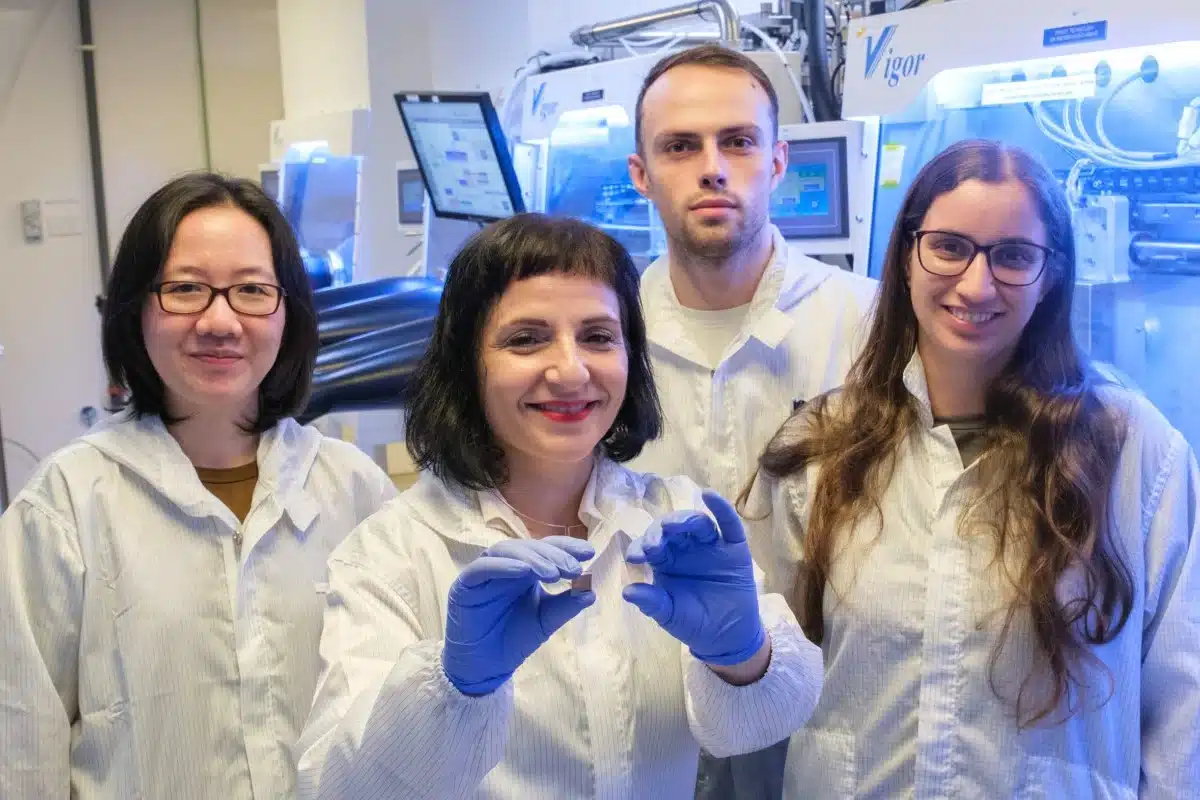
Researchers at Nanyang Technological University (NTU) have developed a transparent solar cell that could transform everyday surfaces into clean energy generators. The innovation could allow car windows, building façades, sunroofs, and even smart glasses to produce electricity while remaining almost invisible.

The research team created ultrathin perovskite solar cells that are around 10,000 times thinner than a human hair and roughly 50 times thinner than conventional perovskite solar cells. Despite their extremely small size, the devices achieved some of the highest power conversion efficiencies reported for ultrathin perovskite solar technology.
Researchers believe the technology could have a major impact in dense urban areas. If deployed at scale, glass-covered office towers in districts such as Raffles Place or Marina Bay could generate several hundred megawatt-hours of electricity each year through their façades alone. Depending on building orientation and available glass surface area, that amount of power could equal the annual electricity consumption of about 100 four-room HDB flats.
To manufacture the solar cells, the NTU team used a vacuum-based process called thermal evaporation. In this method, source materials are heated until they vaporise inside a vacuum chamber before settling onto a surface as a thin film. The technique allows highly uniform perovskite layers to be deposited over large areas while avoiding toxic solvents and reducing defects that can affect efficiency.
By refining the process, the researchers successfully produced both opaque and semi-transparent solar cells with carefully controlled thicknesses. They believe this is the first time ultrathin perovskite solar cells have been fabricated entirely using vacuum-based manufacturing, an important step toward industrial-scale production.
The team created perovskite absorber layers as thin as 10 nanometres while still maintaining strong energy performance. One semi-transparent device with a 60-nanometre layer allowed 41 per cent of visible light to pass through while achieving 7.6 per cent efficiency.
Researchers are now collaborating with industry partners to improve the durability, scalability, and commercial viability of the technology, with the long-term aim of integrating transparent solar cells into buildings, vehicles, and wearable devices.