
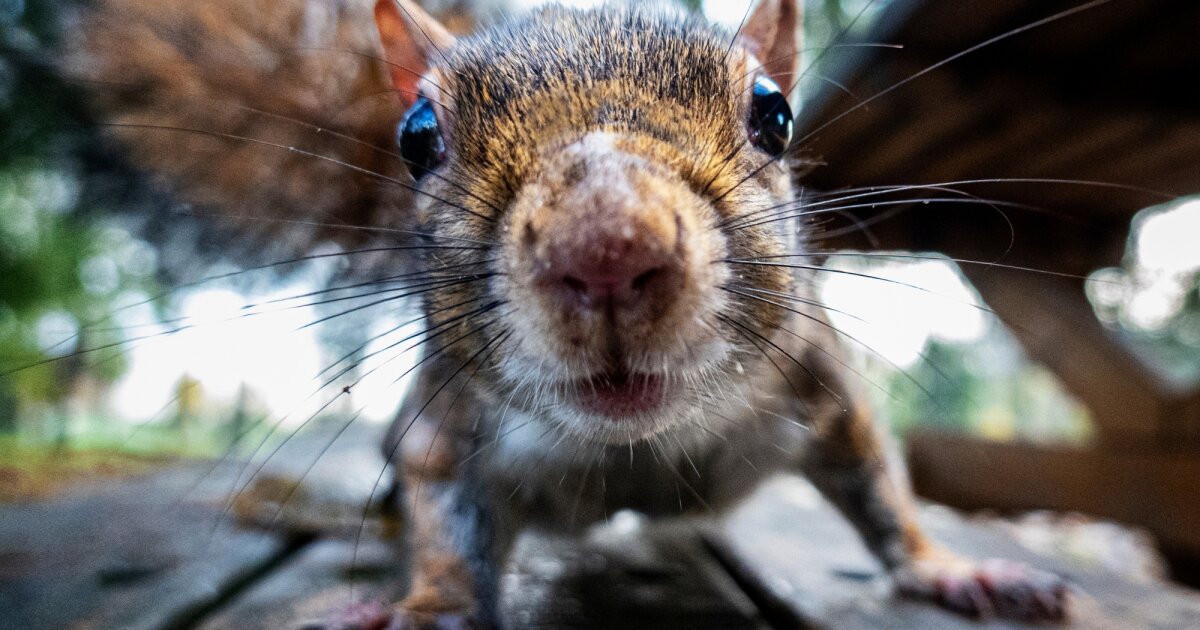
Advances in understanding of neuron activity and adaptation during squirrel hibernation could help inform stroke treatment and recovery.
Ground squirrels have an impressive ability to bounce back from brain damage incurred during winter hibernation, and a new study shows that this neuroplasticity appears to be a “brain-wide phenomenon” – a discovery researchers say could be a positive step toward understanding how to aid stroke recovery in humans.
The study, published today in the Society for Neuroscience’s JNeurosci journal, demonstrates for the first time that structural changes to neurons in the squirrel’s primary visual cortex during hibernation may be reversible.
Study author Hendrikje Nienborg, from the National Eye Institute, said that studies on neuroplasticity in touch-processing areas of the squirrel brain – including the hippocampus, somatosensory cortex, and thalamus – suggest that a similar mechanism might be at work in the part of the brain linked to visual information-processing.
When a ground squirrel powers down for the winter, its body temperature plummets, its heart rate drops to just a few beats per minute, its metabolism slows, and breathing becomes almost imperceptible. What’s more, its brain activity goes very quiet. In short, hibernation puts the squirrel in airplane mode.
Neurologically speaking, a hibernating squirrel’s brain has something in common with that of a stroke victim: oxygen and nutrient delivery to brain cells are greatly reduced. The difference is that the squirrel’s brain cells are able to recover.
Understanding how squirrels rebound from a state of prolonged torpor could yield important new insights into treatment for conditions linked to neuron damage or impairment in humans, such as strokes. It could also go some way toward unlocking the holy grail of stroke research: endogenous repair of damaged neurons in human brains.
Researchers dissected squirrel brains to establish how two types of neurons react to the torpor (deep sleep) phase of hibernation, as well as during the 12- to 24-hour inter-torpor arousal periods, in which the squirrel’s deep-sleep state is disrupted.
One neuron type showed structural changes during deep hibernation. These were resolved within 90 minutes of the squirrel being roused from its slumber, however. Six months on, it was not even possible to tell the squirrel had hibernated.
Earlier studies have shown hibernating squirrels undergo a massive increase in Small Ubiquitin-like Modifier (SUMO) protein binding – a process referred to as SUMOylation – which protects their brain cells from damage.
“We know these structural changes have implications for neural communication, learning, and recovery after conditions like stroke,” Nienborg said.
“To see that there is a mechanism in the brains of these hibernating animals that [is so quick to change] is exciting because if we can figure out how to leverage this mechanism, we can potentially help human adult brains be more [adaptable] too, especially during recovery after stroke.”
Globally, strokes are the third leading cause of death, and a key driver of long-term disability. Around 80% of these are ischemic strokes, which are caused by a clot cutting off blood flow and preventing critical oxygen from reaching other parts of the brain, bringing about cell death.
Stroke recovery in humans largely requires new neural connections and the reorganization of existing neurons. This allows patients to regain critical functions such as swallowing, speech, and walking.
Nienborg says now that they have more information about the structural changes neurons undergo, scientists have a better idea of what to explore in future studies.
“We know a lot about how brain areas support visual processing,” she said. “So exploring functional changes in the visual brains of squirrels is a very likely next step.”
This research was published in JNeurosci.
Fact-checked by Mike McRae