
Surajkund Temple: The Living Presence of Hanuman in Three Ages Each Day
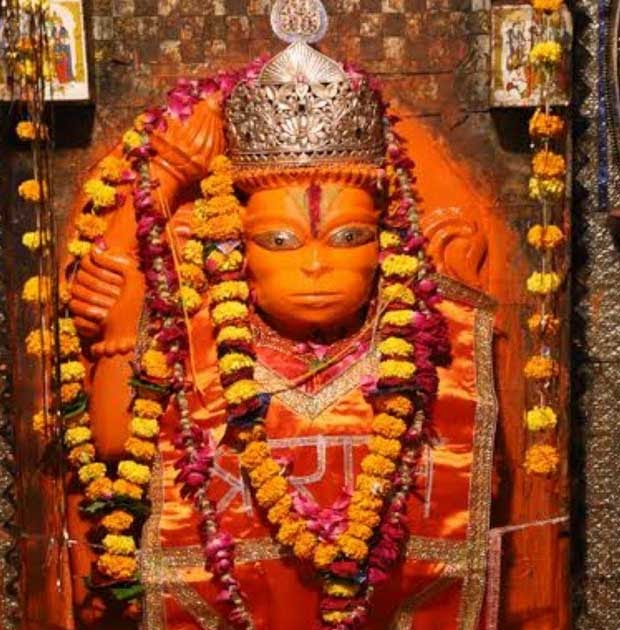
Nestled in the sacred landscape of Mandla at Surajkund in Madhya Pradesh, the Surajkund Hanuman Temple stands as a rare and spiritually powerful shrine dedicated to Bhagwan Hanuman. What sets this temple apart is a daily phenomenon that has inspired devotion and awe for generations. The idol of Hanuman is believed to undergo three distinct transformations in appearance and aura over the course of a single day, symbolizing the complete cycle of life. The temple houses an age-old, life-size idol of Lord Hanuman made from an extremely rare stone. Hanuman’s face is filled with attraction and divine radiance. In one hand Hanuman holds a mace, while the other hand rests on a rudraksha garland worn around his neck, which lies against his chest. In this form, Lord Hanuman appears to be chanting the name of Bhagavan Sri Rama.

The Three Forms of Hanuman – Child – Youth – Old Age
Devotees observe that from around 4 am to 10 am, the idol appears childlike, smaller in size, gentle in expression, and lighter in color. This phase is associated with innocence, purity, and the early stage of spiritual discipline. From 10 am to 6 pm, the idol gradually takes on a youthful and powerful form. The features appear sharper, the stature larger, and the presence more dynamic, reflecting strength, service, and unwavering devotion. After sunset, from 6 pm onwards, Hanuman is seen in an aged form, with deeper tones and a more composed expression, symbolizing wisdom, renunciation, and detachment.
This daily transformation is not seen as a miracle to be analyzed, but as a sacred experience to be felt. For devotees, it reflects the truth that divine consciousness transcends time while simultaneously guiding human life through every stage.
Surajkund Hanuman Temple Story – the Role of Surya Dev
The origins of Surajkund Temple remain unknown, adding to its spiritual mystery. Local tradition holds that Surya Dev chose this place to perform intense penance. During this period, Hanuman Ji stood guard, ensuring that no force disturbed the Sun God’s meditation. Pleased by Hanuman’s devotion and vigilance, Surya Dev requested him to bless the land and remain present there to fulfill the sincere wishes of devotees. It is believed that a divine portion of Hanuman Ji resides eternally at Surajkund.
It is said that around the year 1926, due to a devastating flood in Narmada River, the kund of temple (sacred pond) was buried. Along with it, the idol of Lord Hanuman was also displaced by the powerful floodwaters and moved some distance away toward a stream. People witnessed this and hundreds tried to lift the idol, but it was beyond anyone’s strength.
Only after a vow (mannat) was made did Hanuman allow himself to be lifted—resting in the arms of just four people. The kund disappeared in the flood of 1926.
Symbolism and Spiritual Meaning
Hanuman is often described in scriptures as eternal and beyond decay. In the Ramcharitmanas, Tulsidas writes in Sundar Kand, Doha 1:
“Ram doot atulit bal dhama, anjani putra pavan sut nama”
This verse highlights Hanuman as the embodiment of immeasurable strength and divine purpose. At Surajkund, that strength expresses itself not through force, but through compassion, growth, and wisdom across time.
Importance for Devotees
Surajkund Temple is especially significant for devotees seeking strength, protection, and clarity in life. Many believe that offering prayers during different times of the day brings blessings related to health, courage, duty, and spiritual maturity. The temple reminds worshippers that devotion, like life itself, evolves, yet remains rooted in surrender and service.
Surajkund is not merely a place of worship. It is a living symbol of faith, where time bows before devotion and Hanuman Ji continues to guide humanity through every stage of existence.