
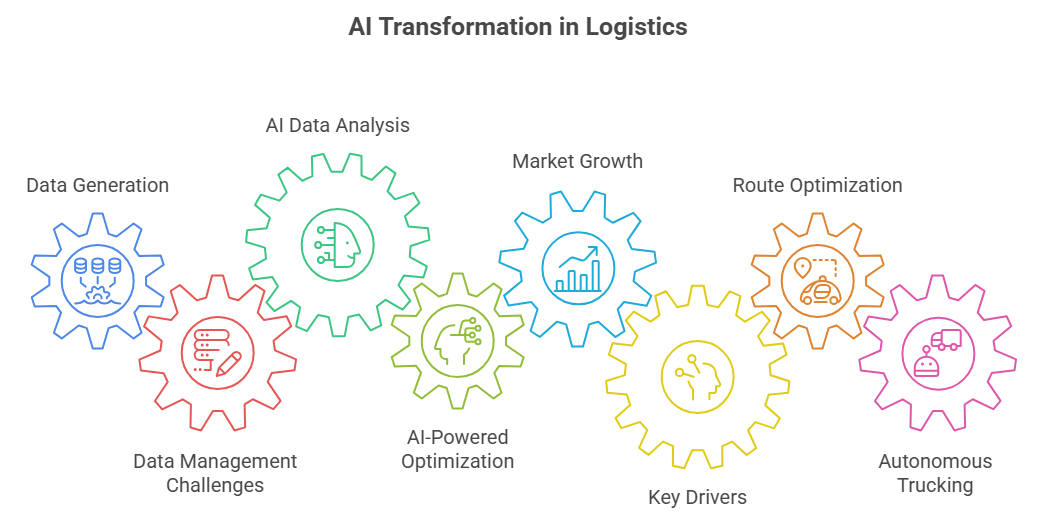
The freight and logistics industry is undergoing a major transformation. Rising customer expectations, global supply chain disruptions, increasing fuel costs, and the demand for faster deliveries are forcing logistics companies to rethink traditional operations. In this rapidly evolving environment, Artificial Intelligence (AI) is emerging as the driving force behind smarter, faster, and more efficient logistics systems.
From predictive analytics and route optimization to warehouse automation and real-time shipment tracking, AI is reshaping every aspect of the freight ecosystem. Businesses are now leveraging intelligent technologies to reduce operational costs, improve delivery performance, and enhance customer satisfaction.
As digital transformation accelerates, companies investing in advanced logistics technologies are gaining a significant competitive advantage. The integration of AI-powered tools with modern supply chain systems is no longer optional it is becoming essential for survival and long-term growth.
Why AI Is Transforming the Freight and Logistics Industry
The logistics industry generates massive volumes of data every day. Shipment records, customer orders, traffic updates, warehouse activities, fuel consumption, and delivery schedules all contribute to highly complex operations. Managing this information manually often leads to delays, inefficiencies, and costly errors.
AI helps businesses process and analyze this data in real time, enabling faster decision-making and more accurate forecasting. Intelligent systems can identify patterns, predict disruptions, automate repetitive tasks, and optimize workflows without human intervention.
According to recent industry reports, the global AI in logistics market is expected to witness substantial growth over the next decade due to increasing adoption across transportation, warehousing, and supply chain management sectors.
Key Factors Driving AI Adoption in Logistics
- Rising demand for same-day and next-day delivery
- Increasing supply chain complexity
- Need for real-time visibility and transparency
- Growing labor shortages in warehouses
- Pressure to reduce operational costs
- Expansion of ecommerce and global trade
- Demand for sustainable logistics practices
These challenges are pushing organizations toward AI-powered logistics solutions that can improve efficiency while maintaining accuracy and scalability.
AI-Powered Route Optimization and Smart Transportation
One of the most impactful applications of AI in freight management is route optimization. Traditional route planning methods often fail to consider real-time variables such as weather conditions, traffic congestion, road closures, and fuel efficiency.
AI-driven systems analyze live data continuously and suggest the most efficient delivery routes. This helps logistics companies reduce transportation costs, improve delivery timelines, and minimize fuel consumption.
Benefits of AI-Based Route Planning
- Faster deliveries
- Reduced fuel expenses
- Lower carbon emissions
- Improved fleet utilization
- Enhanced driver productivity
- Reduced shipment delays
For example, major logistics companies are already using AI algorithms to dynamically reroute vehicles during peak traffic hours. These intelligent systems significantly reduce idle time and improve operational efficiency.
Autonomous trucking is another emerging trend in freight transportation. AI-enabled autonomous vehicles have the potential to revolutionize long-haul logistics by improving safety, reducing human errors, and enabling continuous operations.
Intelligent Warehousing and Automation
Warehouses are becoming increasingly automated with the help of AI and robotics. Modern logistics facilities now use intelligent systems to streamline picking, packing, sorting, and inventory tracking processes.
AI-powered robots can identify products, navigate warehouse floors, and manage repetitive tasks with exceptional speed and precision. This reduces manual labor dependency while improving operational efficiency.
Businesses investing in advanced warehouse technologies are also integrating predictive analytics to forecast demand and optimize storage allocation.
This growing demand has increased the importance of reliable Inventory Management Software Development solutions that can support automated inventory tracking, stock forecasting, and real-time warehouse visibility.
How AI Improves Warehouse Operations
Predictive Inventory Management
AI analyzes historical sales data, seasonal trends, and customer behavior to forecast inventory demand accurately. This minimizes stock shortages and overstocking issues.
Automated Picking Systems
Robotic systems equipped with computer vision can quickly identify and retrieve products, reducing order processing times.
Smart Space Utilization
AI helps warehouses optimize storage layouts to maximize available space and improve workflow efficiency.
Real-Time Monitoring
Sensors and AI-powered tracking systems provide live updates on inventory levels, shipment status, and warehouse activities.
Companies like Amazon have already demonstrated how AI-driven warehouse automation can dramatically improve order fulfillment speed and operational scalability.
Predictive Analytics for Smarter Supply Chains
Supply chain disruptions can cause significant financial losses for businesses. Weather events, geopolitical issues, labor shortages, and unexpected demand spikes can negatively impact logistics operations.
AI-powered predictive analytics helps businesses anticipate these disruptions before they occur. By analyzing historical patterns and real-time market data, AI systems can forecast risks and recommend proactive solutions.
Practical Applications of Predictive Analytics
- Predicting shipment delays
- Forecasting product demand
- Preventing inventory shortages
- Managing supplier risks
- Reducing maintenance downtime
- Optimizing procurement planning
For example, logistics companies can use AI to predict port congestion and reroute shipments accordingly. This improves delivery reliability and reduces costly delays.
Predictive maintenance is another major advantage. AI monitors vehicle performance and detects potential mechanical failures before they happen, reducing breakdowns and maintenance expenses.
AI and Real-Time Shipment Visibility
Modern customers expect complete transparency throughout the delivery process. Businesses that fail to provide accurate tracking information often struggle with customer dissatisfaction and reduced trust.
AI-powered logistics platforms now offer real-time shipment visibility by integrating GPS tracking, IoT devices, and machine learning algorithms.
Features of AI-Based Shipment Tracking
- Live shipment monitoring
- Accurate estimated delivery times
- Automated customer notifications
- Delay prediction alerts
- Intelligent exception management
- Enhanced customer communication
Real-time visibility not only improves customer satisfaction but also helps logistics managers make faster operational decisions during disruptions.
Many enterprises are now partnering with providers offering advanced Logistics Software Development Services to build customized AI-powered tracking and transportation management solutions.
The Role of AI in Sustainable Logistics
Sustainability is becoming a critical priority in the logistics industry. Governments, consumers, and investors are demanding environmentally responsible transportation and supply chain practices.
AI is helping logistics companies reduce their environmental impact through smarter resource utilization and optimized transportation planning.
How AI Supports Green Logistics
- Reduces fuel consumption through route optimization
- Minimizes empty truck movements
- Optimizes warehouse energy usage
- Improves load planning efficiency
- Reduces packaging waste
- Supports electric vehicle fleet management
AI-driven sustainability strategies not only help businesses meet environmental goals but also reduce operational costs significantly.
As carbon emission regulations continue to evolve, AI-powered logistics systems will play an increasingly important role in helping organizations achieve compliance and long-term sustainability targets.
AI Chatbots and Customer Experience in Logistics
Customer service is another area where AI is delivering measurable improvements. AI-powered chatbots and virtual assistants are helping logistics companies provide faster and more personalized support experiences.
These intelligent systems can handle common customer inquiries, shipment tracking requests, delivery updates, and issue resolution without human intervention.
Benefits of AI Customer Support
- 24/7 customer assistance
- Faster response times
- Reduced operational workload
- Improved customer satisfaction
- Personalized communication
- Scalable support operations
AI-driven customer engagement tools are particularly valuable for large logistics companies managing thousands of customer interactions daily.
Challenges of AI Adoption in Freight and Logistics
Despite its advantages, implementing AI in logistics comes with several challenges. Many organizations still struggle with outdated infrastructure, data silos, and integration complexities.
Common AI Implementation Challenges
High Initial Investment
AI technologies often require substantial upfront investments in software, infrastructure, and employee training.
Data Quality Issues
AI systems rely heavily on accurate and structured data. Poor-quality data can lead to unreliable predictions and operational inefficiencies.
Cybersecurity Concerns
As logistics systems become more connected, the risk of cyberattacks and data breaches also increases.
Workforce Adaptation
Employees may require reskilling to work effectively with AI-powered systems and automation tools.
Integration Complexity
Many legacy logistics systems are not designed to integrate seamlessly with modern AI technologies.
However, businesses that strategically plan their AI adoption journey can overcome these challenges and unlock significant long-term benefits.
Real-World Examples of AI in Logistics
Several global companies are already leveraging AI to transform their freight and logistics operations.
DHL
DHL uses AI-powered analytics to optimize supply chain operations, predict shipment delays, and improve warehouse efficiency.
UPS
UPS leverages AI-based route optimization technology to reduce fuel consumption and improve delivery accuracy across its massive transportation network.
FedEx
FedEx uses machine learning algorithms to enhance shipment tracking, demand forecasting, and predictive maintenance.
Amazon
Amazon’s fulfillment centers heavily rely on AI-powered robotics and warehouse automation systems to accelerate order processing and improve operational efficiency.
These examples demonstrate how AI is becoming a critical competitive differentiator in the logistics sector.
Future Trends Shaping AI in Logistics
The future of freight and logistics will be increasingly driven by intelligent technologies and data-driven decision-making.
Emerging AI Trends in Logistics
Autonomous Delivery Vehicles
Self-driving trucks and delivery drones are expected to play a larger role in future transportation networks.
Digital Twins
AI-powered digital twins will enable companies to simulate supply chain operations and optimize logistics performance in virtual environments.
Hyperautomation
Businesses will combine AI, robotics, and IoT technologies to automate entire logistics workflows.
Advanced Demand Forecasting
Machine learning models will become more accurate in predicting customer demand and market fluctuations.
AI-Powered Supply Chain Resilience
Organizations will increasingly use AI to build adaptive and resilient supply chains capable of responding quickly to disruptions.
As competition intensifies, companies that embrace these innovations early will be better positioned for long-term success.
Why Businesses Are Investing in AI Development Expertise
Implementing AI successfully requires specialized technical expertise, industry knowledge, and scalable software infrastructure.
Organizations across the logistics sector are increasingly seeking experienced providers offering AI Software Development Services USA to develop customized AI-powered logistics platforms tailored to their operational requirements.
At the same time, many enterprises are choosing to Hire AI/LLM Developers USA to build intelligent automation systems, predictive analytics platforms, conversational AI solutions, and advanced supply chain management applications.
By working with skilled AI professionals, businesses can accelerate digital transformation while reducing implementation risks and improving scalability.
Conclusion
Artificial Intelligence is redefining the future of freight and logistics. From intelligent route optimization and warehouse automation to predictive analytics and real-time shipment visibility, AI is enabling logistics companies to operate with greater speed, efficiency, and accuracy.
As global supply chains become more complex, businesses must adopt smarter technologies to remain competitive and resilient. AI not only improves operational performance but also enhances customer satisfaction, sustainability, and long-term profitability.
Companies that invest in AI-driven logistics solutions today will be better equipped to navigate future industry challenges and capitalize on emerging opportunities.
If your organization is looking to modernize freight operations, streamline supply chain management, and unlock the full potential of intelligent automation, now is the ideal time to embrace AI-powered logistics innovation. Partnering with experienced technology experts can help you build scalable, future-ready logistics systems that drive measurable business growth.
You Can Also Read: