
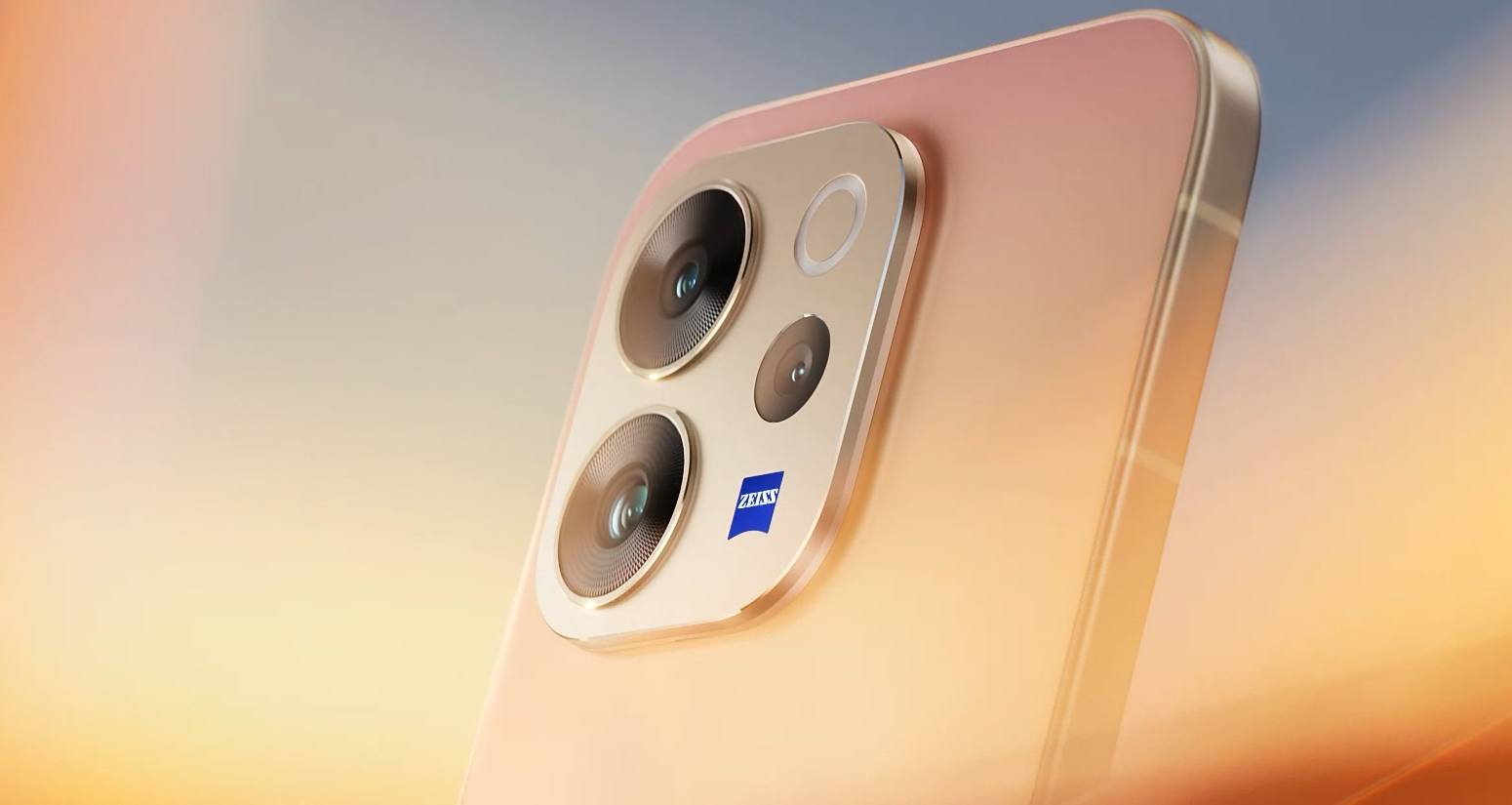
The mid-range phone market has never been more competitive. For somewhere between $400 and $600, you can now get phones with flagship-grade displays, serious cameras, and multi-day battery life. Vivo knows this. The Vivo V70 is its answer: a phone built around a ZEISS co-engineered triple camera system, an IP68/IP69-rated build, and a 6,500mAh battery. On paper, it reads like a strong contender. In practice, it’s a little more complicated than that.
The first thing you notice about the V70 is that it doesn’t feel mid-range. The aluminum frame and glass back feel premium. At just 7.59mm thick, it slips into a pocket without thinking twice. Vivo also throws in a TPU case, a 90W charging brick, and a USB-C cable in the box. That’s a refreshing move when most brands have quietly dropped the charger.

The display is a 6.59-inch 1.5K AMOLED panel running at 120Hz, with a peak brightness of 5,000 nits. Colors are punchy, text is sharp, and outdoor visibility is excellent. However, there is one catch: the phone defaults to a Smart Adaptation setting that caps the refresh rate at 90Hz. You can switch to 120Hz manually, but not all apps respond to the change even when you whitelist them. It’s a small frustration, but one you notice when you’re paying north of $500 for a phone.
However, the build quality earns its keep, though. IP68 and IP69 ratings mean the V70 can handle submersion up to 1.5 meters and high-pressure water jets. That’s a spec you’d normally expect from a phone costing significantly more, so kudos to Vivo for including it here.
The Cameras Are the Main Event

This is where Vivo has put most of its energy, and it shows. The rear camera setup includes a 50MP ZEISS main camera with OIS, a 50MP ZEISS periscope telephoto with 3x optical zoom and OIS, and an 8MP ultra-wide. The main and telephoto lenses are genuinely impressive for this price range. The telephoto in particular stands out. It’s a useful focal length for everyday shooting, and results hold up well even at 10x digital zoom in decent light.
Vivo’s ZEISS partnership isn’t just a logo on the camera housing. The color science is restrained and natural, which sets it apart from phones that oversaturate everything. Portrait mode is reliable. The new AI Stage Mode uses the telephoto to capture performers from a distance, which is a surprisingly useful addition if you shoot concerts or live events.
But if there is one weak spot in the entire camera setup, we’d have to say it is the ultra-wide. At 8MP, it’s actually kind of disappoint. It puts it behind its competitors at this price point. Vivo has recycled the same OmniVision sensor in this position for multiple generations, and it’s starting to feel like a deliberate cost-cutting decision. It won’t matter to everyone, but if ultra-wide photography is part of how you shoot, you might want to take that into consideration.
The good news is that when it comes to video, you will see an upgrade. The V70 brings 4K 60fps recording to the V series for the first time, and both the front and rear cameras support it.
Performance, Battery, and the Wireless Charging Problem

The Snapdragon 7 Gen 4 chipset handles everyday tasks without complaint. Social media, streaming, navigation, casual gaming: all of it runs smoothly. Heavy gamers or users who push demanding apps regularly will probably want a Snapdragon 8-series chip. For most people and for day-to-day tasks, the V70’s performance is more than adequate.
Battery life is one of the phone’s best arguments. The 6,500mAh silicon-carbon battery is large even by 2026 standards. Most users will comfortably get through a full day of regular use. The 90W wired charging gets you from zero to 50% in about 30 minutes. A full charge takes just under an hour.

What’s missing is wireless charging. At $550 to $600, that omission is harder to overlook than it would have been a couple of years ago. Google’s Pixel 9a includes wireless charging at $499. The Galaxy A56 doesn’t either, but it costs less. Competitors are adding it to phones at lower price points, and Vivo’s decision to skip it is increasingly difficult to justify.
Software runs on Android 16 with OriginOS 6 on top. It’s a big improvement over Vivo’s older Funtouch OS, and the transition gives the phone a cleaner, more intuitive feel. Vivo promises four years of major Android updates and six years of security patches, which is competitive.
Who Is This Phone Actually For?

The Vivo V70 is a genuinely good phone. The camera system outperforms most competitors in the main and telephoto departments. The battery is exceptional, and the build quality punches above its class. If you prioritize photography and battery life and don’t want to pay $1,000 for a flagship, this could be the phone for you.
But its pricing is also working against the device. At $550 to $600, the V70 sits above the Pixel 9a, which offers longer software support, wireless charging, and Google’s strong camera processing. The Galaxy A56 comes in cheaper with a more recognizable brand. Vivo’s product cycle is also fast: the V70 arrived less than a year after the V60, running the same chipset and nearly identical camera hardware. If you already own the V60, there’s almost no reason to upgrade.
For buyers new to the V series, though, the Vivo V70 is a hard spec sheet to argue with, as long as you’re in a market where Vivo has solid support and availability.