
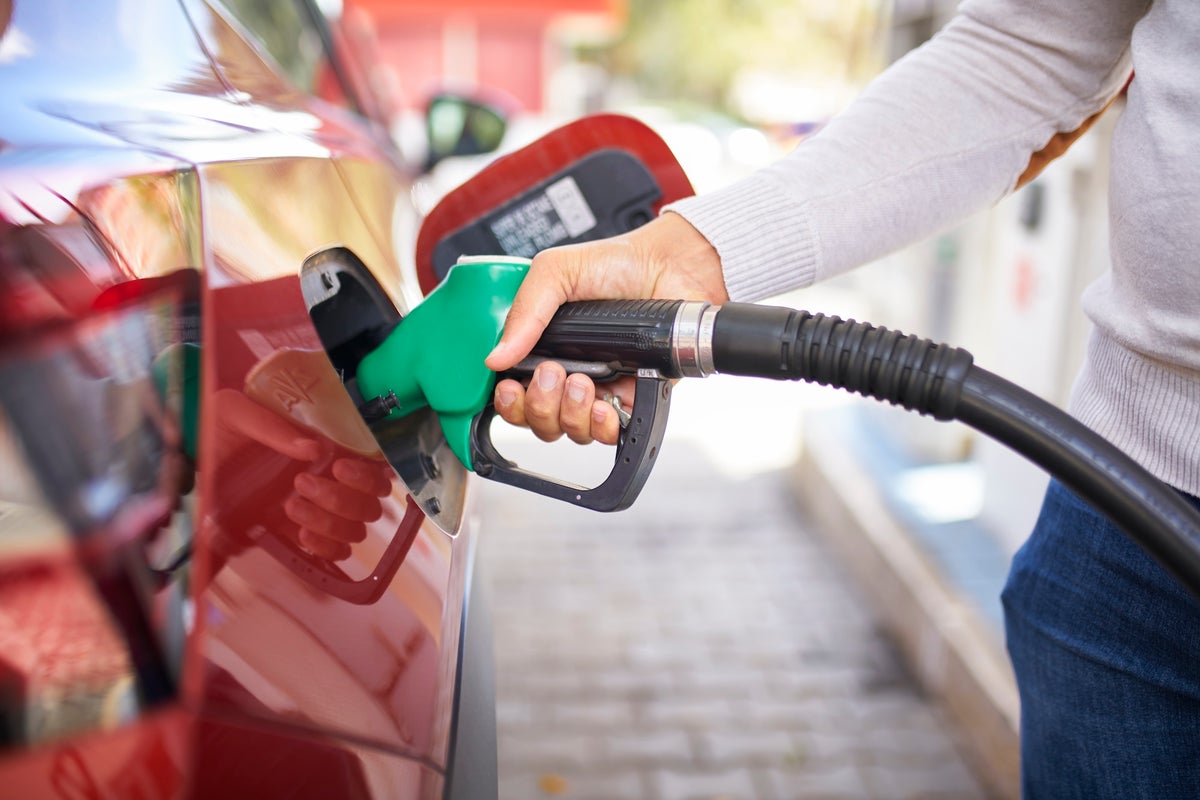
With the conflict in Iran strangling oil and gas supplies, prices at the pump have been rising. The economic pain may be acute as many hit the road over the Memorial Day weekend.
In one move meant to lower fuel costs for drivers, Environmental Protection Agency head Lee Zeldin announced in March that he would grant a waiver to the ban of selling so-called E15 gasoline, which contains 15 percent ethanol, during the summer. The waiver went into effect on May 1 and was initially intended to last for 20 days, but Zeldin has signaled he will likely extend it through the summer to increase “fuel supply and consumer choice.” The EPA has issued short-term waviers in response to summer gas prices before, but, in a shift from previous years, the House of Representatives passed a bill on May 13 to make year-round sales of E15 permanent.
If that bill passes the Senate, though, it could also boost summer air pollution. Here’s what to know about the change.
On supporting science journalism
If you’re enjoying this article, consider supporting our award-winning journalism by subscribing. By purchasing a subscription you are helping to ensure the future of impactful stories about the discoveries and ideas shaping our world today.
Why is ethanol mixed with gasoline?
Most gasoline sold year-round in the U.S. contains 10 percent ethanol, a fuel made from fermented biomass—usually corn—instead of petroleum. The use of ethanol in fuels dates back to the Clean Air Act Amendments of 1990 and the subsequent U.S. Renewable Fuel Standard, which was established by the Energy Policy Act of 2005. Ethanol contains more oxygen than gasoline, which means ethanol blends release fewer toxic carbon monoxide emissions from tailpipes. Ethanol also releases fewer nitrogen oxides—another set of tailpipe pollutants—compared with gasoline. At the time, lawmakers had hoped that ethanol would have a smaller climate effect than gasoline, says Holly Gibbs, a geographer at the University of Wisconsin–Madison, who studies land use.
“The basic idea behind ethanol blending was that replacing some petroleum with plant-based fuel would lower transportation emissions because the carbon released by burning ethanol was assumed to be partly offset by the corn absorbing CO₂ as it grows,” she says. This hope has not panned out, however, because of the climate effect of increasing the footprint of cornfields, she adds.
Ethanol is popular with U.S. farmers, though, because it provides a market for their crops. About 40 percent of the U.S. corn crop is used for ethanol.
What is E15 fuel, and why isn’t it sold during the summer?
E15 fuel contains between 10.5 and 15 percent ethanol. In the U.S., it’s approved for use in all light-duty vehicles made in 2001 or later and for what are called flexible fuel vehicles, which are designed to run on blends of up to 83 percent ethanol. It’s typically not sold in the summer, however, because burning ethanol releases volatile organic gases that react with sunlight and nitrogen oxides in the atmosphere to produce acetaldehyde, a major component of ground-level ozone. At Earth’s surface, ozone is a toxic gas that causes wheezing, coughing and asthma attacks; it also contributes to smog. (Higher up in the stratosphere, ozone is protective against ultraviolet rays.)
This reaction is more pronounced in the summer because heat and sunlight speed up these reactions. It’s also most impactful in places where there aren’t many reactive organic gases in the air already. That’s the case for most of the U.S. except the Southeast, where abundant vegetation naturally releases reactive gases, says Mark Jacobson, a Stanford University professor of civil and environmental engineering, who has studied the pollution impacts of ethanol fuels. So although the increase in ozone from E15 isn’t necessarily significant in a place like Atlanta in the summer, it is in a place like Los Angeles, where keeping reactive organic gases low is important for reducing smog, Jacobson says. For this reason, E15 sales are typically restricted in most of the U.S. during the summer months.
What effect will the fuel waivers have?
Farmers will likely welcome the waivers because the move could bump up corn prices, which could help them make up for the financial hit from the increase in diesel and fertilizer prices stemming from the war in Iran. And the Trump administration is under pressure to keep farmers’ support, says Carlisle Runge, a professor of applied economics and law at the University of Minnesota.
About 3,000 gas stations, or 2 percent nationally, are equipped to dispense E15 gas, according to the EPA. Though the cost effect of blending more ethanol into gasoline varies with the price of corn and the price of oil, E15 is likely to sell for between five and 40 cents per gallon less than E10, or regular gasoline with up to 10 percent ethanol, this summer. Ethanol has lower fuel efficiency than gasoline, however, meaning drivers may have to fill up more often, according to the American Consumer Institute.
Given the limited distribution of E15 stations and the relatively low ethanol concentration in E15, health effects from this summer’s waivers will likely be small, Jacobson says.
What is the environmental effect of ethanol fuel in general?
This is not the first time that E15 waivers have been issued—E15 sales allowances have occurred every summer since 2022. The U.S. Renewable Fuel Standard for 2023 to 2025 also calls for an increasing proportion of biofuels, including ethanol, in gasoline, with advocates—often in the agricultural sector—calling for up to 85 percent ethanol blends.
An influential 2019 study from Argonne National Laboratory found that, between 2005 and 2019, the use of corn ethanol reduced emissions by 544 million metric tons of CO2, a 23 percent reduction in the carbon intensity of fuel. Those results are hotly contested, however. A 2022 study co-authored by Gibbs found that if you take into account the effects of the conversion of land into farmland for growing corn, then corn-based ethanol fuel actually increases greenhouse gas emissions by 24 percent.
The intensive land use required to grow corn for ethanol has its own effects on water quality and fertilizer use as well, Runge says. For those reasons, along with the air pollution effects, many researchers argue that ethanol isn’t as green a fuel as it is sometimes made out to be. And Jacobson’s work has found that a move toward 85 percent ethanol gasoline would result in between 71 and 213 additional ozone-related deaths and 1,200 additional emergency department visits for asthma in the U.S. each year.
“Both gasoline and ethanol are bad,” Jacobson says. “And the solution is really to go to electric vehicles.”