

Trump administration cut funding to study hantavirus, the virus behind the deadly cruise ship outbreak
The Centers for Research in Emerging Infectious Diseases were designed to study viruses that could jump from animals to people, including hantavirus, but in 2025 the National Institutes of Health said the work wouldn’t continue

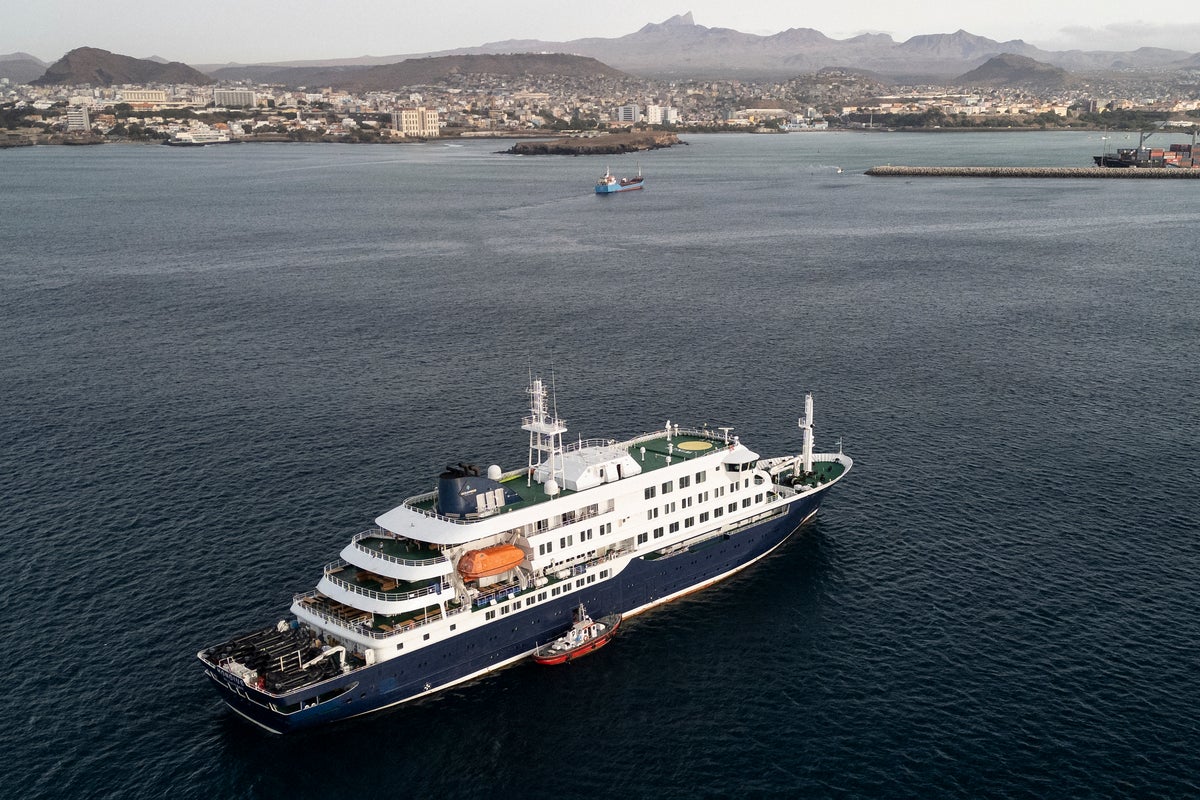
Photo by AFP via Getty Images
In 2025 the Trump administration eliminated funding for a group that had been running a pilot project aimed at studying the type of hantavirus that has been confirmed to be behind an ongoing outbreak on a cruise ship. The outbreak is now believed to have caused the deaths of three people and sickened several more. The virus has potentially spread beyond the ship because there were passengers who disembarked during the voyage before the first suspected case came to light; five U.S. states are now monitoring for the pathogen.
The pilot project was designed to better understand how hantavirus passes from rodents to humans and was being conducted through the West African Center for Emerging Infectious Diseases (WAC-EID), one of 10 centers that comprised the Centers for Research in Emerging Infectious Diseases (CREID) network. All 10 centers were shuttered last year after the National Institutes of Health decided the research was “unsafe.”
The WAC-EID primarily studied diseases in Senegal, Sierra Leone and Nigeria, and many of these illnesses were borne by rodents. “We found out that there was a group in Argentina that wanted to do similar kinds of things that we were doing in West Africa,” says Scott Weaver, WAC-EID’s former principal investigator and a professor at the University of Texas Medical Branch. “We supported them to put in an application for a pilot award, and they did that, and they were reviewed, and they were successful in getting funded.”
On supporting science journalism
If you’re enjoying this article, consider supporting our award-winning journalism by subscribing. By purchasing a subscription you are helping to ensure the future of impactful stories about the discoveries and ideas shaping our world today.
Most recorded hantavirus cases are contracted through direct exposure to rodents and their feces and urine—not through human-to-human transmission. The exception is a pathogen in this family of viruses called the Andes virus—for which several people who were onboard the MV Hondius have tested positive. But experts know little about the mechanisms of human-to-human transmission, in part because of how rare such outbreaks are. It’s possible that hantavirus can be passed on through direct exposure to an infected person’s saliva—such as by kissing—but it’s unclear if the pathogen can be transmitted through aerosol droplets of saliva, such as those produced by sneezing or coughing. Infection can result in a buildup of fluid in the lungs, hemorrhagic fever or kidney failure. Learning more about the virus was the goal of the canceled pilot project.
From 2021 WAC-EID was awarded a series of U.S. governmental grants, ranging between $521,027 and $1,702,711. Of that, Weaver says around $100,000 would likely have been dedicated to the Argentina study.
According to records compiled by Grant Witness—a website dedicated to tracking eliminated federal agency grants, including from the NIH—of the more than $8.3 million that the NIH’s National Institute of Allergy and Infectious Diseases (NIAID) originally outlaid for WAC-EID, almost $2.4 million had yet to be dispersed at the time that the funding was cut. Virologists working with CREID decried the move at the time, saying there was no evidence their work was unsafe—the cuts came amid a broader pullback of federal infectious disease funding and surveillance. The Department of Health and Human Services, which overseas the NIH and NIAID, did not immediately respond to a request for comment.
In its final funding filing to the NIH, dated to 2024, WAC-EID boasted numerous accomplishments, such as research that had led to faster, more accurate outbreak detection in West Africa for several pathogens, including a variety of dengue fever.
“The continuation of the CREID program will help to further reduce response times to emerging infectious disease threats, improve pathogen discovery pipelines, and enhance regional capacity for data-driven public health interventions,” the researchers wrote at the time.
The Argentina project almost certainly would not have prevented the outbreak onboard the Hondius. Weaver stresses, however, that funding cuts to this kind of research can make the U.S. and the world more vulnerable to viral pandemics. He points to the Zika virus outbreak of 2015 and 2016, during which thousands of Americans were exposed to a previously obscure pathogen.
“We’re not in a good position to say [hantavirus], just because it’s never caused big outbreaks, doesn’t have the potential to do that one day,” he says.
While the Hondius is currently isolated at sea, and all the currently asymptomatic passengers remain onboard, several people are known to have disembarked before the outbreak began, including individuals from at least five U.S. states—California, Arizona, Texas Georgia and Virginia. The California Department of Public Health said in a statement that it is coordinating with local health officials to monitor a number of residents, although there is no indication any are infected. Two Georgia residents are also being monitored after leaving the ship, according to the state’s public health department, which added in a statement that both are “in good health and show no signs of infection.”
At a press conference on Thursday, the World Health Organization’s director general Tedros Adhanom Ghebreyesus said eight total cases of hantavirus have been reported, with five of those eight confirmed. While classifying the incident as “serious,” he stressed that the public health risk is low because the Andes hantavirus does not appear to pass between humans easily.
Editor’s Note (5/7/26): This is a developing story and may be updated.
It’s Time to Stand Up for Science
If you enjoyed this article, I’d like to ask for your support. Scientific American has served as an advocate for science and industry for 180 years, and right now may be the most critical moment in that two-century history.
I’ve been a Scientific American subscriber since I was 12 years old, and it helped shape the way I look at the world. SciAm always educates and delights me, and inspires a sense of awe for our vast, beautiful universe. I hope it does that for you, too.
If you subscribe to Scientific American, you help ensure that our coverage is centered on meaningful research and discovery; that we have the resources to report on the decisions that threaten labs across the U.S.; and that we support both budding and working scientists at a time when the value of science itself too often goes unrecognized.
In return, you get essential news, captivating podcasts, brilliant infographics, can’t-miss newsletters, must-watch videos, challenging games, and the science world’s best writing and reporting. You can even gift someone a subscription.
There has never been a more important time for us to stand up and show why science matters. I hope you’ll support us in that mission.