
How can machine failures be anticipated before they occur? Real-time, sensor-driven intelligence is enabling predictive maintenance, helping keep operations running smoothly while minimising unplanned downtime.

The motive is to gain insights into predictive maintenance. You can see two words in the concept of predictive maintenance: predictive and maintenance. Believing we are all familiar with the concept of maintenance, it is an unavoidable activity we need to perform from time to time on our products, services, and machinery.

Reactive to proactive maintenance
When dealing with people, it becomes much easier when their behaviour is predictable; similarly, managing machines is simpler when we can anticipate their behaviour. This very predictability is valuable in maintenance, where predictive maintenance is used. In this session, we will explore how predictive maintenance helps industries operate more efficiently. We will cover the traditional maintenance approach used, the identification of core or grassroots problems, the industrial needs, data flow and intelligence used in predictive maintenance, a real-world case study and findings, the challenges faced, and conclude by answering queries.
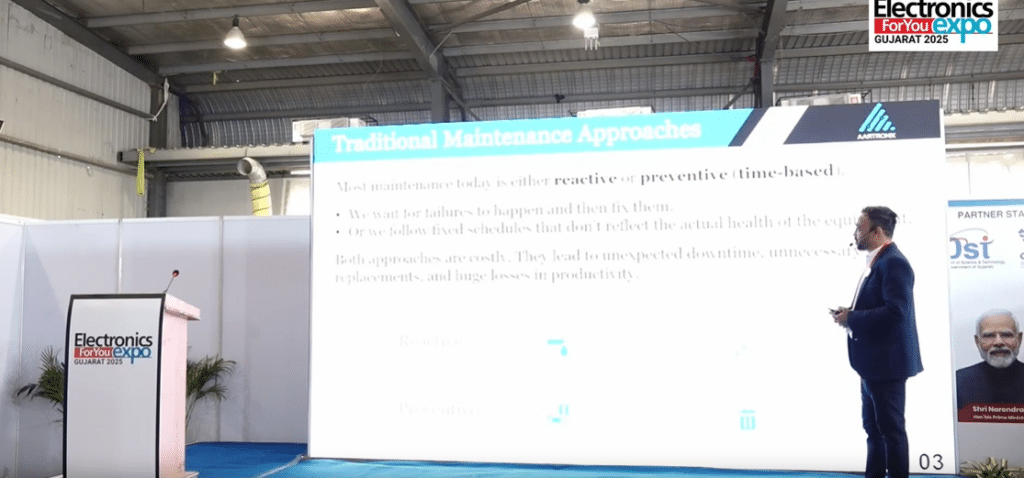
Most maintenance today falls into two categories, namely:
- Reactive approach: We wait until the machine fails. Once it fails, we call the maintenance team, they fix the issue, and then we restart the machine. This is known as reactive maintenance.
- Preventive maintenance: This method involves performing maintenance on a set schedule. Machines are checked regularly at predefined intervals. However, this approach does not reflect the actual health of the machinery.
Both approaches have drawbacks as they can lead to unexpected downtime, unnecessary part replacements and lost productivity. These are the main challenges with traditional maintenance methods.The grassroots problem involves a lack of visibility into machine health. We often don’t know what’s happening inside, why performance is dropping, which component is degrading or when a failure might occur. This is a critical issue in our country, making effective maintenance very difficult.
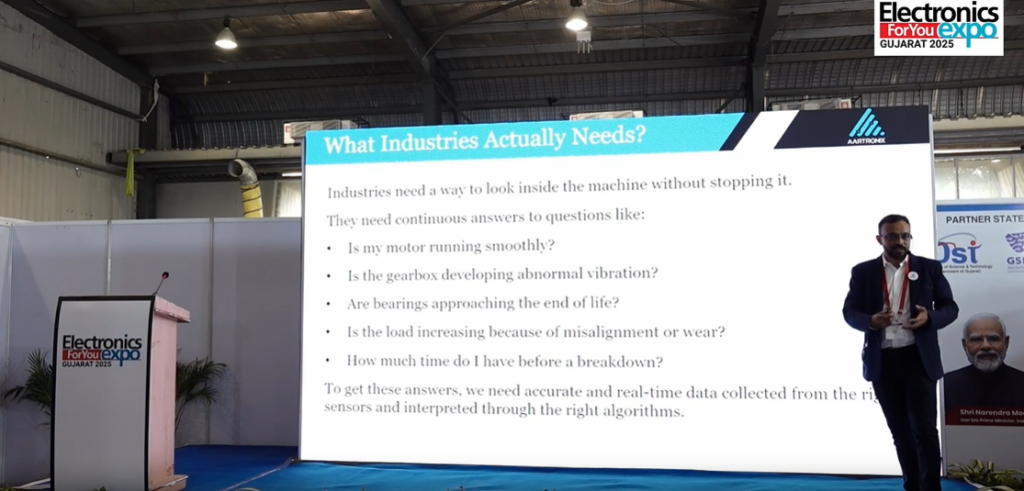
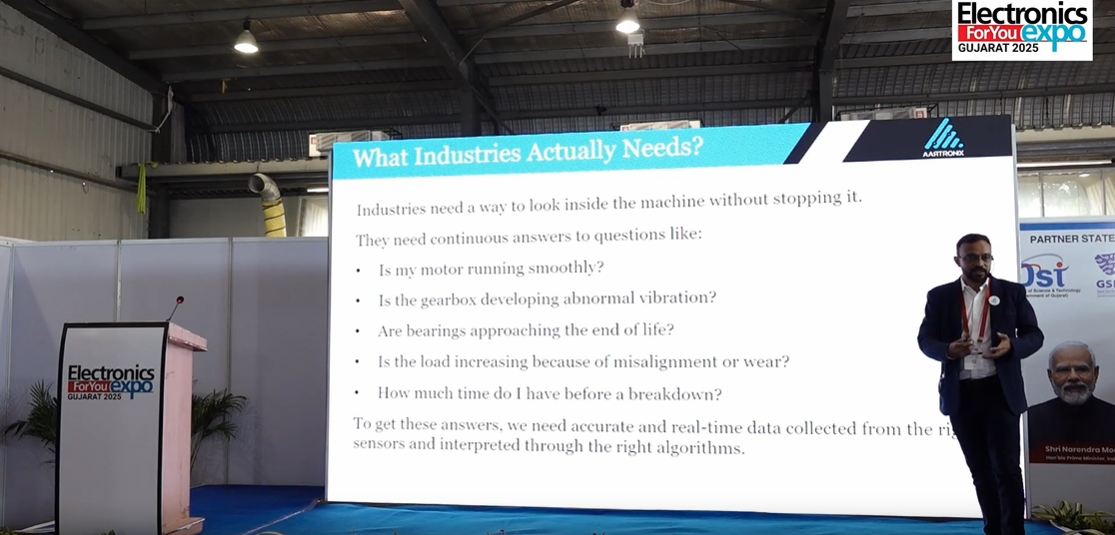
The industry needs answers that are available while the machine is running. Some of these questions will be: whether the motor is running smoothly or not, whether the gearbox is giving abnormal vibrations, whether the bearings are reaching towards the end of their life, misalignment, or any other issue, at what rate the load is increasing and how much more time one can give before the breakdown.
To answer these, we must collect accurate, real-time data using the right sensors and apply appropriate algorithms to understand and predict machine behaviour.
Architecture and real impact
Predictive maintenance uses sensor data, analytics, and algorithms to predict when equipment will fail. As a result, many maintenance activities can be carried out just in time. This can prevent failures before they occur, rather than reacting after equipment breakdown.
Insights can be available one or two weeks in advance, letting us identify which component, bearing or motor might fail. One of the biggest advantages is that the maintenance team can be informed in advance and replace parts precisely when needed.
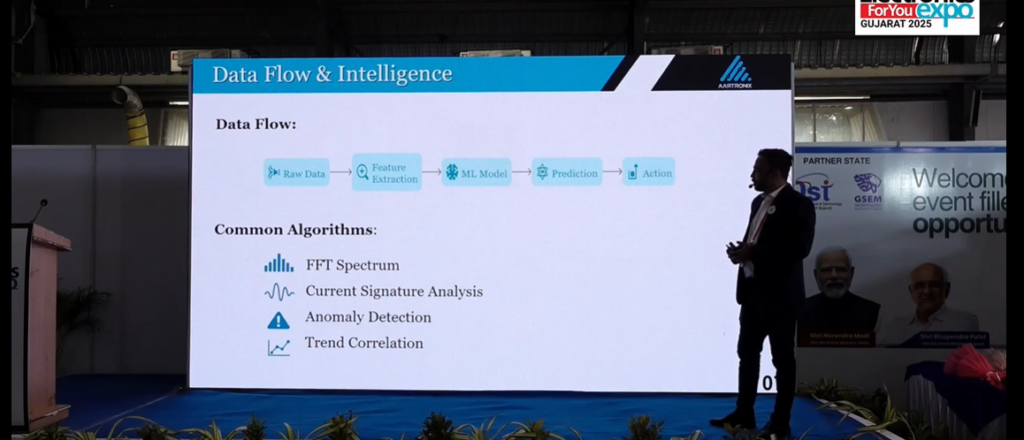
The system architecture of predictive maintenance first gathers data from sensors, which is transmitted to an edge device for processing. The results are then relayed to the cloud, where analysis or machine algorithms produce an alert. Raw data alone isn’t useful, so we extract meaningful features before sending it to cloud-trained machine learning models for specific applications. AI algorithms then predict what type of failure may occur and when, generating actionable insights. Multiple algorithms can be used depending on the application, with common techniques including Fast Fourier Transform, current signature analysis, anomaly detection, and trend correlation.
In a real-world case study, we worked with an industrial commercial building with a centralised 20-ton HVAC system, experiencing intermittent cooling and rising power consumption. We installed vibration, temperature, and current sensors on the compressor motor and collected continuous data for ten days under varying load conditions. Using algorithms such as FFT, envelope analysis, and current signature analysis, we identified elevated 1x running-speed vibration indicating rotor imbalance, high-frequency peaks pointing to outer-race bearing damage, increased load ripple due to mechanical resistance, and thermal stress from friction in deteriorated bearings.Based on these observations, we replaced the defective bearing and balanced the rotor. The results showed an energy-efficiency improvement of 22%, an eventual prevention of an unexpected compressor failure that could have shut down the entire HVAC system, thereby delivering real value to the customer.
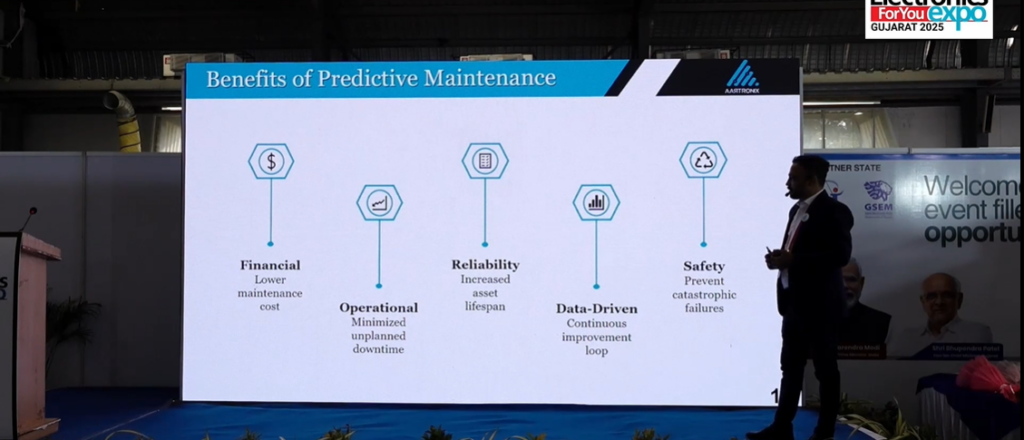
The advantages of predictive maintenance are not limited to a single fix. It reduces maintenance costs financially, decreases unplanned downtime operationally and prolongs asset life while enhancing reliability. It is completely data-driven and assumption-free, and its algorithms can be continually refined as more data becomes available. Most importantly, predictive maintenance prevents catastrophic failures by catching issues early on, before they affect other components.
Overcoming challenges and capturing value
Predictive maintenance comes with its own set of challenges. The first is data quality, where algorithms rely on accurate, high-speed, noise-free data, and any missing or corrupted data can cause them to fail. The second is integration. Sensors must be properly installed on existing systems, with correct placement for vibration, temperature and current measurements. Legacy systems and change management add complexity as technicians used to reactive or preventive maintenance need training to interpret dashboards and act on insights.
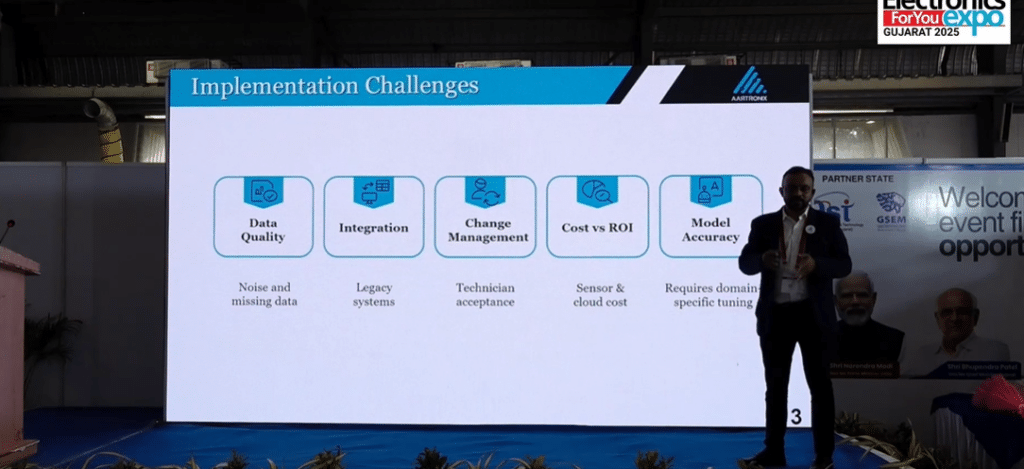
Cost versus return on investment is another factor to be considered. Predictive maintenance is most effective for complex and expensive equipment. However, it may not always be the most feasible practice for simpler equipment. Lastly, it is essential for a model to be accurate.
Us as a design services company, along with Aartronix Edge provides solutions tailored to specific customer requirements. Our product is the technology itself. We bring expertise in embedded sensing, DSP, and connectivity, and we offer a complete edge-to-cloud integration with high-speed data acquisition across motor drives, UPS, and industrial systems.
We collect high-speed sensor data and perform edge-level analysis such as FFT, envelope analysis, and current signature analysis to extract meaningful insights. Using proven theories, known defect frequencies, and vibration patterns, we can identify potential failures without intentionally damaging equipment. Our models are first validated practically and then automated after sufficient observation. We have not used synthetic data so far, as our approach focuses on real physical data collected from industry deployments.
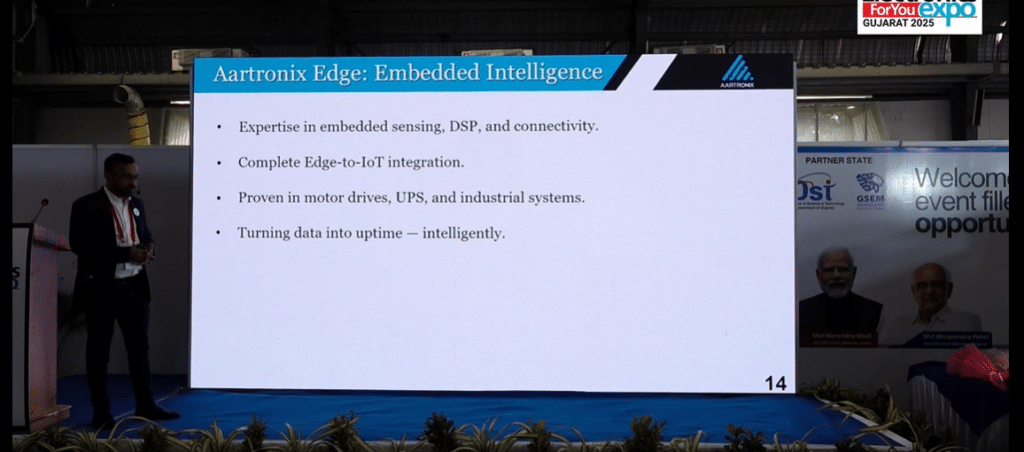
Some algorithms are implemented directly on edge devices to enable real-time actions, but advanced machine learning models require higher processing power, which in turn increases the cost of the edge devices. This creates a trade-off between investing in more powerful edge hardware and using centralised servers for computation. Both approaches are feasible, and the choice depends on cost, scale and application requirements.
The article is based on the talk at the EFY Expo in Gujarat 25, titled ‘Predictive Maintenance: Transforming Downtime into Uptime with Data & Intelligence’, by Kalpesh Gajera, Director, Aartronix Innovations Pvt Ltd. It has been transcribed and curated by Saba Aafreen, Technical Journalist at EFY.