
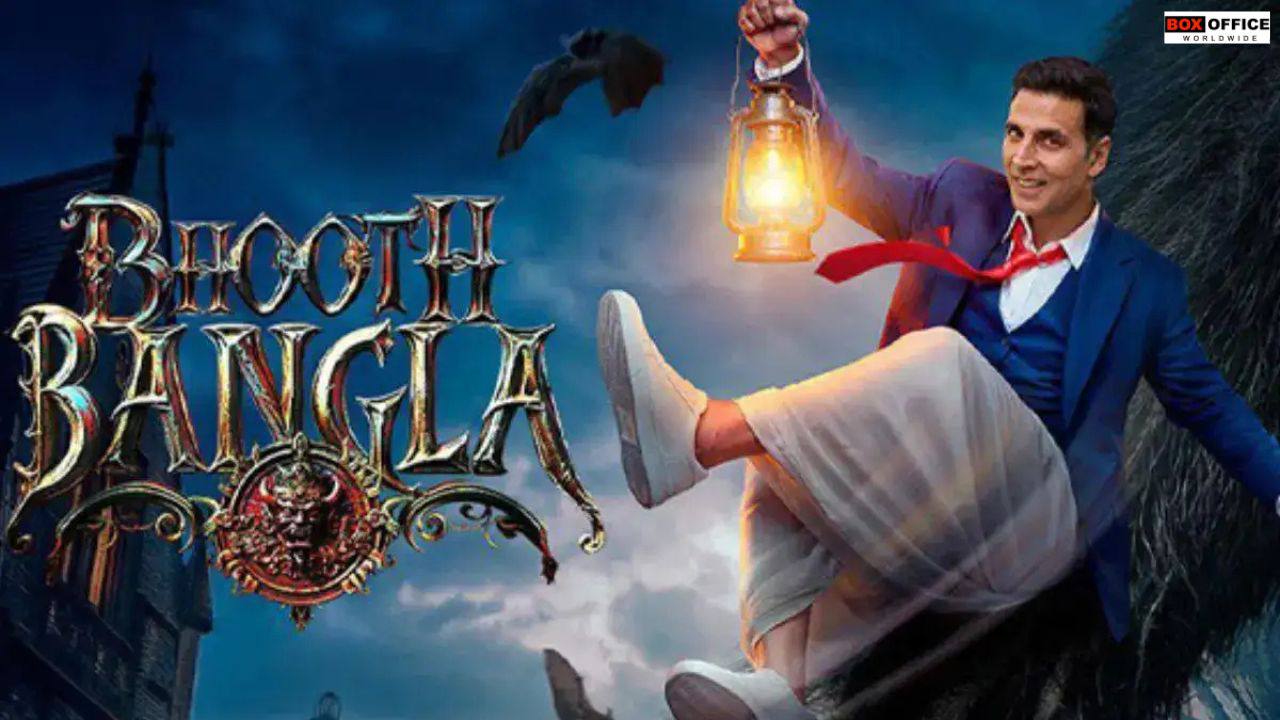
Bhoot Bangla arrives with the weight of familiarity and uses it as a weapon. Priyadarshan returns to the comic architecture that defined much of his Hindi work and places it inside a haunted palace charged by a cursed wedding, a setup that gives the film constant movement and instant theatricality. The supernatural frame is not decorative here. It drives suspicion, confusion, and comic disorder with precision. The film does not aim for deep horror. It aims for velocity, crowd pleasing confusion, and a steady stream of reversals, and it pursues that objective with full conviction.
The palace setting gives the material a natural dramatic advantage. Hidden rooms, unexplained disturbances, overheard conversations, and family tension create a space where comedy and mystery can operate together without strain. Bhooth Bangla thrives on this density. It keeps its characters in a state of permanent instability and turns every revelation into an opportunity for more chaos. That design gives the film energy from scene to scene, even when the plotting becomes excessive.
This is not a film interested in reinvention. Its appeal lies in rhythm, memory, and performer chemistry. Priyadarshan trusts old school comic staging, broad character collisions, and escalating misunderstandings, and that trust shapes the entire film. The result is a mainstream entertainer that knows exactly what it is doing. When scenes become louder than necessary, the film still holds because its timing remains disciplined and its ensemble never lets the material collapse into noise.
Bhooth Bangla: Plot
The film places a wedding inside a haunted palace and lets that collision generate its entire dramatic engine. That is a strong commercial idea because a wedding already brings vanity, secrecy, rivalry, emotional overflow, and social performance into one enclosed space. Bhooth Bangla exploits that setting with confidence. The curse hanging over the palace keeps the atmosphere unstable, while the wedding keeps the human drama combustible. Every corridor hides either a secret, a misunderstanding, or a fresh outburst of panic.
The screenplay treats the supernatural premise as a machine for escalation rather than fear. Strange incidents do not deepen dread so much as destabilise relationships and force characters into comic confrontation. That decision defines the film’s method. Priyadarshan builds scenes through accumulating confusion, overlapping motives, and delayed revelation. The narrative keeps folding characters into situations they do not understand, and that confusion creates the momentum that carries the film through its busiest passages.
What gives the story its charge is its refusal to remain static. Bhooth Bangla keeps introducing disruptions that alter alliances and sharpen suspicion. The writing does not chase realism or emotional intricacy. It chases comic instability, and that instinct serves the film well. The script’s construction is strongest when revelations trigger fresh disorder instead of merely explaining what has already happened. That structural aggression keeps the film active and prevents the mystery from becoming inert.
The emotional material is simple and direct. Family friction, wedding anxiety, and buried tensions provide the human layer that stops the film from turning hollow. The writing does not pursue emotional depth, but it gives the characters enough personal stake to make the chaos matter. That clarity is one of the film’s strengths. It keeps the narrative accessible and gives the supernatural confusion a recognisable emotional frame.
Bhooth Bangla: Performance
Akshay Kumar anchors the film with sharp comic control. He understands how to move through escalating absurdity without losing a scene’s internal rhythm. His performance rests on timing, physical response, and a precise sense of when disbelief should turn into panic. Bhooth Bangla gives him a role built around those strengths, and he uses that familiarity to steady the film’s loudest stretches. He never chases chaos for its own sake. He shapes it.
Paresh Rawal remains central to the film’s comic machinery. He turns irritation, authority, and exasperation into a running source of force. His reactions sharpen scenes and create counterweight to the general frenzy around him. Rajpal Yadav supplies the anxious unpredictability that this genre demands. He has complete command over nervous comic energy, and his presence injects scenes with immediate volatility. Together, the three actors create the film’s strongest current. Their chemistry delivers the nostalgia the film seeks, but it also gives the comedy present tense vitality.
Tabu enters the film with composure and conviction. She treats the material seriously, which makes the surrounding absurdity land harder. Her restraint gives the ensemble shape and prevents the tone from floating away. Wamiqa Gabbi and Mithila Palkar bring freshness and warmth, helping the film maintain a lighter emotional texture around its familiar comic framework. They are not ornamental additions. They keep the film from becoming trapped inside its own backward glance.
The supporting cast functions with purpose. This is ensemble comedy that depends on reactions, interruptions, misunderstandings, and pressure from every side, and the film gets that support across the board. Not every role is memorable, but the collective effect is strong. The performances carry the film through every rough patch in the writing and keep the entertainment level consistently high.
Bhooth Bangla: Analysis
Priyadarshan’s direction gives the film its identity. He remains committed to orchestrated confusion, and Bhooth Bangla uses that method with discipline. The film is built through movement, entrances, exits, suspicion, interruption, and reversal. What separates it from routine farce is the supernatural premise, which allows the director to shift from eerie suggestion to comic explosion without losing coherence. He controls rhythm with assurance and understands exactly how long to hold disorder before converting it into payoff.
That command does not erase the film’s artistic limit. Bhooth Bangla is a polished exercise in familiar mechanics, not a major expansion of horror comedy. The haunted palace, the curse, and the family intrigue give the film a lively shell, but the material never grows into a distinctive vision of the genre. The horror remains surface decoration, and the comedy follows inherited patterns with complete dependence on performer energy. The film succeeds as entertainment because the execution is strong. It remains limited as cinema because it never transforms its ingredients into anything singular.
The screenplay is most effective when character behavior generates confusion organically. It weakens when the plot extends disorder through repetition. That pattern affects the middle portions, where the film revisits the same kind of misunderstanding before pushing toward the next reveal. The setting, however, is used with intelligence. The palace is not wasted as a visual backdrop. It becomes the engine of concealment, suspicion, and dramatic circulation, and that gives the film a clear spatial identity.
Ekta Kapoor’s production backing aligns with the film’s instincts as a mainstream entertainer built for family viewing. Bhooth Bangla knows its audience and serves that audience with discipline. It is not interested in tonal experimentation or genre subversion. It is interested in delivering a theatrically effective blend of comic disorder, supernatural flavour, and ensemble familiarity, and on that front it remains firmly in control.
Bhooth Bangla: Verdict
Bhooth Bangla works because it commits completely to its chosen mode. It is broad, fast, crowded, and deliberately excessive, but it never loses grip on rhythm. The film does not search for novelty, and it does not disguise its dependence on familiar comic grammar. Its strength lies in how confidently it executes that grammar. Priyadarshan directs with assurance, the haunted wedding premise gives the narrative constant motion, and the central trio of Akshay Kumar, Paresh Rawal, and Rajpal Yadav keep the comedy alive through timing rather than desperation.
This is a satisfying commercial horror comedy that values structure, ensemble performance, and audience rhythm over invention. Its artistic range is narrow, its horror remains light, and its comic architecture is drawn from a long established tradition. Yet the film delivers exactly what that tradition promises when handled with craft. It is funny, energetic, and theatrically alert from start to finish. For viewers seeking a family entertainer built on confusion, chemistry, and supernatural mischief, Bhooth Bangla delivers with force.
Bhooth Bangla: Rating
Critics Rating: 3.5/5
Box Office Rating: 3/5
Stay tuned for Movie reviews, ott reviews, latest bollywood movie reviews, box office movie reviews.
Related