
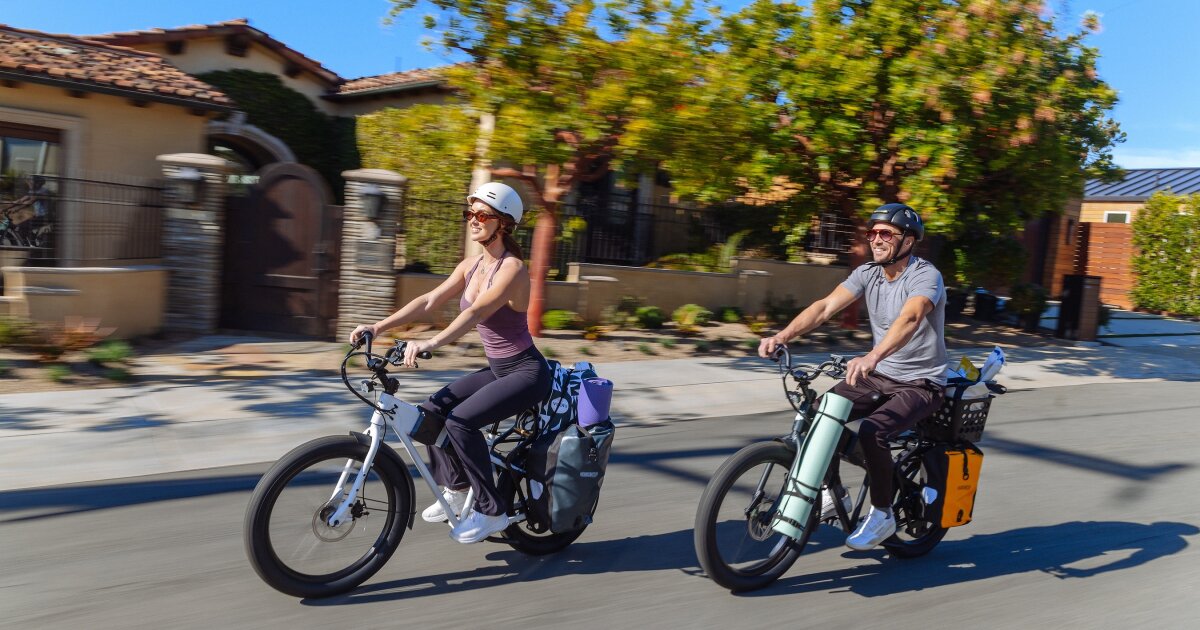
Most electric cargo bikes live in garages, because that’s the only place big enough to put them. JackRabbit’s new MG Cargo is so slim it can live in a closet or a hallway. It will still carry your kids, a week’s worth of groceries, or an adult passenger on the back – all on a frame that weighs less than a suitcase.
The MG Cargo’s frame collapses to a precise 8 inches (20 cm) wide, which is about the depth of a shoebox standing on its side. For apartment dwellers, that specificity matters. But the portability goes further than storage: remove the front wheel and handlebars, which takes under a minute and requires no tools, and the bike fits into an SUV trunk, the storage bay of a campervan, or the hold of a sailboat.
JackRabbit
Weighing in at 55 lb (25 kg), the company claims it’s the lightest high-capacity electric cargo bike on the market while still supporting a combined rider-and-cargo load of 500 lb (226 kg) – a nearly 10-to-one load-to-weight ratio that JackRabbit says doubles the average for the category.
That weight advantage becomes concrete when you line it up against the competition. The RadWagon 5 weighs 86 lb (39 kg), the Aventon Abound SR is 80 lb (36 kg), and the Specialized Globe Haul ST comes in at 77 lb (35 kg). Saving 22–31 lb over those rivals may sound incremental, but it’s the difference between lifting the bike onto a car rack solo and needing a second pair of hands – and a favor you’ll hear about later.
JackRabbit built the MG Cargo around a heat-treated 6061-T6 aluminum frame, an aerospace-grade alloy prized for its strength-to-weight ratio. The rear hub motor is a brushless 749-W unit specifically tuned for cargo use, meaning its internal gearing prioritizes pulling force at low speeds and on hills rather than top-end velocity.
Power comes from a 36-V, 720-Wh lithium battery with a claimed real-world range of over 48 miles (75 km). A full charge takes around five hours, but an optional second hot-swappable battery can extend that range further. Stopping power is handled by dual-piston hydraulic brakes front and rear, and pre-installed dual LED lights complete the package.
The wheel layout follows what mountain bikers call a “mullet” setup: a larger 24-inch front wheel for rolling over rough pavement, paired with a smaller 20-inch rear wheel that lowers the cargo platform for better stability when the rack is loaded. Both use 3-inch-wide tires.

JackRabbit
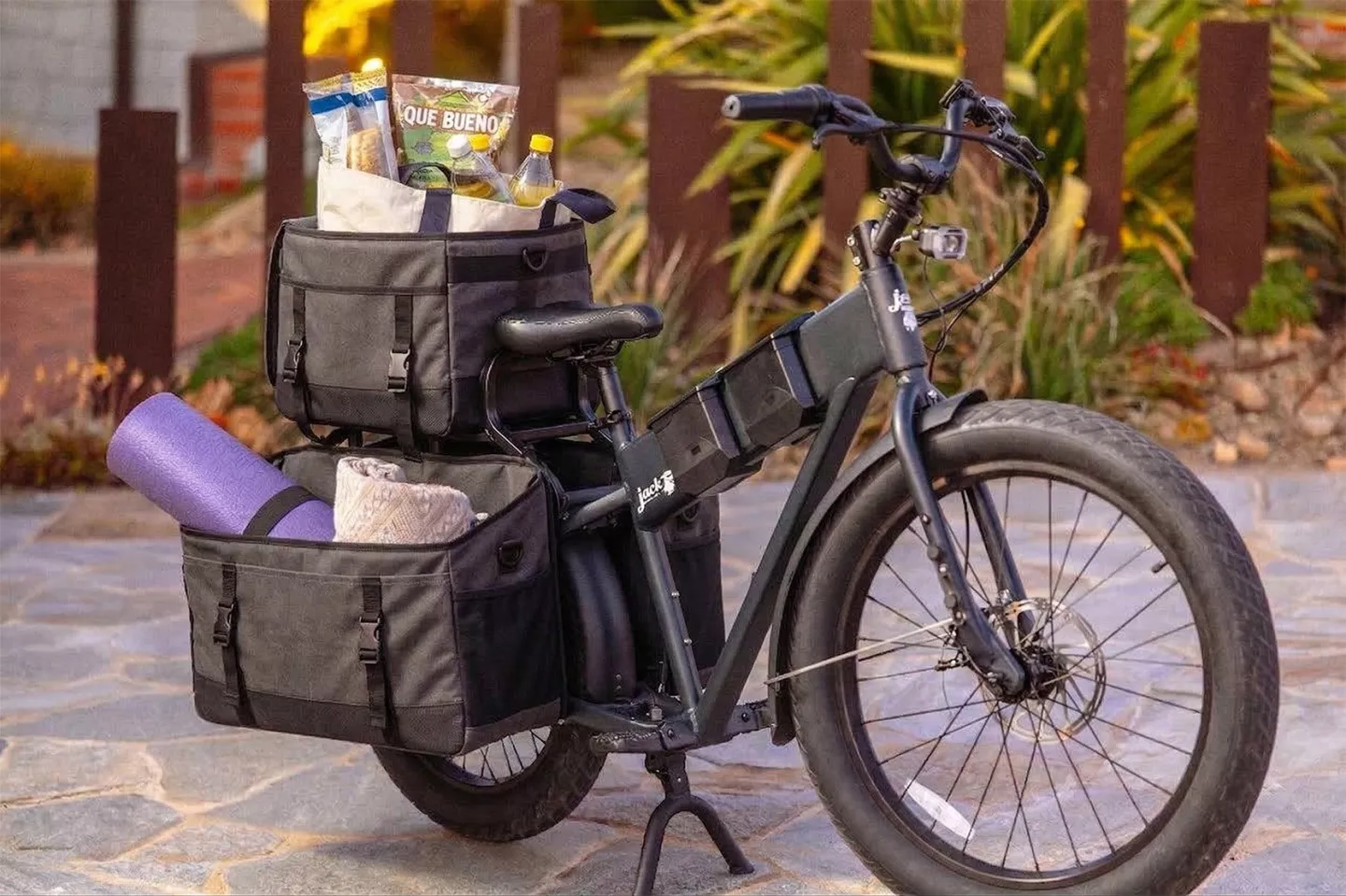
Alongside the bike, JackRabbit launched ModRabbit, an open accessory platform that groups compatible gear from Ortlieb, Burley, Thule, Fidlock, and Topeak. The Copilot Kit converts the rear rack into a passenger seat rated to 150 lb (68 kg) and accepts the Thule Yepp 2 Maxi child seat. Side racks add 25 lb (11 kg) of capacity per side on bamboo platforms.
As with other members of the JackRabbit family, this cargo ebike lacks pedals so you roll with motor only. Three power modes are on tap: from Eco at 7 mph (11 km/h) through Mid at 15 mph (24 km/h) to High at 20 mph (32 km/h). An off-road mode pushes that to 24 mph (38 km/h), though it’s locked by default – it exceeds US street-legal ebike limits and is restricted to private trails and riders over 18.
At US$2,499, the MG Cargo is not the cheapest option in the category. JackRabbit is betting that for apartment dwellers and car-dependent families who need to actually move the bike regularly, the weight and portability savings earn that premium. The first units ship in mid-May direct from the company or through more than 200 US retailers.
All New JackRabbit MG Cargo
Product page: JackRabbit MG Cargo