
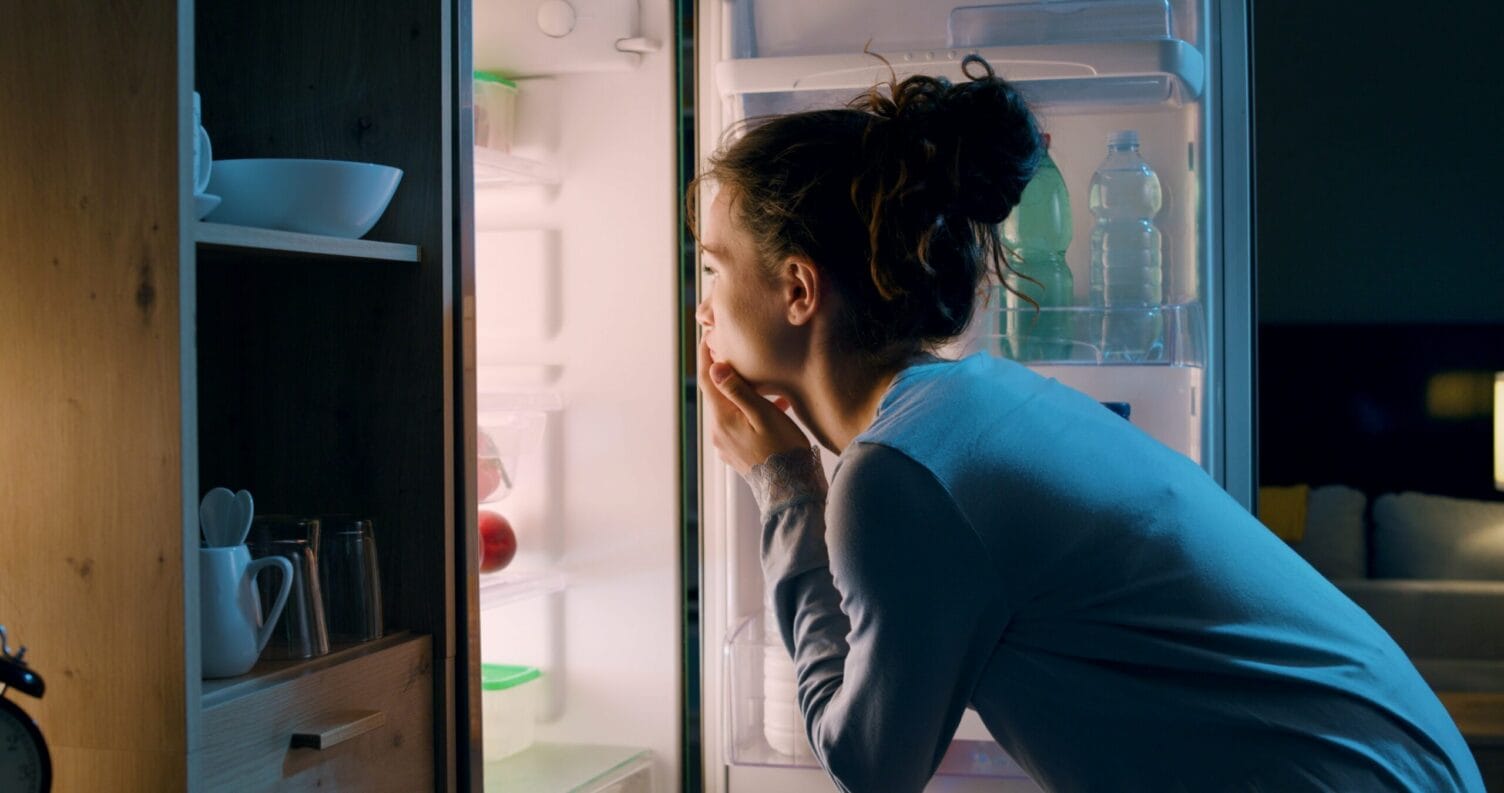
If you get hungry before bed, you do not need a perfect snack. You just need one that is small, balanced, and easy to digest. The best healthy late night snacks can take the edge off hunger, support steadier blood sugar, and in some cases may even help with sleep. (2,5)
That does not mean everyone needs to eat before bed. For many people, a bedtime snack is optional. But if you often go to sleep hungry, wake up hungry, or need help avoiding overnight low blood sugar, a small snack may make sense. (2,1)
“Bedtime snacks are not any different than snacking at other times. A nutrient-rich snack containing lean protein and fiber-rich carbohydrates is recommended to help keep you full through the night while keeping blood sugar steady,” says Joanna Gregg, RD, MyFitnessPal Registered Dietitian.
Do You Really Need a Bedtime Snack?
Not necessarily.
“Individuals without certain medical conditions such as diabetes generally do not need a snack before bed to stabilize blood sugar overnight, as the body is well equipped to regulate glucose levels during sleep,” says Emily Sullivan, RD, MyFitnessPal Registered Dietitian.
However, a bedtime snack might help some people, including those who need to prevent overnight low blood sugar and, in some cases, active people using nighttime nutrition strategically. (1,2)
That is why bedtime snacks are best thought of as helpful for some people, not a must for everyone. Your full eating pattern during the day matters more than one snack at night. (2)
What Makes a Healthy Bedtime Snack?
A healthy bedtime snack usually includes a source of lean protein and fiber-rich carbs. That combination helps you feel fuller for longer and slows the rise of blood glucose. (4,20)
For example, fruit on its own may not keep you full for long. But fruit with nut butter or yogurt is more balanced. Toast alone is less satisfying than toast with cottage cheese or avocado.
Portion size matters too. One review found that a small, nutrient-dense nighttime snack, around 150 calories, may be fine for healthy adults, though this is based on limited research and individual needs vary. Yet still, large meals late at night are more likely to affect sleep and health in a negative way. (2)
If you want to get a better sense of whether you are eating enough protein, fiber, or calories during the day, logging meals in the MyFitnessPal app may help you spot patterns. Late-night hunger can sometimes be a sign that dinner was too small or not well balanced.
6 Healthy Late Night Snacks to Try
1. Greek Yogurt With Berries And Walnuts
Plain low-fat Greek yogurt with berries and walnuts is one of Sullivan’s go-to bedtime snacks. It is a simple, balanced option that can feel light while still being satisfying. Sullivan also notes that dairy and walnuts have both been studied for possible sleep benefits. (5,9,10)
Dairy foods contain tryptophan, an amino acid involved in the production of melatonin and serotonin. Researchers are still learning more about the link between dairy foods and sleep, but the connection is promising. (5,9)
It’s also important to note that the research on walnuts and melatonin looked at daily walnut consumption over time, not a single handful at bedtime, so the sleep benefit from an occasional snack portion is uncertain. (10)
However, this is still one of the easiest healthy bedtime snack ideas because it takes only a minute to put together.
2. Banana And Nut Butter, Two Ways
It appears we have a consensus. Both Sullivan and Gregg recommend bedtime snacks built around banana and nut butter.
Sullivan’s version is oatmeal with peanut butter and banana, which works well when you want something warm and a little more filling. Gregg’s version is a banana with peanut butter or almond butter, which is a faster option when you want something simple and easy.
Both banana and nut butters contain magnesium, a nutrient that has been studied for its role in sleep. (6)
3. Whole Wheat Toast With Low-Fat Cottage Cheese
This is another easy snack from Gregg.
Whole-grain toast with cottage cheese pairs a slower-digesting carbohydrate with a protein-rich topping. (3,11) It’s also a good option if you prefer savory foods over sweet options at bedtime.
4. Whole Grain Toast With Avocado
Katherine Basbaum, MS, RD, MyFitnessPal Registered Dietitian, recommends a slice of whole grain toast topped with avocado.
Whole grains provide fiber and complex carbs to keep you full longer, while avocado contains magnesium, which has been shown to improve sleep. (3,6,18)
This snack is simple, plant-forward, and easy to keep in your routine, while still being extra delicious.
5. Tart Cherry Juice With A Handful Of Nuts
Brookell White, MS, RD, MyFitnessPal Registered Dietitian, recommends a small glass of tart cherry juice with a handful of nuts before bed.
Tart cherry juice has been studied for its possible sleep benefits as it contains melatonin which may help support longer sleep duration, though more studies are needed. (14,19)
Additionally, nuts can help make the snack feel more balanced and satisfying. Nuts also contain magnesium which has been associated with better sleep in those who lack this mineral in their diet. (6,19)
6. Pistachios With Low-Fat Cottage Cheese
Basbaum recommends a handful of pistachios with a small bowl of low-fat cottage cheese.
Of all nuts, pistachios have the highest concentration of melatonin, and cottage cheese contains tryptophan, an amino acid the body uses to help make melatonin and serotonin. (15,16,17)
What Foods Should You Avoid Before Bed?
Some foods are more likely to work against sleep than support it.
White says foods and drinks with caffeine, including coffee, tea, and chocolate, may affect sleep quality. Research cited by the American Academy of Sleep Medicine found that caffeine taken even six hours before bed can still disrupt sleep. (8)
Large or heavy meals can also be a problem. The National Heart, Lung, and Blood Institute recommends avoiding large meals close to bedtime because they can interfere with sleep. (7)

When Should You Eat a Bedtime Snack?
There is no perfect time that works for everyone.
Some research has found an association between eating or drinking very close to bedtime and more wakefulness during sleep, suggesting that a longer gap between the last meal and bedtime may be better for sleep. (12)
In practice, this often means a small snack one to two hours before bed may work better than eating right before lying down. This timing is a general guideline rather than a strict, research-backed rule. Still, a heavy meal late at night is more likely to disrupt sleep.(2,7,12)
Keep in mind that sleep and nutrition responses vary from person to person, so what works well for one individual may not work the same for another.
One Change That Helps Beyond Bedtime
Your nighttime snack matters less than your full eating pattern.
“From a dietary standpoint, eating a plant-forward diet is one of the best things you can do to improve sleep quality and support overnight blood sugar control,” says Basbaum.
A plant-forward way of eating includes more fruits, vegetables, beans, whole grains, nuts, seeds, and healthy fats like olive oil or avocado. These foods tend to be rich in fiber and other nutrients that support better overall health and sleep. (13)
That means the best bedtime snack is only one part of the picture. Eating balanced meals throughout the day may do even more to help you sleep better and avoid blood sugar swings overnight.
If you are trying to improve your routine, the MyFitnessPal app can help you see whether your meals are balanced and whether you are getting enough protein and fiber across the day.

Frequently Asked Questions (FAQs)
- What are good foods to eat before bed?
Good foods to eat before bed include small, balanced snacks that combine protein with fiber-rich carbs. This can look like: Greek yogurt with berries, banana with nut butter, oatmeal with peanut butter, or whole grain toast with cottage cheese. Some of these also contain magnesium, which has been associated with better sleep. (3,4,18)
- What are the best bedtime snacks for diabetics?
The best bedtime snacks for diabetics depend on the person, their medications, and their overnight blood sugar patterns. In general, small snacks with carbs plus protein, fat, or fiber may be used when needed as this combo generally supports stable glucose levels. People using insulin should get individualized advice from their care team. (1,20)
- How long before bed should you eat a snack?
There is no perfect time for everyone, but a small snack is usually better than a heavy meal close to bedtime. Some research suggests a gap between eating and sleep may be associated with better rest, though the ideal timing will vary by individual. (2)
- What foods should you avoid before bed?
It is usually best to avoid large or heavy meals right before bed. Foods and drinks with caffeine, like coffee, tea, and chocolate, may also make it harder to sleep well. (7,8)
Bottom Line
A good bedtime snack doesn’t need to be complicated. Yogurt with berries and walnuts, oatmeal with peanut butter and banana, or toast with cottage cheese or avocado all fit the bill.
If you want something before bed, choose a snack that feels light but still takes the edge off hunger. If you’re not hungry, skip it.
