
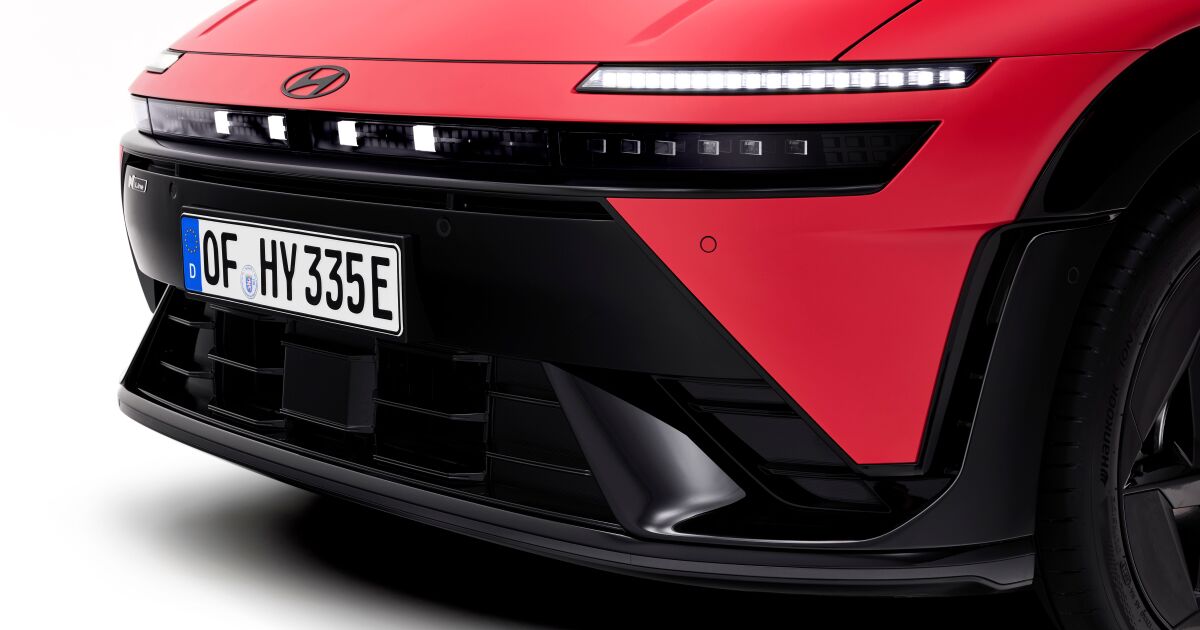
The latest small electric vehicle (EV) to join the crowded battle for European family car buyers has arrived. It’s important, firstly because the Ioniq 3 is from Hyundai, the world’s third biggest auto manufacturer, and secondly, because it looks pretty darn cool.
This is no utility Euro-box for climate worriers. It’s a sexy sleek low-slung supermini that happens to be powered by the latest dynamic auto technology.
Hyundai IONIQ 3 World Premiere | This is more than freedom
Last year we called the Ioniq’s prototype Concept 3 ‘toy-like,’ and although the real thing is less bonkers mad, it’s still a head-turner. While the Concept had lemon-tinted windows, the production Ioniq 3 has futuristic sleek looks as if it’s a mini Ioniq 6.
The basic details are that it is a Golf-ish sized front-drive hatch that claims up to 308 miles (496 km) of range, 133-bhp or 145-bhp motors for sprint times of 9 seconds to 62 miles (100 km) and quoted top speeds of 105 mph (170 km/h), plus a 400-volt system with a 10 to 80% recharge taking 29 minutes.
Those swoopy lines mean it has a very healthy drag coefficient of 0.263. Hyundai says it follows the ‘Art of Steel’ design philosophy with surfaces that “reflect the natural behavior of sheet metal.” Whatever, it also has a lot more trunk space than a VW Golf. So it’s sensible AND sexy.
Hyundai
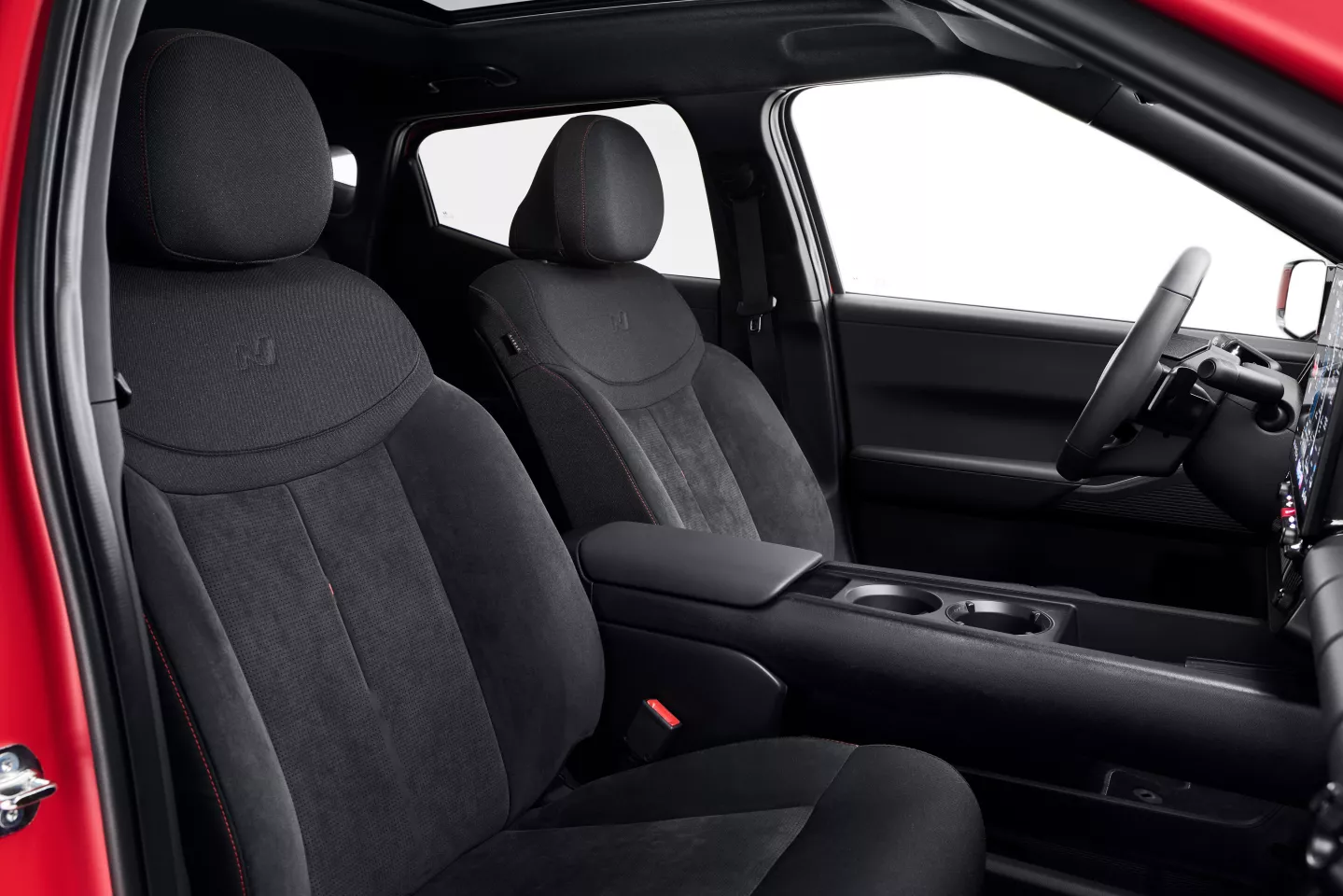
The cabin has a flat floor, seating for five and a new Android-based infotainment system. Screen options are 12.9 or 14.6 inches and there’s a welcome retro series of physical buttons for the climate control. The N-Line trim adds a saucy spoiler and diffuser that hints at the exciting possibility of a future Ioniq 3 N hot hatch.
Depending on trim and spec, Hyundai also says Ioniq 3 owners will get the option of heated and ventilated seats, a Bose sound system, ambient LED lighting and, bizarrely, cabin materials inspired by 1970s Italian furniture.
The Ioniq 3 also features Hyundai’s ‘pixel lighting’ which is a signature design feature of the Ioniq range. In case you haven’t noticed this vital part of Hyundai brand identity, it involves small cubic, pixelated LED light clusters on the front and rear ‘inspired by digital pixels and Morse code.’ I hadn’t actually clocked this before but evidently the dots spell out the Morse for the letter H.

Hyundai
Anyway, how will the new H do in the marketplace? That small EV world is filling up fast. The rivals already include the Renault 5, VW ID.3, MG4, Cupra Born, Škoda Elroq and entries from Chinese new brands like the Nio Firefly and BYD Dolphin.
And of course, there’s its Korean stepsister, the Kia EV2. That’s an interesting relationship. Remember that Hyundai took over a bankrupt Kia in 1998 and, although nominally separate competing companies, they increasingly share their bits. The vague branding difference is that Kia is younger and cheaper, Hyundai more grown-up and premium.
All that means that the Ioniq 3 is REALLY the Kia EV2 with a saucier body.

Kia
Both are built on the Hyundai Group’s E-GMP platform (Electric-Global Modular Platform) using 400-volt architecture and share the same two battery options, front-wheel-drive motor, with all the same stats including charging times.
The difference is telling though: the Kia is marketed differently, as a mini-SUV, while the Hyundai is an ‘aero hatch.’ The big difference is that the tall boxy Kia is less aerodynamic than the longer, low-slung Hyundai, so is able to claim 27 miles shorter range.
No word on pricing or release dates for the Ioniq 3 yet but we expect action around mid-year and cost to be something around £25,000 for UK buyers. There’s no word on availability beyond Europe at this time.
Source: Hyundai