
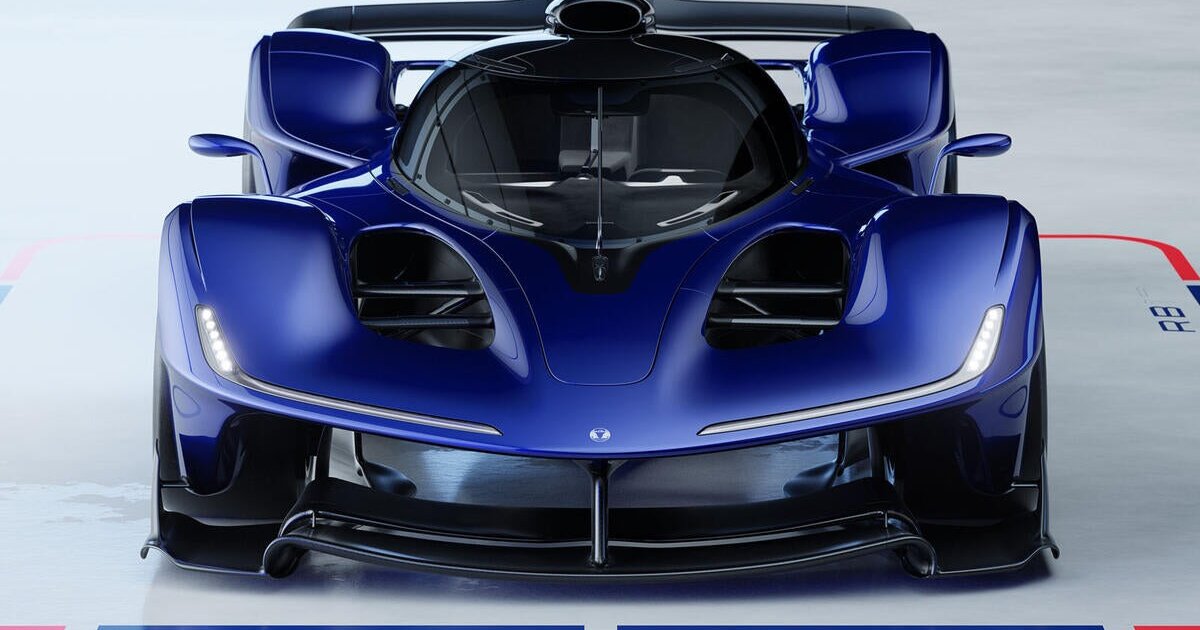
It’s been close to two years since Red Bull revealed the RB17, a low-slung aerodynamic hypercar teased as capable of generating nearly twice its own weight in downforce. Now, in 2026, we’re not too far away from the real thing.
Designed by Adrian Newey, the same man behind Formula 1-winning cars for Williams and McLaren, the RB17 is claimed to be faster than any existing F1 car out there.
The hypercar has now entered its final build phase, with final assembly now underway in Milton Keynes, UK. Track testing will follow ahead of an official launch scheduled for spring 2027 (Northern Hemisphere), with customer deliveries continuing through to the end of 2028.
Only 50 units of the RB17 are set to be built, and every single one has already been allocated – despite a price tag of around US$6.7 million.
Red Bull Advanced Technologies
And there’s a good reason why.
The RB17 is not merely another hypercar in the conventional sense. Rather, it was conceived as a proper track machine designed to deliver the closest possible experience to driving a real Formula 1 car. Its hypothetical lap time at Spa-Francorchamps is said to be around 1 minute 38 seconds – about a second faster than a modern Formula 1 car.
That performance comes courtesy of a 1,200-hp 4.5-liter V10 developed by Cosworth, paired with a 200-horsepower electric motor and mated to an Xtrac gearbox. All of that power is packed into a car weighing just 1,984 lb (900 kg).
The result is a 0-60 mph (97 km/h) time of under 3 seconds and a top speed of 217 mph (350 km/h).
Red Bull Advanced Technologies
We’ve seen a few hypercars command similar price tags and produce similarly astonishing power outputs – the Aston Martin Valkyrie AMR Pro and Pagani Huayra R to name a couple of examples. But none of those cars are intended to stand toe-to-toe with a Formula 1 car. The RB17, on paper at least, is designed to do exactly that – and potentially even beat one on lap time.
And then there’s the rumor that hypercar modifier Lanzante is developing a $600,000 conversion kit that would make the RB17 road legal, though it’s hard to imagine many owners choosing to commute in one.
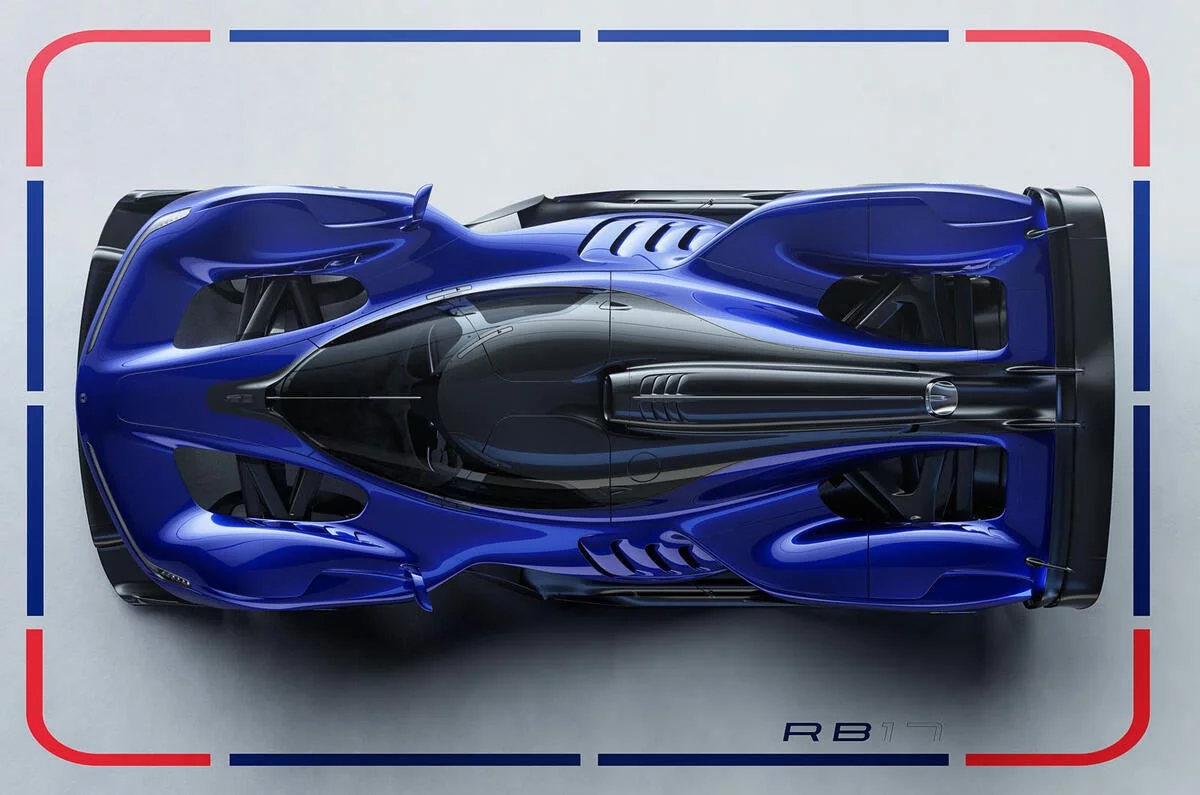
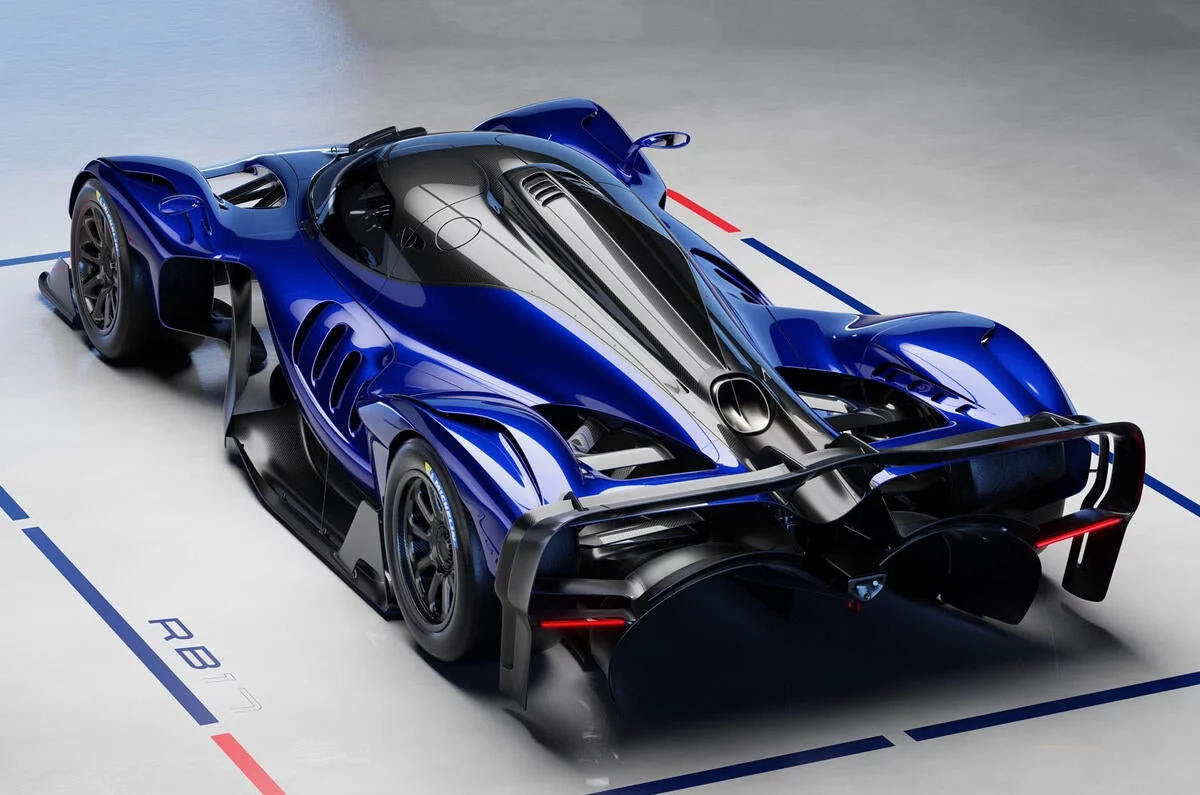
Visually, the RB17 has changed very little from its original reveal. Deep side channels direct airflow toward the rear, while a compact front aero section manages airflow across the bodywork. There’s also a massive diffuser and a high-mounted rear wing integrated into the rear frame.
The exhaust is housed within a central spine running down the engine cover, with gases channeled beneath the wing to increase aerodynamic load. According to RB17 technical director Rob Gray, the car’s adaptive suspension system provides “a nice stable platform” and controlled ride height while generating up to 3,747 lb (1,700 kg) of downforce.
Red Bull Advanced Technologies
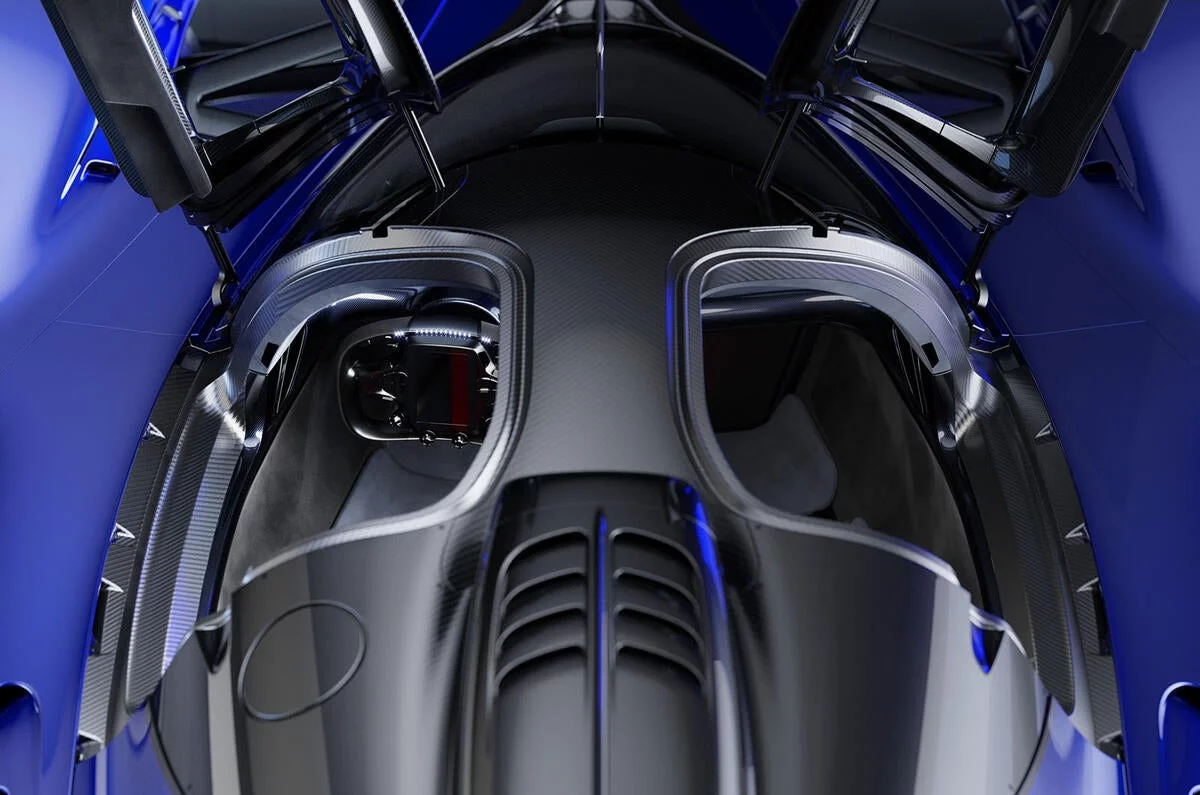
The interior is just as fancy as the exterior. Inside is a compact, race-inspired cabin featuring “knobs and thumbwheels, not screens,” as Gray explains. The two-seat layout positions the passenger next to but slightly behind the driver, helping the cockpit feel more spacious than its dimensions suggest.
Getting into the RB17 is unconventional, too. Instead of gullwing or butterfly doors, the car uses front-hinged doors that swing forward, allowing occupants to stand on the seat and effectively “drop into the car.”
The RB17 feels less like a car and more like Adrian Newey finally being allowed to remove the handbrake from his imagination. No FIA regulations, no balance-of-performance politics, no cost caps – just one of Formula 1’s greatest designers building the sort of machine engineers probably sketch on napkins after a few drinks before dismissing it as impossible the next morning. Somehow, Red Bull actually decided to build it.
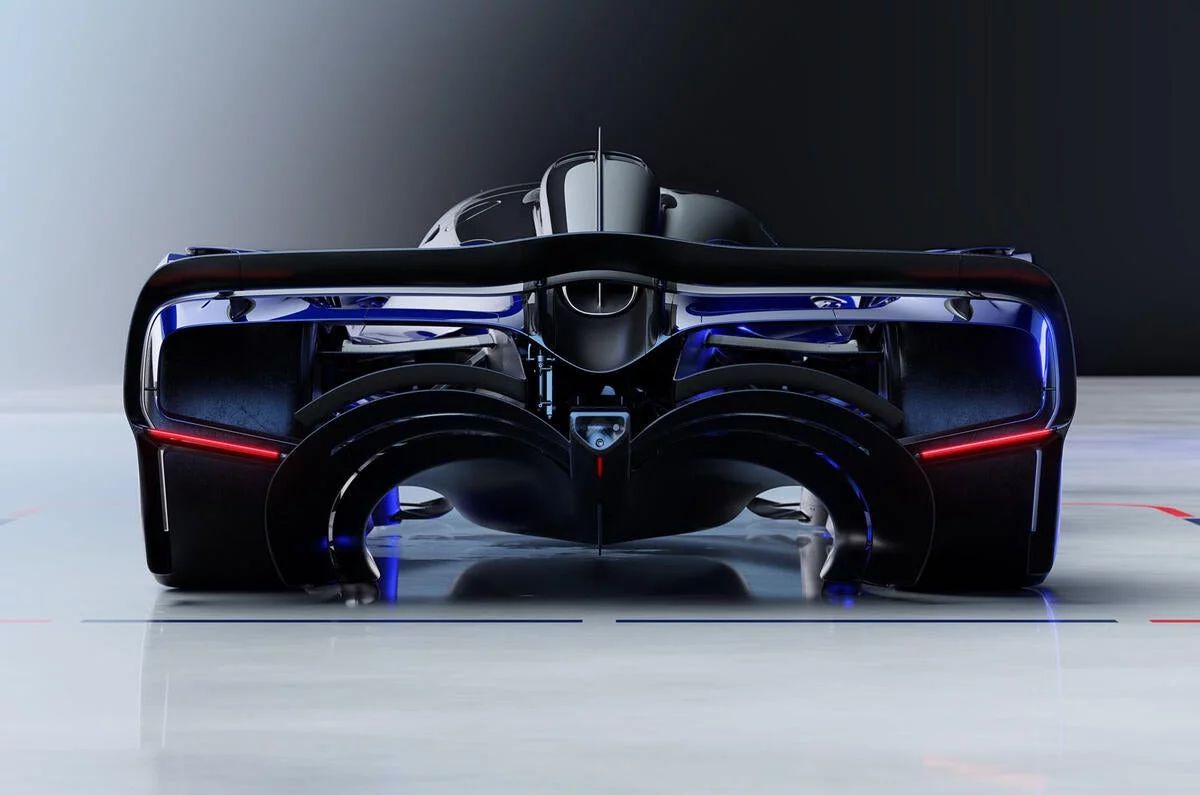
Red Bull Advanced Technologies
And all of this arrives at a time when much of the automotive industry is shifting toward electrification and increasing digitalization. The RB17 clearly shows that brands like Red Bull are still willing to pursue a different approach – one centered on driving experience, aerodynamics and mechanical purity. And I’m all for it!
Via: Autocar UK