
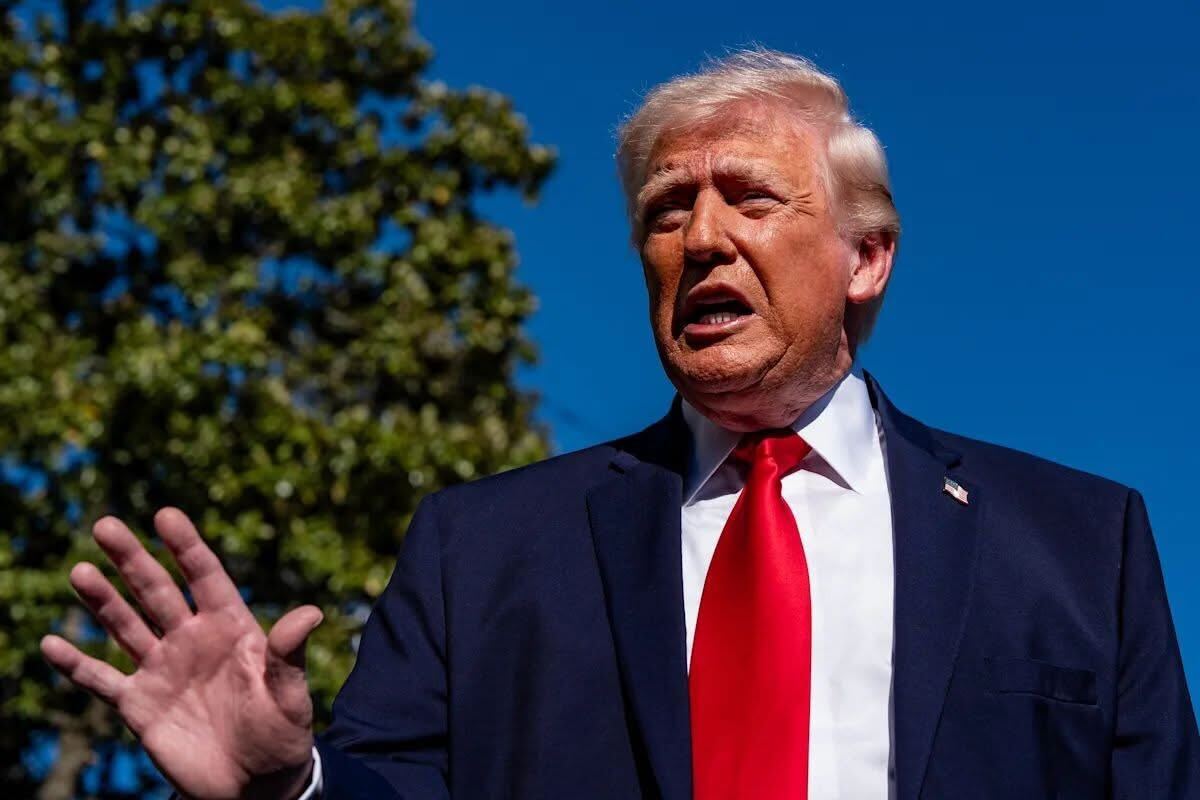
After Trump announces 10 days ceasefire between Israel and Lebanon, he revealed plans to invite both Netanyahu and Aoun to the White House for what he called “the first meaningful talks between Israel and Lebanon since 1983”.
U.S. President Donald Trump has announced that Israel and Lebanon have agreed to a temporary 10-day ceasefire, after speaking to Israeli Prime Minister Benjamin Netanyahu and Lebanese President Joseph Aoun, following intensified Israeli occupation attacks on Lebanon that resulted in the killing thousands of people and widespread destruction across the country.
The ceasefire, Trump said, is set to take effect at 5pm Eastern Time [21:00 GMT] on Thursday, following what he described as “excellent conversations” with Netanyahu and Aoun.
In a post on Truth Social, Trump stated, “These two leaders have agreed that in order to achieve PEACE between their countries, they will formally begin a 10 Day CEASEFIRE,” expressing confidence that both sides are committed to de-escalation and that progress towards peace could come “quickly”.
The announcement was welcomed in Beirut, where Lebanese Prime Minister Nawaf Salam described the ceasefire as a key national objective.
Writing on X, Salam said the truce represented “a central Lebanese demand we have pursued since the first day of the war,” and noted that it had been the primary goal of recent discussions between Lebanese and Israeli officials in Washington.
He also paid tribute to those killed in the Israeli attacks and voiced hope that over a million people by Israeli military operations would be able to return home “as soon as possible”.
The ceasefire follows weeks of intense hostilities that have drawn Lebanon deeper into a broader conflict involving the U.S., Israel and Iran.
Violence escalated after Hezbollah launched rockets into Israel in early March, an action it said was in response to the killing of Iran’s Supreme Leader Ali Khamenei in an Israeli strike at the outset of the war on Iran on February 28.
Israel launched a sustained military campaign across Lebanese territory, resulting in more than 2,000 deaths and thousands of injuries, alongside widespread destruction and mass displacement.
Recent strikes in southern Lebanon alone reportedly killed several civilians.
Diplomatic momentum gathered pace in recent days, culminating in a rare meeting between Lebanese and Israeli representatives in Washington, their first direct engagement in decades.
The talks, hosted by U.S. Secretary of State Marco Rubio, were described by both sides as constructive, although officials indicated that President Aoun declined direct contact with Netanyahu prior to a formal ceasefire agreement.
Trump had reportedly sought to facilitate a direct call between the two leaders, but Lebanese officials insisted on securing a truce first.
In parallel, Trump revealed plans to invite both Netanyahu and Aoun to the White House for what he called “the first meaningful talks between Israel and Lebanon since 1983”.
He emphasised that “both sides want to see PEACE, and I believe that will happen, quickly”, signalling Washington’s intention to build on the ceasefire to broker a more durable settlement.
He added that Vice President JD Vance, alongside Rubio and Chairman of the Joint Chiefs of Staff Dan Caine, had been tasked with advancing negotiations towards a lasting agreement.
The ceasefire also appears closely tied to broader regional dynamics, particularly ongoing efforts to end the war involving Iran.
Tehran had reportedly made a halt to fighting in Lebanon a precondition for further negotiations, with Iranian officials stressing that stabilising Lebanon was “just as important” as securing a wider ceasefire.
A fragile two-week truce between the US and Iran is due to expire, with expectations of renewed talks in Pakistan, raising hopes that the Lebanon ceasefire could serve as a stepping stone towards a broader regional deal.