

The battery has long been the weak link of the electric bike. It degrades in the cold, ages poorly with fast charging, and rarely survives more than four years of heavy use. Ride1Up thinks it has a fix – and it’s priced it for regular people.
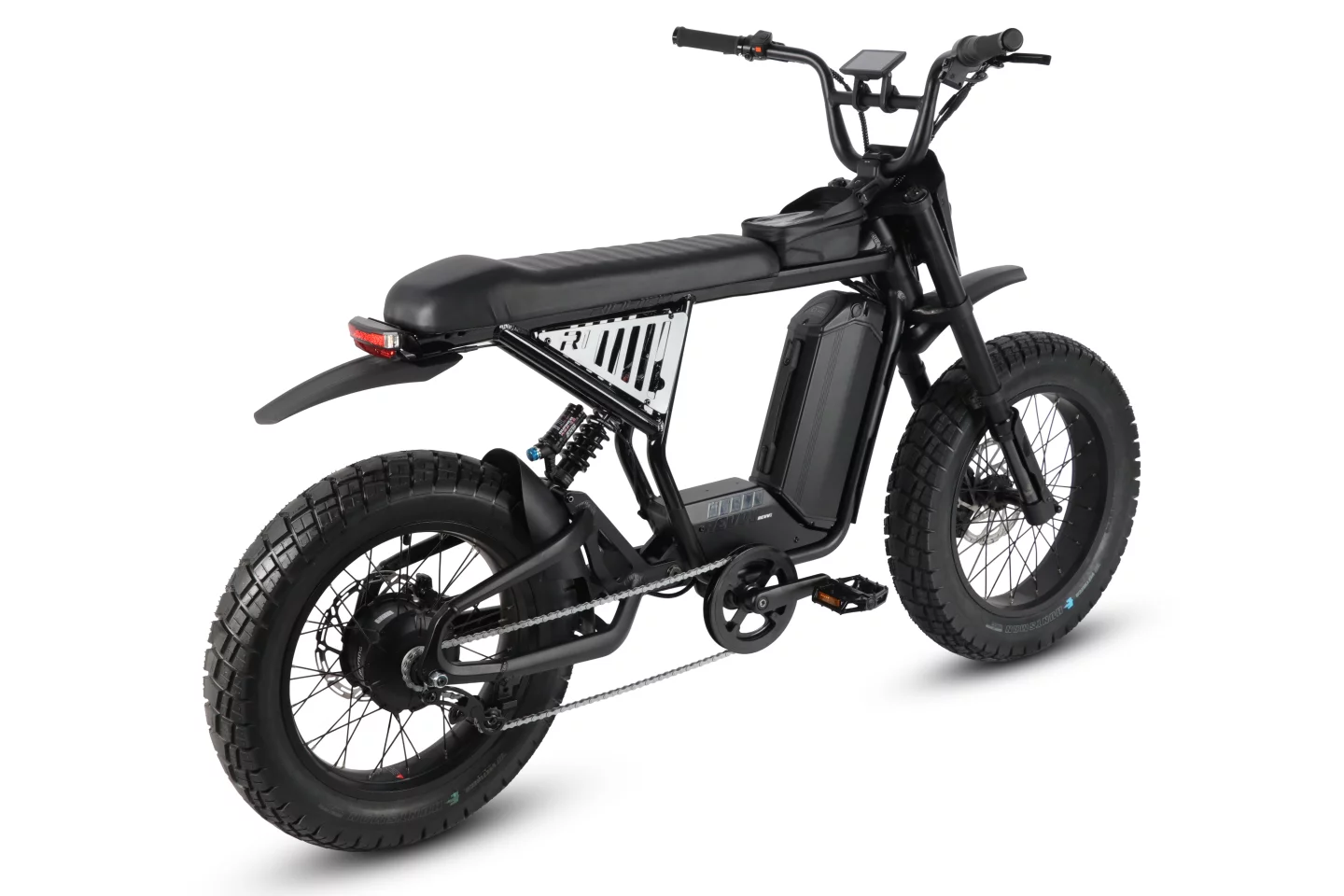
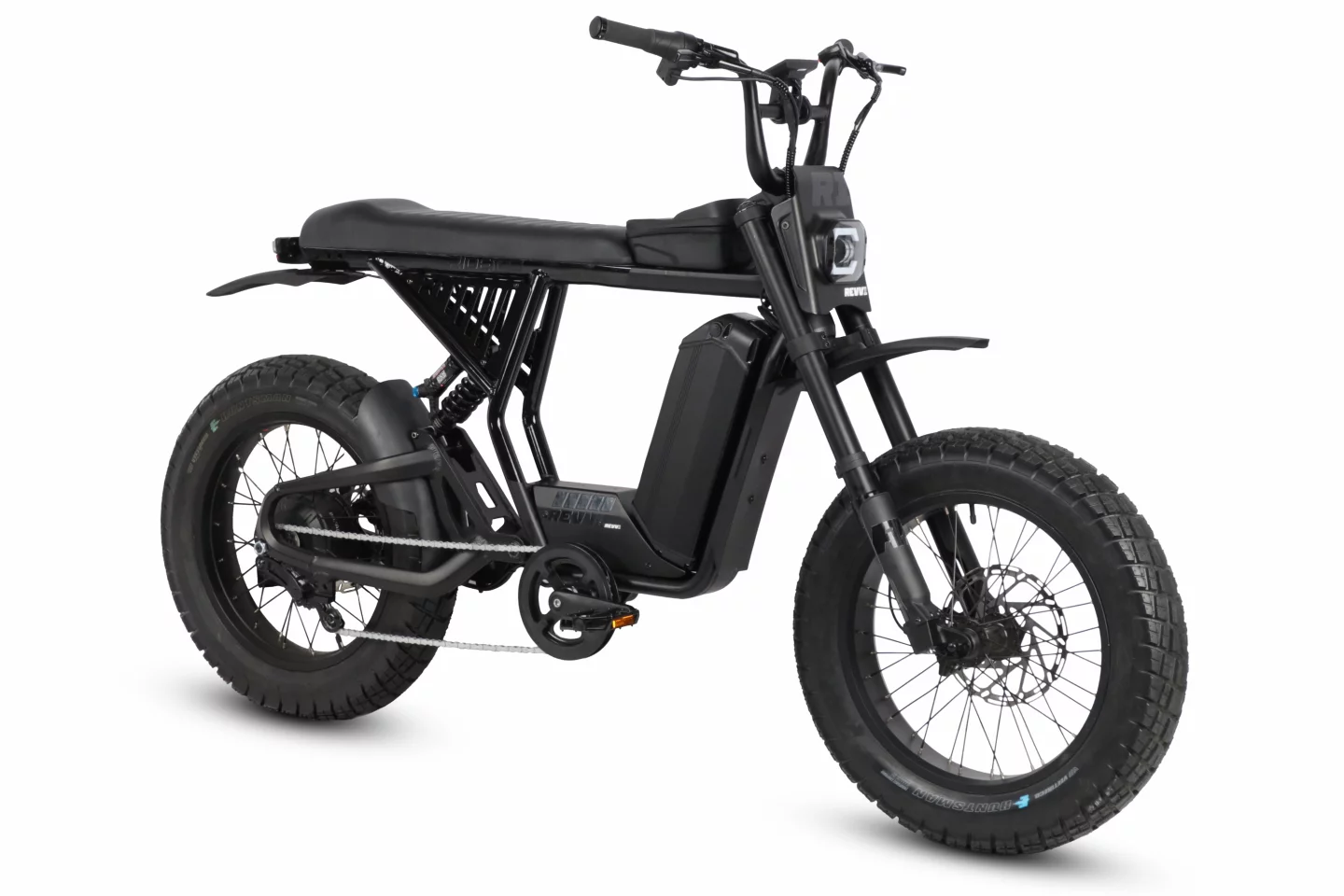
The California-based brand has launched the Revv1 evo, a moped-style ebike built around a semi-solid-state battery that’s billed as the first with this chemistry to be made available to mainstream US consumers at an accessible price point.
That claim deserves a small asterisk. Models like the Dimentro DP-Pro and the Naxeon I AM – more motorcycle‑like than what riders typically think of as an ebike – had already incorporated semi-solid-state batteries before the evo’s launch, and component suppliers like Joycube and T&D had been shipping similar packs to other brands for months. What does seem more defensible is that the evo is the first moped-style ebike with this battery chemistry available for direct purchase.
Ride1Up
So what is a semi-solid-state battery, exactly? Think of a standard lithium-ion battery as a sponge soaked in a flammable liquid – that liquid is the electrolyte, the medium that lets ions travel between the two electrodes during charging and discharging. A semi-solid-state battery replaces that liquid with a gel or a low-liquid mixture, which reduces fire risk and improves chemical stability under extreme conditions. This is not the same as the fully solid-state batteries that electric-vehicle manufacturers have been promising for years but have yet to reach mass production. Semi-solid-state is a middle step: safer and more durable than conventional lithium-ion, but without the manufacturing complexity that still blocks full solid-state technology from scaling.
Ride1Up claims that the Revv1 evo’s battery survives more than 1,200 charge cycles before dropping to 80% of original capacity. A standard lithium-ion pack typically hits noticeable degradation around 500 cycles. For a rider charging three or four times a week, that’s roughly 8-10 years of use versus the usual 3-4. The bike also supports a full charge in two hours – and according to Ride1Up, without the usual penalty. In conventional batteries, fast-charging generates excess heat that accelerates wear; the semi-solid-state chemistry, the company says, handles it more gracefully. In extreme cold, down to -20 °C (-4 °F), the ebike’s battery reportedly retains around 70% of its capacity, not spectacular but a meaningful improvement over the erratic behavior of conventional lithium-ion cells when temperatures drop hard. Per-charge range is reported to be between 30 and 60 miles (48 – 96.5 km).
Ride1Up
The evo is built on Ride1Up’s existing Revv1 platform, shared with the DRT and FS models. It packs a 750-W motor with 100 Nm (73.7 lb.ft) of torque and pedal-assist to 28 mph (45 km/h), DRT-spec suspension, and Vee Huntsman all-terrain tires, managed by an onboard battery management system that the brand says actively monitors pack health on every cycle.
The whole thing weighs around 90 lb (41 kg) – closer to a gas-powered moped than a traditional ebike. That means it’s built for open roads and longer commutes, not for locking up at a bike rack or hauling up a stairwell. If you’re looking for something to replace your car on a city commute, this model could make sense in some scenarios. If you want a bike you can carry into the office or apartment, look elsewhere.
At US$2,395, the Revv1 evo undercuts competitors that have adopted semi-solid-state chemistry – such as German brand Nicolai, whose upcoming semi-solid-state e-mountain bikes target a premium segment at considerably higher prices. Pre-orders are open on Ride1Up’s website, with shipping expected from August for the US market only.
The real story may not be this single bike but what its price signals about the maturity of semi-solid supply chains. When a technology that spent years confined to high-end prototypes and boutique models becomes viable at a mainstream price point, other brands tend to follow quickly.
Source: Ride1Up
Note: New Atlas may earn commission from purchases made via links